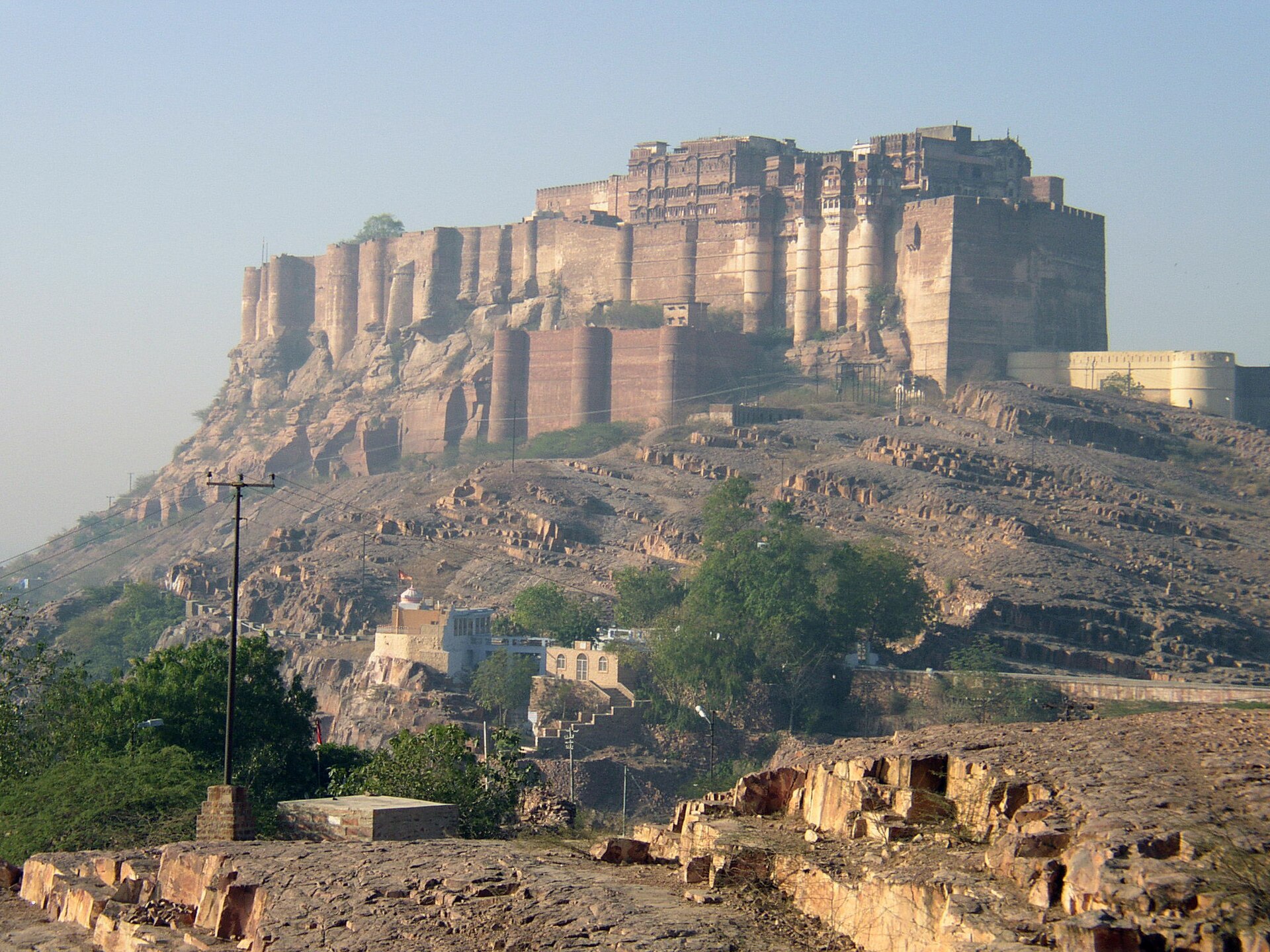
Perched on a rocky hill overlooking Jodhpur, Mehrangarh Fort isn’t just a structure of stone and mortar—it’s a living testament to the resilience and ambition of Rajasthan’s rulers. Built in the mid-15th century by Rao Jodha, the founder of Jodhpur, the fort was meant to be more than a military stronghold. It was a statement, a seat of power that would endure through centuries of shifting dynasties and relentless desert heat. Local lore tells of a hermit who once lived on the hill, displaced to make way for the fort’s construction. The hermit’s curse, warning of perpetual water scarcity, is said to linger over the city, though the fort itself has weathered far worse—sieges, battles, and the slow march of time—without losing its imposing presence.
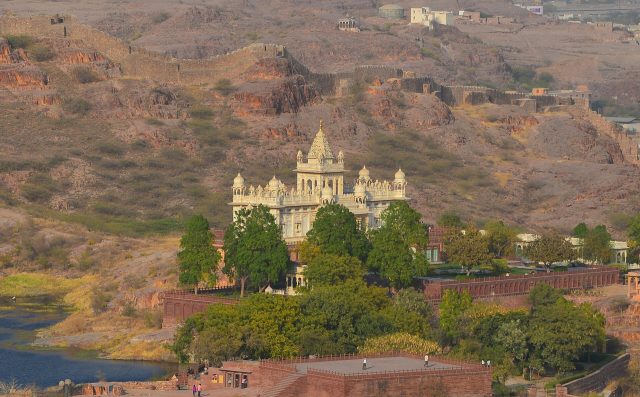
The architecture of Mehrangarh is a study in contrasts: brute strength and delicate craftsmanship coexisting in the same space. The walls, some nearly twenty meters thick, were designed to withstand not just enemy attacks but the harsh Rajasthani climate. They rise from the hillside like a natural extension of the rock, their sheer scale making visitors feel small in comparison. Inside, the fort unfolds into a series of palaces, each with its own character. The Jaswant Thada, a white marble cenotaph built in memory of Maharaja Jaswant Singh II, offers a quiet counterpoint to the fort’s grandeur, its intricate carvings and serene gardens providing a moment of reflection. Meanwhile, the Phool Mahal, or Palace of Flowers, dazzles with its gold leaf and mirrored ceilings, a celebration of opulence that once hosted royal celebrations.
Walking through the fort’s courtyards, it’s impossible not to feel the weight of history pressing in from all sides. The walls bear the scars of past conflicts—cannonballs embedded in stone, their impact still visible centuries later. The doors are adorned with scenes from Rajput epics, their stories etched into wood and marble for future generations. One of the most striking features is the museum, where the past feels almost tangible. Here, you’ll find the personal effects of the maharajas: ornate palanquins that once carried royal women in procession, their interiors lined with silk and velvet; suits of armor inlaid with gold and precious stones, each piece a relic of a time when warfare was as much about pageantry as it was about strategy. The collection isn’t just a display of wealth—it’s a glimpse into a world where honor and lineage dictated every aspect of life.
Mehrangarh isn’t frozen in time; it’s a place where tradition still breathes. The fort comes alive during festivals, when its courtyards echo with music and the air fills with the scent of incense and spices. The Dussehra celebrations are particularly vivid, transforming the fort into a stage for reenactments of ancient battles and mythological tales. Dancers in vibrant costumes move to the rhythm of traditional instruments, their performances a reminder that the stories of Rajasthan’s past are still very much alive. Even on ordinary days, the fort hums with activity—artisans selling handcrafted souvenirs, guides sharing tales of valor, and visitors pausing to take in the view from the ramparts.
From the fort’s highest points, Jodhpur sprawls below like a patchwork of blue and ochre. The city’s famous indigo hue isn’t just for aesthetics; the color was traditionally used to repel insects and keep homes cool in the scorching heat. From this vantage point, the labyrinth of streets and bazaars feels almost within reach, though the fort itself remains a world apart. Below, life moves at its own pace—rickshaws weaving through narrow alleys, vendors calling out their wares, the occasional cow ambling past unhurried. Above it all, Mehrangarh stands as a silent observer, its walls holding centuries of stories that continue to unfold with each passing day.
What makes Mehrangarh special isn’t just its size or its history, but the way it makes the past feel immediate. You can spend hours wandering through its palaces, tracing the intricate patterns of the jharokhas (overhanging enclosed balconies) or studying the frescoes that depict scenes from Rajput life. The light filtering through the latticework casts shifting shadows on the stone floors, creating a play of patterns that changes with the time of day. In the late afternoon, the fort takes on a golden glow, the setting sun softening its imposing edges. It’s in these quiet moments that the true magic of Mehrangarh reveals itself—not as a relic to be admired from a distance, but as a place that invites you to step inside its story.
For many, the fort is more than a tourist attraction; it’s a connection to something larger than themselves. Whether it’s the thrill of standing where warriors once stood or the simple pleasure of watching the city below from a secluded terrace, Mehrangarh has a way of leaving an impression. It doesn’t just preserve history—it lets you experience it, in all its complexity and contradictions. The fort has seen empires rise and fall, yet it remains, a steadfast symbol of Rajasthan’s enduring spirit. And perhaps that’s the real reason it continues to draw people in, year after year: it doesn’t just tell a story, it lets you become a part of it.