Perched on a hillside overlooking Jodhpur, Chamunda Mata Temple is more than just a place of worship—it’s a quiet guardian of the city’s past, where faith, history, and architecture merge into something timeless. The temple is dedicated to Chamunda, a fierce manifestation of the goddess Durga, revered in Hinduism as a protector against evil and a symbol of strength. For the people of Jodhpur, this isn’t merely a religious site but a living connection to their heritage, a place where rulers once sought divine favor before battle and where the echoes of devotion still linger in the stone.
The temple’s design feels almost organic, as if it grew naturally from the rock beneath it. Though modest in size, its simplicity is deceptive. The entrance is framed by intricately carved columns depicting scenes from mythology, their details softened by centuries of weathering. Inside, the dim light of oil lamps and the occasional shaft of sunlight through narrow windows create an atmosphere of reverence. The central shrine, housing the image of Chamunda, exudes a quiet power, drawing visitors into a space where the sacred feels tangible.
The temple’s origins are woven into the story of Jodhpur itself. It was founded in the 15th century by Rao Jodha, the ruler who established the city after moving his capital from Mandore. According to legend, Chamunda appeared to him in a dream, guiding him to this very hill. From then on, the goddess became the patron deity of the Marwar dynasty, and the temple a cornerstone of royal tradition. Here, kings performed rituals before war, and royal families marked milestones, embedding the temple deeply into the region’s identity.
Today, Chamunda Mata remains an active place of pilgrimage, drawing devotees from across India. The most vibrant time to visit is during Navratri, the nine-day festival honoring Durga, when the temple is adorned with flowers, illuminated by countless lamps, and filled with the sounds of prayers and drums. Yet even outside these celebrations, the temple retains a serene energy. The air is still, broken only by the rustle of leaves or the distant murmur of worshippers, making it a place where time seems to slow.
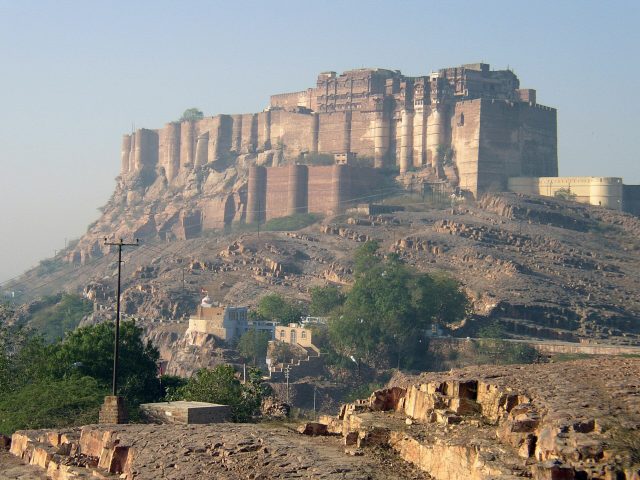
The hill on which the temple stands offers more than just spiritual solace. From its summit, the view of Jodhpur is breathtaking—the sea of blue houses stretching toward the imposing bulk of Mehrangarh Fort, with the desert plains fading into the horizon on clear days. Many come here not only to pray but to sit quietly, watching the light shift across the ancient walls, feeling the cool breeze carry away the weight of the world below.
Reaching the temple is part of the experience. The path winds up the hillside, weaving between boulders and sparse trees, passing small shrines and weathered stone figures, each with its own story. The climb takes about half an hour, a gradual ascent that feels like a meditation in itself. Along the way, locals might share tales of the temple’s past, but even without words, the journey carries a sense of reverence, as if each step is a reminder of the devotion that built this place.
There are no rigid rules for visitors, but respect for tradition is expected. Shoes are removed before entering the sanctum, and women often cover their heads. Photography isn’t forbidden, though it’s best done discreetly to avoid disturbing those in prayer. Nearby, a small stall sells offerings—flowers, incense, or simple souvenirs like bangles and postcards—allowing visitors to take a piece of the experience with them.
What makes Chamunda Mata special is its ability to remain untouched by the hustle of modern tourism. Even during peak seasons, the temple retains a sense of calm, a refuge from the noise of the city. It’s a place where faith isn’t just about rituals but about the quiet moments of reflection, where the weight of history feels present in the very air.
For the people of Jodhpur, the temple is more than a landmark—it’s a part of who they are. It’s where weddings are celebrated, festivals are observed, and solace is sought. Even those who don’t consider themselves religious often find themselves drawn here, standing on the hilltop, looking out over the city, and feeling a connection to something larger than themselves. In a world that moves too fast, Chamunda Mata offers a reminder of the enduring power of faith, history, and the quiet moments that bind them together.