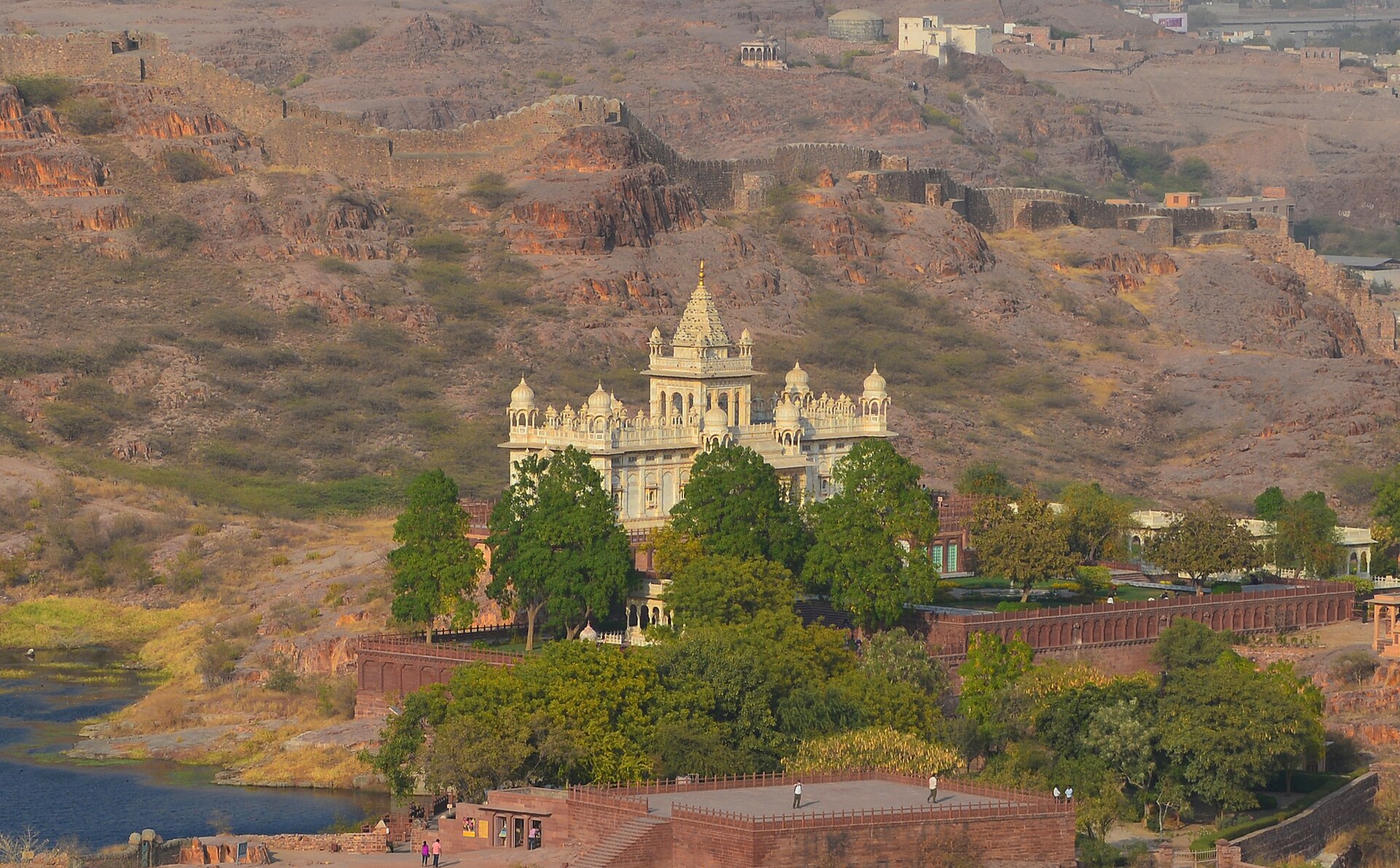
Jaswant Thada stands on the edge of Jodhpur, where the city’s blue-tinted rooftops give way to the quiet slopes of a hill once guarded by Mehrangarh Fort. Built in the late 19th century, this white marble memorial honors Maharaja Jaswant Singh II, a ruler whose reign marked a turning point for the kingdom of Marwar. The structure is more than a tomb—it’s a quiet testament to an era when Rajput traditions still shaped the land, even as the world beyond began to change.
The architecture blends Rajput elegance with subtle Mughal influences, visible in the delicate arches and domes that seem to float above the marble. Under the harsh Rajasthan sun, the stone takes on an almost translucent quality, its surface carved with intricate patterns that resemble lace. Inside, the walls are lined with miniature portraits of Marwar’s rulers, their faces rendered in the fine, precise strokes of a fading art. The craftsmanship feels both grand and intimate, as if the builders wanted to honor a man without overshadowing the simplicity of his legacy.
Unlike many memorials, Jaswant Thada remains a living space. Descendants of the royal family still visit to perform rituals, their presence a reminder that this place is not just a relic but part of an ongoing story. Tourists might stumble upon these moments—an offering of flowers, the murmur of prayers—adding a layer of unexpected connection. There’s no crowd here, no hurried footsteps or loud voices, just the occasional rustle of leaves and the distant echo of a city waking up below.
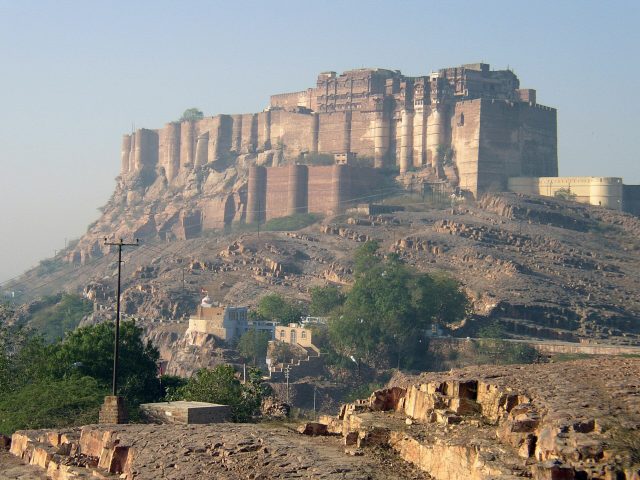
A small garden surrounds the memorial, its paths lined with native trees and shrubs that offer shade from the relentless sun. The layout is unassuming, designed for quiet reflection rather than spectacle. From the hillside, the view stretches over Jodhpur’s old quarter, where the blue houses cluster like pieces of a mosaic, and beyond them, the desert stretches endlessly. Mehrangarh Fort looms in the distance, its imposing walls a stark contrast to the delicate marble below.
Some call Jaswant Thada the "Taj Mahal of Marwar," though the comparison doesn’t quite hold. Both are made of white marble and built for love, but where the Taj is a monument to eternal devotion, Jaswant Thada feels more personal, almost domestic. It doesn’t demand awe; it invites quiet appreciation. There’s no need for grandeur here—just the quiet beauty of stone, light, and time.
Most visitors pair a trip to Jaswant Thada with a visit to Mehrangarh Fort, and the two sites together paint a fuller picture of Jodhpur’s past. The fort tells the story of battles and power, while the memorial speaks of the people behind the legends—their lives, their losses, and the traditions that bound them. One is a symbol of strength; the other, a reminder of humanity.
There’s a stillness to Jaswant Thada that makes it easy to linger. The marble stays cool even in the midday heat, and the air carries the faint scent of desert flowers. It’s not a place for hurried sightseeing but for slowing down, for noticing the way the light shifts across the stone or how the wind moves through the garden. The past here isn’t something distant—it’s present in the quiet, in the way the place feels lived-in even when empty.
Jaswant Thada doesn’t try to impress. It doesn’t need to. Its power lies in its restraint, in the way it holds history without fanfare. For those who take the time to look, it offers something rare: a moment of connection, not just to a place, but to the people who shaped it.