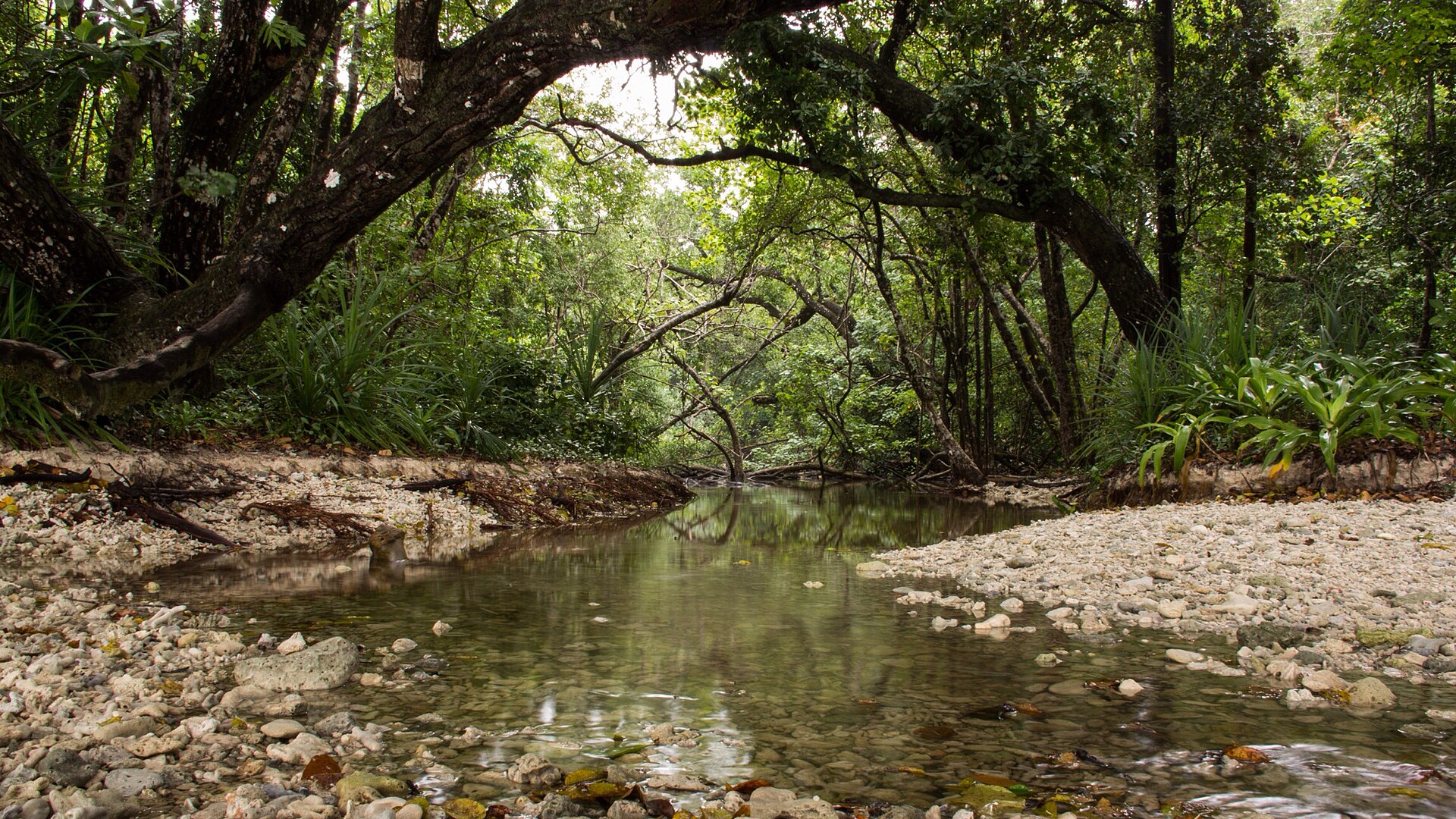
Ujung Kulon is one of those rare places where the wild still feels untouched, where the jungle spills into the ocean and time seems to slow down. Stretching across a peninsula and a handful of nearby islands on Java’s western edge, this national park is one of the last strongholds of the Sunda region’s original ecosystems. There are no crowds here, no resort towns or high-rise hotels—just dense forests, tangled mangroves, coral reefs, and empty beaches where the Indian Ocean crashes against the shore. It’s not a place you visit to be entertained; it’s a place where nature sets the rules, and humans are only passing through.
The park’s story is tied to one of the most violent natural disasters in modern history. When Krakatoa erupted in 1883, the explosion wiped out everything in its path, leaving the surrounding lands barren. But over time, life returned. Ujung Kulon became a refuge for species that vanished elsewhere on Java, including the Javan rhinoceros—one of the rarest animals on Earth. Today, this is the only place where these rhinos still roam freely. For scientists and conservationists, the park is a living laboratory, a chance to study how ecosystems recover after catastrophe.
The landscapes here shift dramatically from one step to the next. Thick tropical forests, draped in vines and towering trees, give way to open savannas and swampy lowlands where mangroves twist their roots into the water. Along the coast, long stretches of sand lead to coral reefs just beneath the surface. The water is clear, but the currents are strong, making swimming risky. Instead, visitors might spot dolphins playing near the shore or sea turtles dragging themselves onto the beach to lay their eggs. The ocean here is unpredictable, but that’s part of the draw.
Wildlife thrives in Ujung Kulon, though it’s not always easy to see. Beyond the Javan rhinos, the park is home to banteng—wild cattle that move cautiously through the undergrowth—as well as leopards, macaques, and wild boars. Birdwatchers will find kingfishers flashing through the trees and hornbills with their massive, curved beaks. But the animals here are elusive, and the dense vegetation hides them well. The best chances of spotting them come at dawn or dusk, when they venture out to feed.
There aren’t many man-made landmarks in Ujung Kulon, and that’s the point. The real attraction is the land itself. Still, a few remnants of the past linger. Old lighthouses, built during the colonial era, stand sentinel over the coast, their paint peeling but their presence undeniable. On Panaitan Island, one of these lighthouses offers a sweeping view of the ocean and the surrounding islands. Nearby, the ruins of Dutch forts hint at a time when this region was part of the Dutch East Indies. These structures feel forgotten, but that only adds to their quiet charm.
Getting to Ujung Kulon takes effort. The park is remote, and the journey involves multiple legs—first by road to Cilegon or Labuan, then by boat or off-road vehicle. Once inside, there are no paved roads, only dirt paths winding through the jungle. Most visitors join guided expeditions, which can last several days and include camping in tents or simple huts. Sleeping under the stars here is an experience in itself: the night is alive with the calls of birds, the rustling of leaves, and the distant roar of the ocean.
This is a place where modern life fades away. There’s no cell service, no internet, just the raw, unfiltered presence of nature. For some, that’s unsettling. For others, it’s exactly why they came. Ujung Kulon isn’t for those seeking comfort or entertainment. It’s for those who want to step outside of time, to feel the weight of something ancient and untamed. The silence here isn’t empty; it’s full of the sounds of the wild—the snap of a branch, the cry of a bird, the endless rhythm of the waves.
Ujung Kulon is more than a national park. It’s a reminder that wilderness can still exist, even in a world that often feels overrun. Protected by UNESCO, its future depends on how carefully people treat it. Every visitor leaves a mark, not just in photographs, but in the responsibility to ensure this place remains as wild and untouched as it is today. For those who make the journey, it’s a rare chance to witness nature as it was meant to be—unspoiled, resilient, and free.