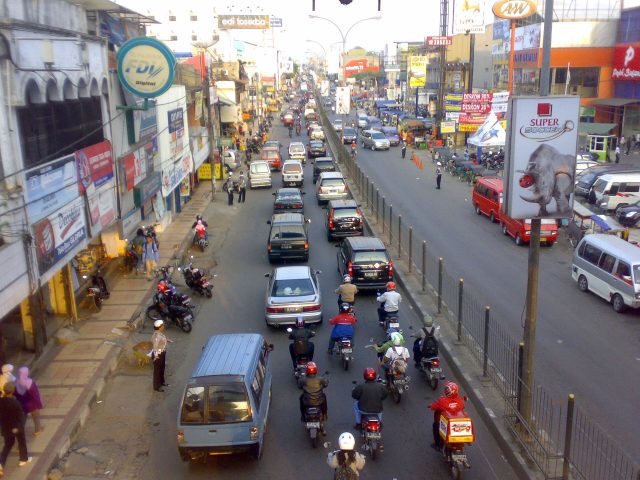
Pasar Lama has stood here for over a century. Its narrow aisles are lined with wooden stalls darkened by time and use. There are no fluorescent lights or polished floors—just the rhythm of trade and daily life. The scent of turmeric mixes with the briny tang of fresh tuna and the sweetness of mangosteen. The hum of voices blends with the clatter of metal scales and the hiss of a kerosene stove.
Cilegon sits on the western edge of Java, shaped by the sea and agriculture. Every morning, Pasar Lama comes alive before dawn. Fishermen from villages along Sawahlunto Bay unload their catch—tuna, mackerel, and sardines. Farmers spread out eggplants, bitter melon, and kaffir lime leaves on woven mats. By six, the market is full. Some haggle over prices, others sip coffee from a vendor with a copper cezve. A few linger by the fabric stalls, running their fingers over batik patterns of parang or kawung.
The corrugated iron roofs rattle under rain. In the center, older men play chess on a plywood board, their moves unhurried. Nearby, vendors sell clay pots, woven baskets, and plastic plates with Indonesian comic characters. A sweets stall offers klepon—sticky rice balls dusted with coconut—and dadar, pandan-flavored crepes wrapped in banana leaves.
Eating here is simple. A woman fries nasi goreng in a wok with charred edges. A boy skewers chicken satay. An old man slices open a durian, warning about its smell before insisting you try it. You can grab rice steamed in banana leaves, sambal made from red chilies and lime, or a caramelized banana, its edges crisped from the fryer.
Familiarity runs deep. Ahmad, the spice seller, measures out turmeric and coriander with the same wooden scoop he’s used for years. Ibu Sari has sold fish here for three decades. Her stall watched her daughter do homework between stacks of ice and fish. Fishermen discuss the weather in the mornings. Housewives swap recipes for soto soup.
During Eid al-Fitr, the market changes. Colorful paper garlands hang between stalls. Vendors prepare ketupat—rice cakes wrapped in palm leaves—and rendang, beef slow-cooked in coconut milk and spices. Even those who usually shop at supermarkets come here for the occasion.
Pasar Lama isn’t found on GPS. If you ask a taxi driver for the market with old scales and the smell of fried fish, they’ll know where to go. There are no tourist maps—just the pulse of life. The air is thick with spices, the chatter of regulars, and the sticky residue of mangosteen juice on your fingers.
Some stalls have disappeared, like the one that sold hand-spun yarn. Others have taken their place, including a kiosk selling SIM cards. But when you stand between the rows of fish and spices, the iron roof groaning overhead, it’s easy to forget the changes. For a moment, time feels still.