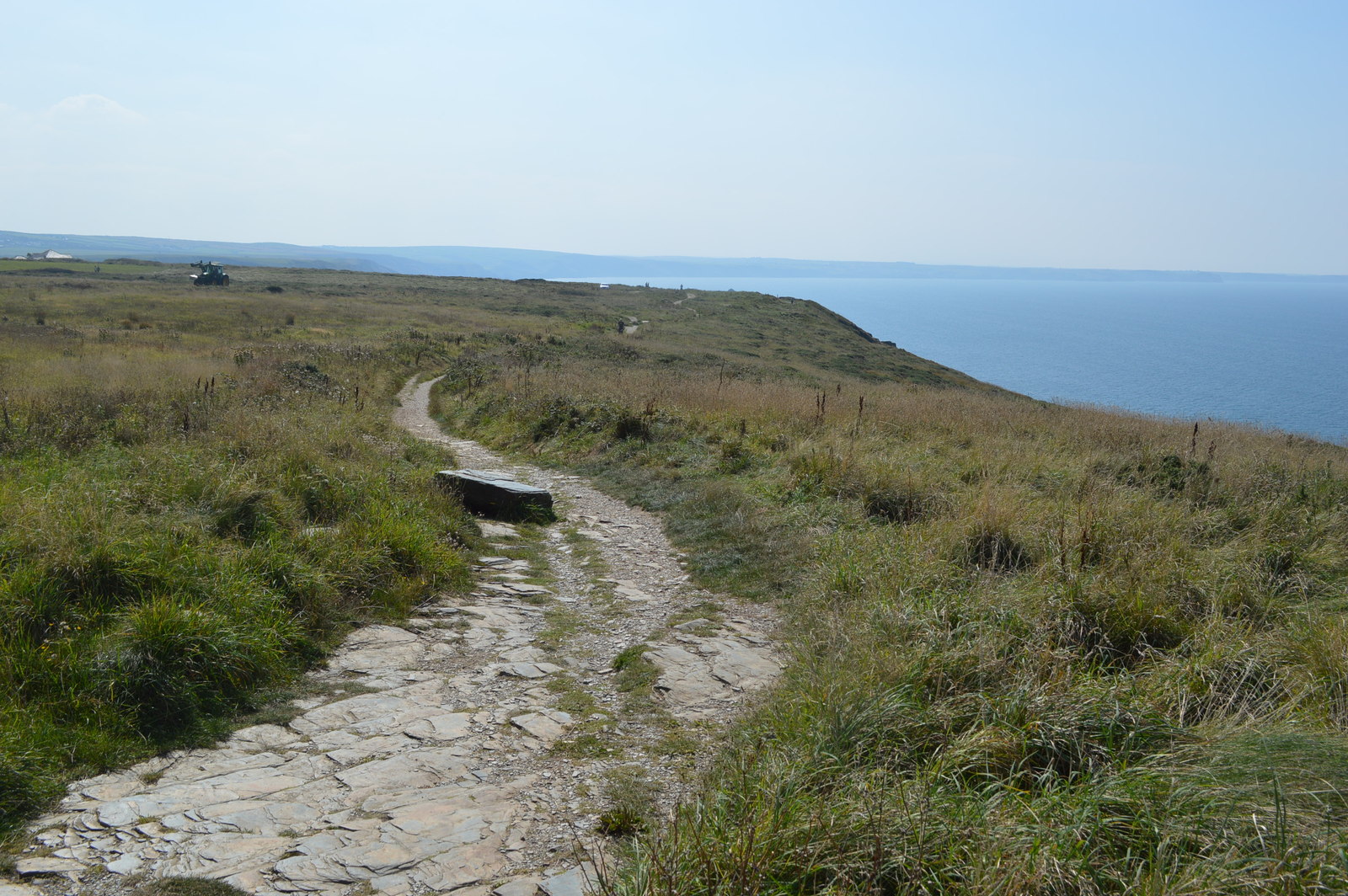
The coastal cliffs of Tintagel are where land, sea, and legend blur into something older than memory. This isn’t just a walking path—it’s a route carved by time itself, winding along the edge of Cornwall’s wildest shoreline. The narrow strip of land connecting Tintagel Castle to the mainland feels almost unreal, as if the earth here is still deciding whether to hold together or surrender to the waves. The wind moves freely, unchecked by anything but the jagged rocks, and the Atlantic crashes against the cliffs with a force that makes the ground beneath your feet feel alive. This is a place where history and myth aren’t just remembered; they’re still being written with every tide.
The trail begins in the village of Tintagel, where the past lingers in the crooked lanes and stone cottages. The buildings here haven’t changed much in centuries, and it’s easy to imagine medieval traders or pilgrims passing through the same narrow streets. From the village, the path climbs toward the castle, but before reaching the ruins, it follows the coastline, twisting along the clifftops. On one side, sheer drops plunge into the sea; on the other, the ocean stretches endlessly, merging with the horizon in a haze. On clear days, the view seems to go on forever, as if you could almost make out the faint outline of distant lands—though in reality, the nearest shore is far beyond sight.
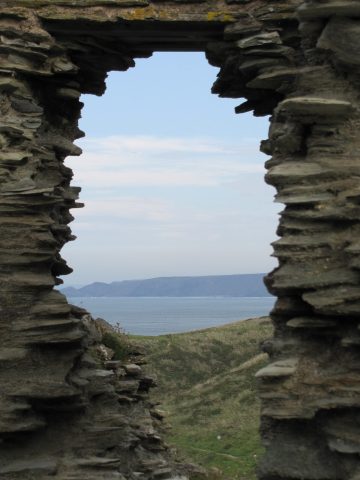
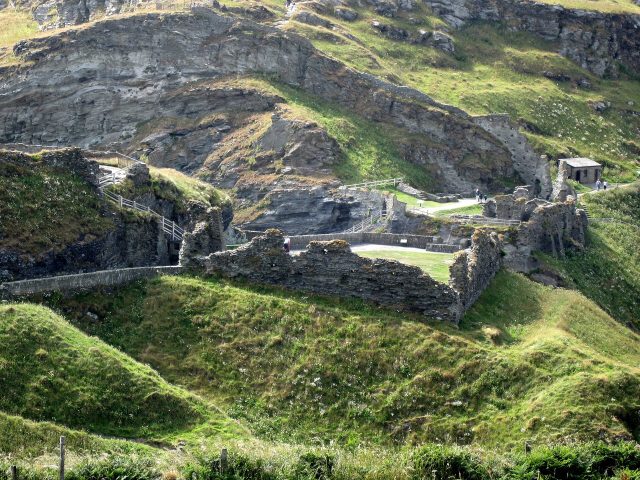
Tintagel Castle is the reason most people come here, perched on a headland as if nature itself had shaped it for a fortress. The ruins aren’t just stones; they’re fragments of a story that began long before the Arthurian legends took hold. Archaeologists have uncovered traces of a settlement from the 5th to 7th centuries, when this was the heart of the kingdom of Dumnonia. But for many, the castle will always be tied to the tales of King Arthur and his knights. Even without the myths, the place has a weight to it—a sense that something important once happened here. You can almost hear the echoes of merchants haggling in the harbor, monks chanting in the chapel, or warriors sharpening their blades before battle.
The path along the cliffs wasn’t always the well-trodden route it is today. Centuries ago, it was a dangerous, uneven track, used more out of necessity than pleasure. Now, it’s one of Cornwall’s most dramatic walks, though not an easy one. The terrain is uneven, the rocks slippery after rain, and the wind can be relentless. But that’s part of what makes it special. The most striking section is where the trail narrows to a thin ridge, with steep drops on either side. It’s here that you understand why the ancient Celts considered these cliffs sacred. The landscape doesn’t just surround you—it dominates you, reminding you that humans are only temporary visitors in a place shaped by wind and water over millennia.
Along the way, small coves cut into the cliffs, accessible only when the tide is low. The most famous is Merlin’s Cave, named after the sorcerer from Arthurian lore. The cave isn’t deep, but it’s cool and damp, with an echo that amplifies the sound of the waves until it feels like the sea is whispering. Locals warn against venturing inside during storms, when waves can surge in and block the entrance. But on calm days, it’s one of the most peaceful spots along the coast—a place to sit and listen to the rhythm of the water, undisturbed by anything but the cry of gulls overhead.
This stretch of coastline isn’t just about history or scenery; it’s about the raw presence of the ocean. Unlike the crowded beaches of more popular seaside towns, Tintagel’s cliffs offer solitude, even in summer. You can find a quiet spot on the rocks and watch the waves roll in, their white foam dissolving against the dark stone. In the evening, as the sun dips below the horizon, the cliffs glow in shades of gold and rose, while the sea turns a deep, almost black blue. It’s easy to see why artists and writers have been drawn to this place for centuries—the light here has a way of making everything feel both real and dreamlike at once.
A walk along the Tintagel cliffs takes a few hours, but time moves differently here. You might start in the morning mist, when the sea is still half-hidden, and finish as the first stars appear in the twilight. There are information boards along the way, offering snippets of history, but they’re not the main attraction. What stays with you isn’t the dates or the names, but the sensations—the salt on your skin, the wind tugging at your clothes, the way the air smells of damp earth and seaweed. There’s a strange feeling, too, that you’re not just passing through, but somehow becoming part of this place, if only for a little while.
Tintagel is the kind of place you want to return to, not because there’s something left unfinished, but because it never looks the same twice. In the rain, the cliffs turn brooding and dramatic, their edges softened by mist. On sunny days, they’re bright and almost cheerful, the sea sparkling under the light. During storms, they become fierce and untamed, the waves crashing so hard it feels like the earth itself is shaking. There’s no single way to experience this place—some come for the history, others for the views, and some just for the quiet. But no matter why you’re here, Tintagel leaves its mark. It’s as if a little of its wildness stays with you long after you’ve left.