Perched on a hill above the village of Tintagel, St Materiana’s Church feels like a place where time moves differently. The building itself is unassuming—small, weathered, and quietly enduring—but its presence carries the weight of centuries. The rough stone walls, darkened wooden beams, and narrow windows that let in slivers of light all speak of a past that hasn’t been polished away by modernity. There’s no grandeur here, no ornate carvings or towering spires, just a sense of quiet permanence, as if the church has always been part of the landscape, watching over the village below.
The exact origins of St Materiana’s are lost to history, but records suggest it was already standing by the 12th century. Tintagel was already steeped in legend by then, most famously as the mythical birthplace of King Arthur. The church may well have been built on the site of an older, pre-Christian shrine, a common practice in Cornwall where the new faith often absorbed the old. The stonework, still solid after hundreds of years, hints at the skill of medieval masons who built to last, unaware that their work would outlive them by so long.
The architecture is simple but striking. The nave and chancel are constructed from local slate, giving the building its distinctive grey-blue hue. The roof, patched and sagging in places, is held up by wooden beams that look as though they’ve been there since Norman times. Inside, there are no soaring vaults or stained glass—just a handful of plain wooden benches, a stone floor, and a modest altar. The lack of adornment isn’t a sign of neglect but of purpose; this was never meant to be a showpiece, just a place of worship, as much a part of the land as the cliffs and the sea beyond.
The churchyard sprawls around the building, a quiet jumble of gravestones that tell their own stories. Some are so worn by time that the inscriptions have faded beyond recognition, while others bear names in Cornish, a language that has all but disappeared. The graves aren’t arranged in neat rows but scattered as if each was placed where it felt right, without strict rules. Among the older stones, newer ones stand as a reminder that the church is still very much alive, serving the local community even as Tintagel has become a magnet for visitors drawn by its legends.
St Materiana’s is deeply entwined with the myths of King Arthur. For centuries, locals have whispered that this was where Merlin tutored the young prince or where the Holy Grail was hidden in the caves beneath the castle. There’s no proof, of course, but the atmosphere of Tintagel makes such stories feel plausible. Even without the legends, the place has a distinct presence—the cry of gulls, the wind off the sea, the way the light shifts over the stones. It’s easy to imagine that time here doesn’t move in a straight line but lingers, folding back on itself.
Unlike many historic sites, St Materiana’s hasn’t been turned into a museum. Services are still held here, and locals come not out of obligation but because it’s part of their lives. Visitors often remark on the sense of calm, the absence of crowds, the feeling that this is a place where the past isn’t just remembered but still alive. It’s a contrast to the busier attractions nearby, a quiet counterpoint to the bustle of Tintagel’s tourist spots.
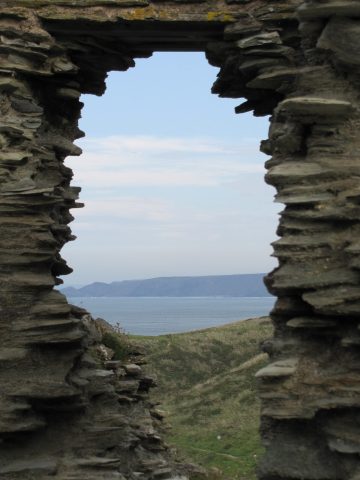
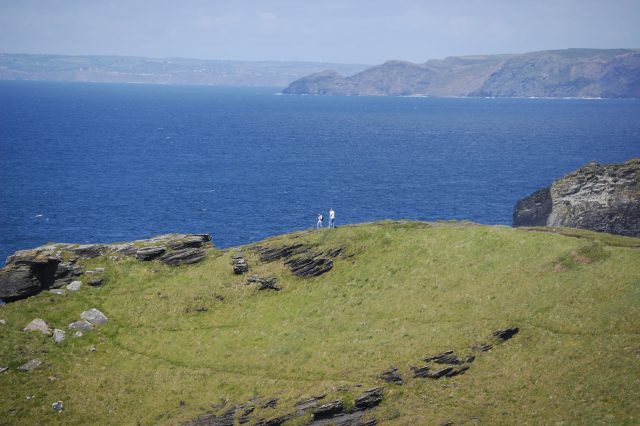
From the hill behind the church, the view stretches out over the coast—jagged cliffs, the grey expanse of the sea, and the horizon where sky and water blur. On clear days, it feels like you can see forever, as if the land itself is reaching out toward the places Cornish sailors once sought. The church stands at the edge of it all, a threshold between the real and the mythical, the past and the present. That might be why it draws people in—not for spectacle, but for the chance to pause, to look back, and to feel, if only for a moment, a connection to those who stood here long before.