Tintagel is a place where legends feel almost tangible. Perched on Cornwall’s rugged north coast, this windswept peninsula has long been tied to the stories of King Arthur, the Knights of the Round Table, and the enigmatic Merlin. The cliffs here are steeped in myth, the crashing waves below seeming to whisper fragments of ancient tales. Now, a new landmark has joined the scene—the Tintagel Bridge—linking the two halves of a castle that once stood defiantly above the sea.
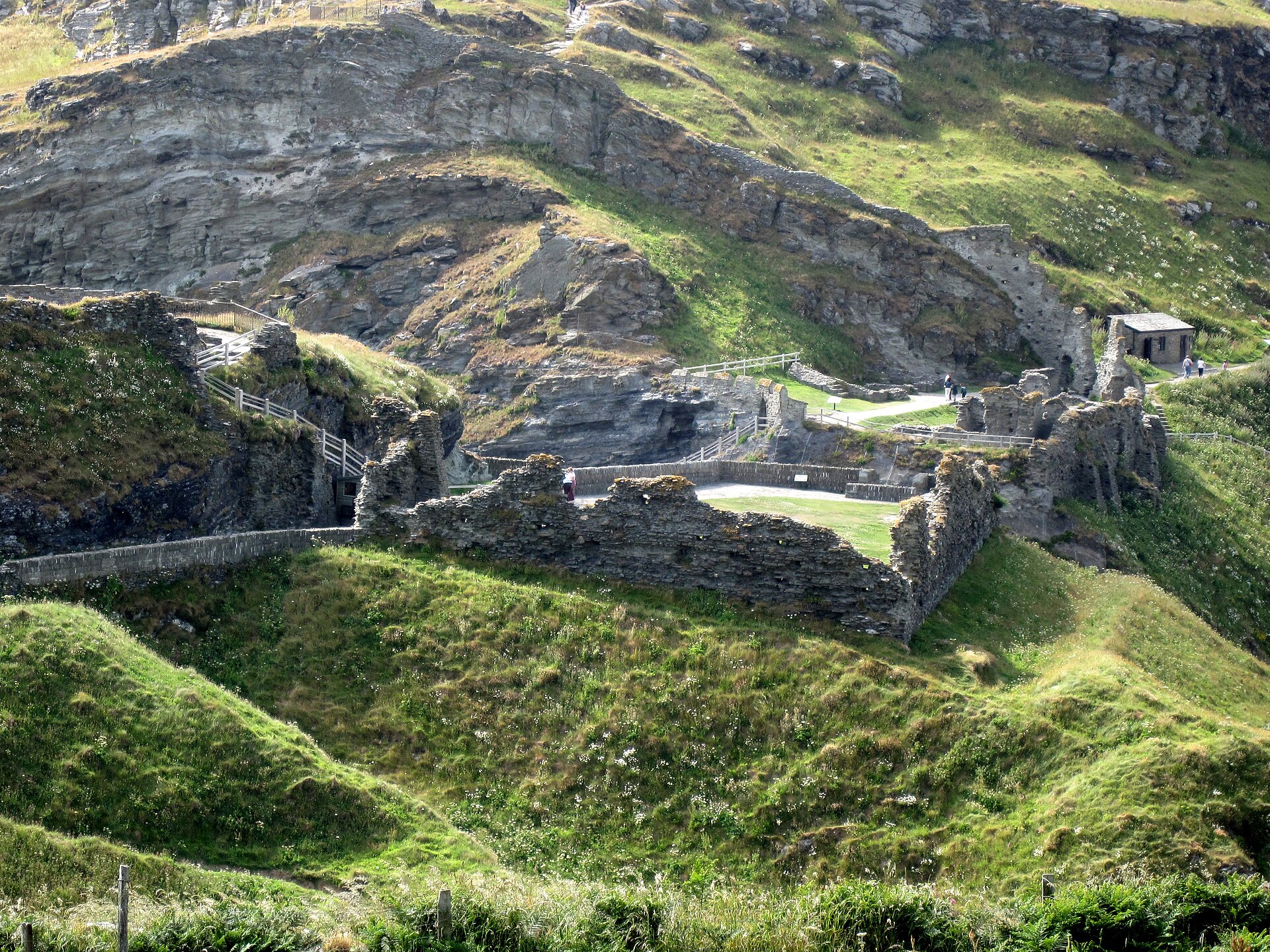
The bridge wasn’t built on a whim. The ruins of Tintagel Castle, scattered across a deep ravine, date back to the 13th century, though the site’s history stretches much further. Archaeologists have uncovered evidence of its importance in Roman times, and later, it served as a stronghold for Cornish rulers. Legends, of course, claim it as the birthplace of Arthur, a tale that has endured even as the castle itself crumbled. Over centuries, the gap between its two halves widened, leaving visitors to imagine what it might have looked like in its prime.
Opened in 2019, the bridge was an attempt to restore some of the castle’s former grandeur. More than just a crossing, it extends the line of the ancient walls, creating the illusion of a complete structure. The design is striking—a steel beam clad in local slate, curving gracefully over the chasm. From above, it resembles a sword embedded in the rock, a nod to the Arthurian myths that cling to this place. Walking across it feels like stepping into the past, with the Atlantic stretching out below and the wind tugging at your sleeves.
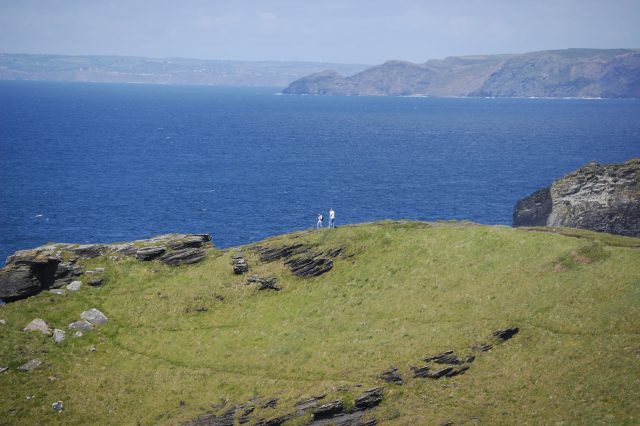
The castle itself is less a coherent fortress and more a collection of ruins, but that’s part of its charm. There are no polished exhibits here, no carefully restored halls—just moss-covered stones, walls slowly surrendering to time, and the ever-present wind. Visitors can wander among the remnants of grand chambers, climb the remains of towers, and picture the lives that once unfolded within these walls. The view from the eastern side is particularly breathtaking, where the coastline unfolds in a dramatic sweep of cliffs and hidden coves.
The bridge has sparked debate. Some argue that its modern design disrupts the site’s ancient atmosphere, while others believe it helps visitors better understand the castle’s original scale. Whatever the opinion, it has become another reason to visit. It doesn’t replace the legends or the archaeology but offers a new perspective, a way to engage with the past without pretending it can be fully recreated.
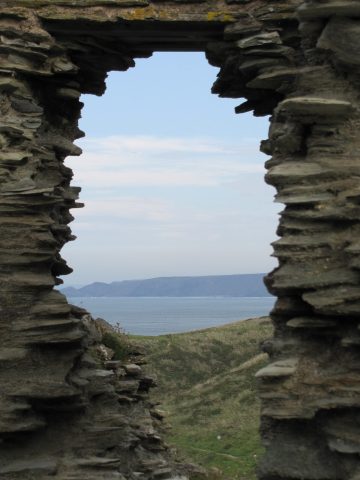
For those uneasy with heights, the bridge is a challenge. The drop below feels endless, and the wind can be fierce, forcing you to grip the railings. Yet that’s what makes the crossing memorable. Standing at its midpoint, you’re suspended between history and the vastness of the ocean, the waves crashing against the rocks far below. In the distance, the jagged outline of Cornwall’s coastline stretches into the haze.
Tintagel is where myth and reality blur so seamlessly that it’s hard to tell them apart. The bridge acts as a kind of time machine, connecting eras while reminding us that history isn’t static—it evolves as we do. The castle may be in ruins, and Arthur’s existence may remain unproven, but the place still draws people in. Perhaps because here, anyone can feel part of something larger—whether it’s the medieval past or the timeless struggle between man and nature.
The best time to visit is on a clear day, when the sea sparkles under the sun and the wind is gentler. But even in stormy weather, Tintagel has a raw beauty—the leaden waves, the low clouds, and the roar of the surf create a mood of quiet drama. Unlike more famous English castles, it’s rarely crowded, which only adds to its appeal. You can wander the paths at your own pace, descend to the beach, or simply sit on the cliffs, watching the ocean stretch endlessly before you.
The Tintagel Bridge isn’t just a way to reach the castle ruins; it’s an invitation to reflect on how we interact with history. It doesn’t try to recreate the past but offers a new way to experience it. Here, the line between old and new, fact and legend, is deliberately blurred. And maybe that’s why this place resonates so deeply—it leaves room for imagination, allowing each visitor to find their own connection to its enduring stories.