Tintagel is where history and legend blur. It sits on a jagged headland along Cornwall’s northern coast, carved from cliffs that drop into the Atlantic. The ruins are striking, but the real pull is the feeling of standing at the edge of the world, watching waves crash against rocks in a rhythm that’s played out for centuries. This landscape demands stories—of knights, kings, and magic—and Tintagel delivers one of the most enduring: the birthplace of King Arthur.
Long before the castle took shape, this headland mattered. Archaeologists have found traces of a Roman-era settlement, but Tintagel flourished between the 5th and 7th centuries as a stronghold of the kingdom of Dumnonia. It wasn’t just a military post; ships from the Mediterranean docked here, unloading wine, olive oil, and luxury goods. Fragments of pottery and glass still turn up in the ruins, proof of a trade network that once thrived.
The castle we see today was built in the 13th century by Richard, Earl of Cornwall, brother to King Henry III. Richard chose this site for its drama and myth. He built his fortress atop the headland, connected to the mainland by a narrow isthmus. But within a few centuries, the castle fell into ruin, its stones repurposed by locals. By the 19th century, only fragments remained—yet those fragments deepened its mystique. The Romantics latched onto Tintagel, framing it as the setting for Arthurian tales and medieval chivalry.
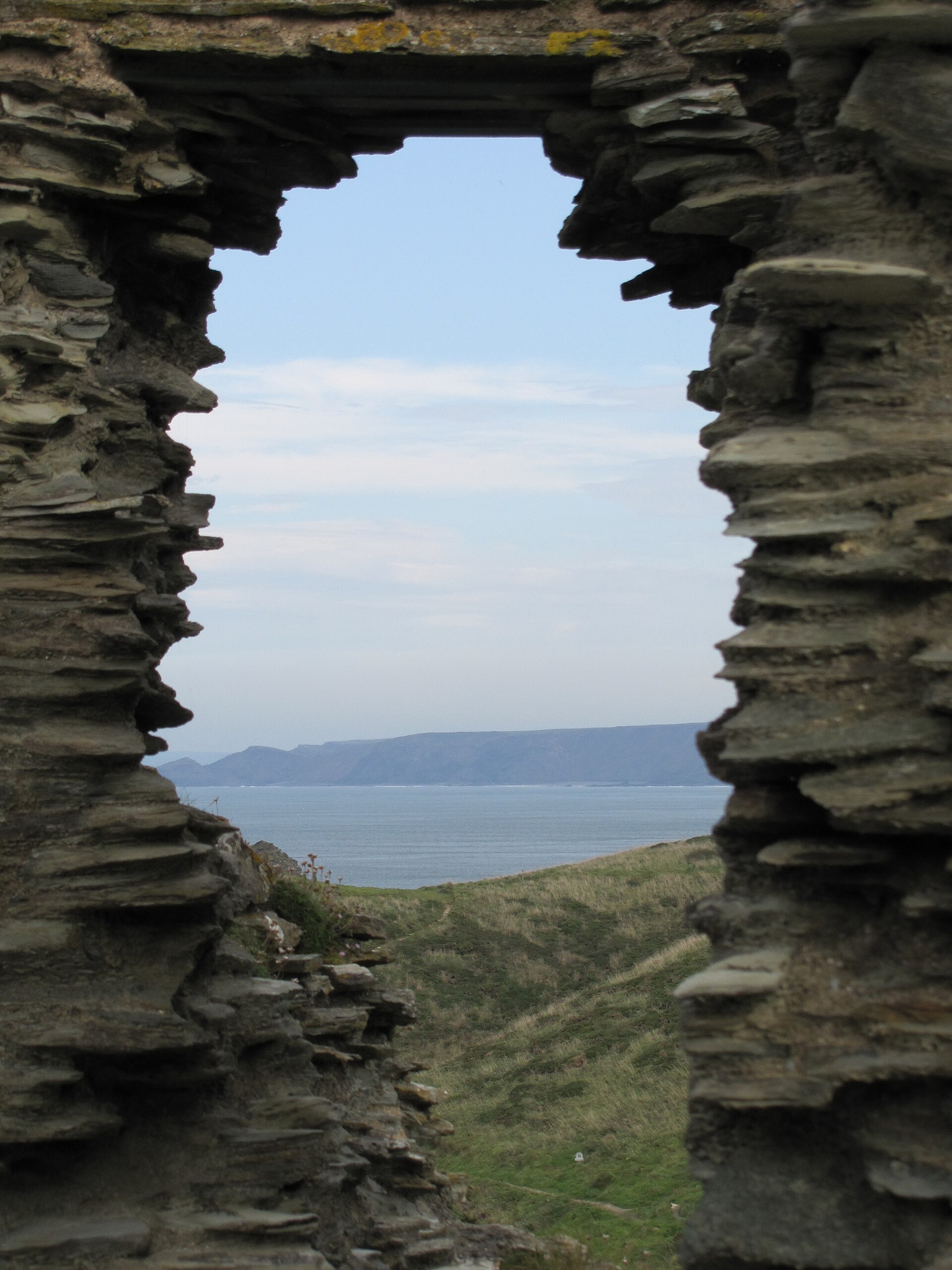
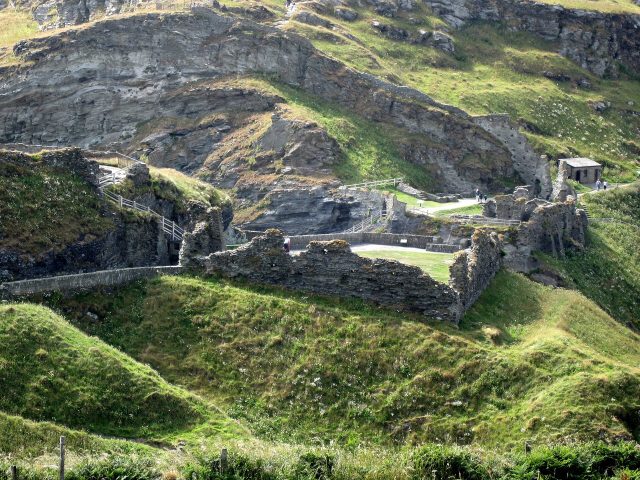
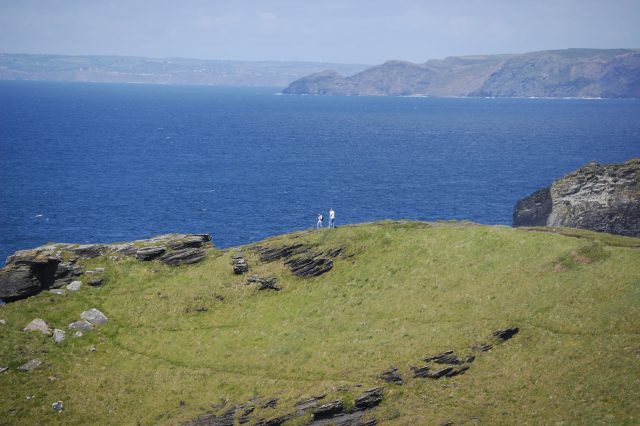
Walking through Tintagel today feels like stepping into a story. Paths wind along cliff edges, offering views of the ocean where the wind carries salt and seaweed. On clear days, the horizon stretches endlessly, revealing distant coves and offshore islands. When storms roll in, waves explode against the rocks, shaking the ground. The ruins scatter across the headland, their weathered stones blending into the landscape. The castle and cliffs feel like they’ve grown together over time.
The legend most tied to Tintagel is King Arthur’s. Medieval tales say Merlin hid the infant Arthur in a cave beneath the castle. Later, Geoffrey of Monmouth wrote in his *History of the Kings of Britain* that Tintagel was where Arthur was conceived. Historians debate the truth, but for visitors, the legends are the draw. Tintagel’s appeal lies in its mystery—the way fact and fiction blur, as if the stories are part of the land itself.
The castle’s remains are a patchwork of eras. Medieval walls, tower outlines, and the gatehouse still stand. One evocative spot is Arthur’s Hall, where legend says the Round Table knights gathered. Excavations in the 19th century found artifacts suggesting this area was important in the Middle Ages. But much of what you see today is later interpretation. The most striking modern addition is the 2019 bridge, spanning the gap between the headland’s two halves. It doesn’t mimic the past; it contrasts with it, reminding you that Tintagel is both a relic and a living place.
A visit to Tintagel is as much about the landscape as the ruins. Coastal paths lead past heathland, hidden coves, and cliffs crowded with seabirds. Gulls cry overhead, and seals bark in the water below. Locals say time moves differently here, following the tides instead of the clock. You could spend hours wandering, sitting on a rocky outcrop, or watching light shift over the water. If the weather holds, the sunset over the Atlantic turns the sky gold and violet before fading into the dark.
Tintagel is managed by a conservation charity and stays quieter than more famous English castles. That’s part of its charm. Arrive early or late, and the place feels intimate, as if the past is just within reach. Even in peak season, the atmosphere lingers because the history and setting are too vast to be overshadowed.
What makes Tintagel unforgettable is the way it resists definition. Some leave feeling they’ve glimpsed something ancient; others just want to return. There are no clear lines here—between history and myth, past and present. That ambiguity is its magic. The castle on its cliff reminds you that history isn’t just dates and facts; it’s woven from lives, dreams, and misconceptions. If you’re in Cornwall, make the trip. Stand where the wind meets the sea, and listen to the waves that have witnessed centuries.