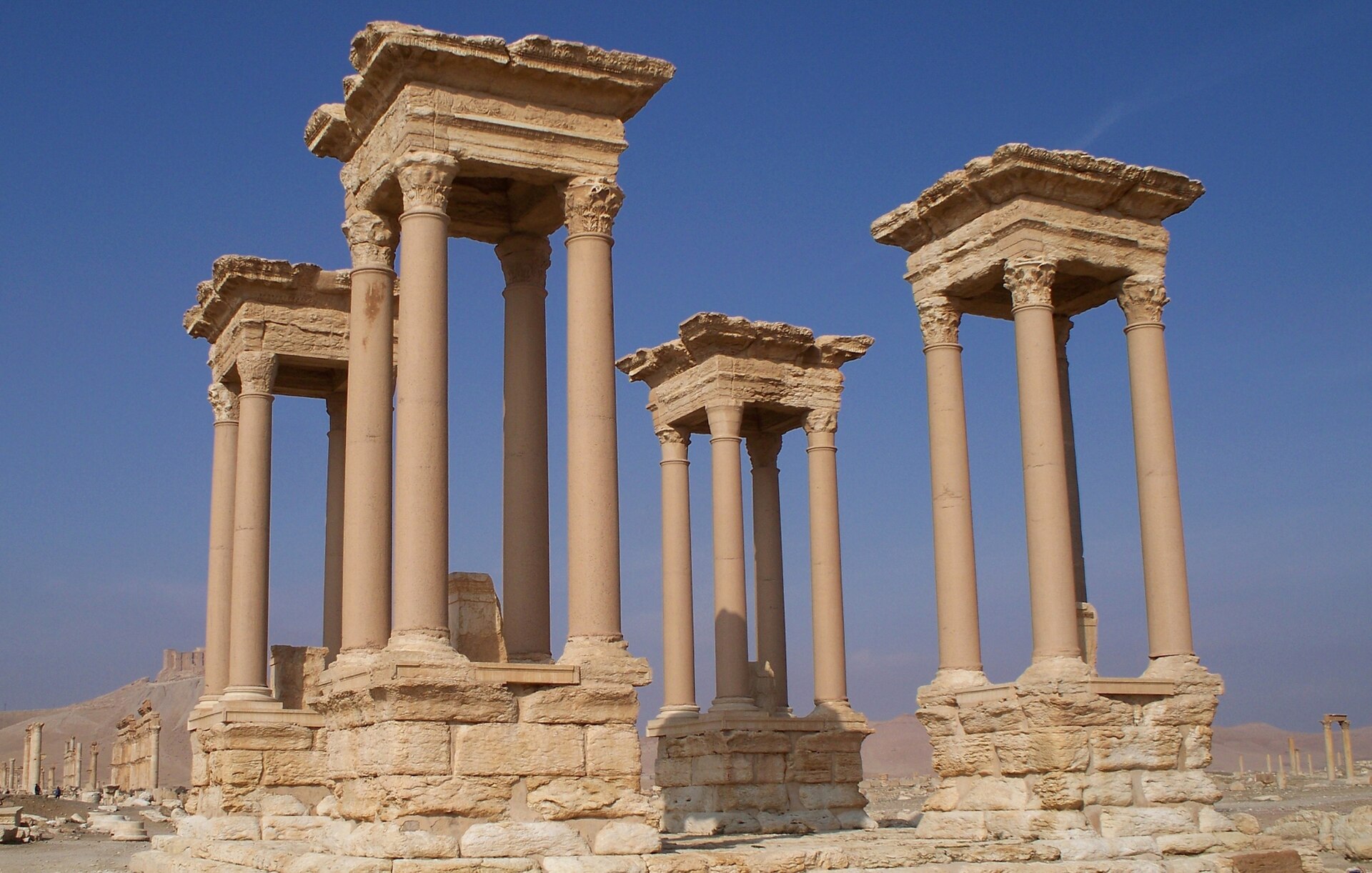
Standing at the crossroads of Palmyra’s ancient streets, the Tetrapylon feels like a silent sentinel, watching over the ruins of a city that once thrived at the heart of the world. Even among the scattered remnants of antiquity, this structure commands attention—not for its grandeur, but for the precision of its design. Four clusters of columns, arranged in a perfect square, mark the intersection where two of Palmyra’s most important thoroughfares once met. The surviving bases and a handful of upright pillars are all that remain, yet they still convey the deliberate symmetry of a monument built to endure.
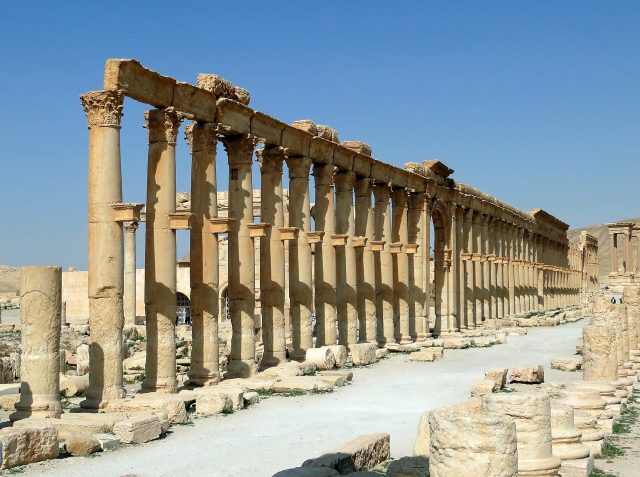
The Tetrapylon was erected sometime between the second and third centuries, a period when Palmyra flourished as a vital hub along the Silk Road. Caravans laden with silk, spices, and precious stones passed through its gates, connecting the Roman Empire to the East. The city’s wealth was legendary, and its architecture reflected both ambition and influence. The Tetrapylon stood at the literal and symbolic center of this prosperity, where the decumanus and cardo—the main east-west and north-south streets—intersected. It was more than a landmark; it was a gathering place, a point of reference for merchants, soldiers, and travelers who shaped the city’s destiny.
What makes the Tetrapylon particularly striking is how it blends Roman urban planning with local craftsmanship. The columns, each a single piece of Egyptian granite, were an extravagant choice—granite was rare and costly, a deliberate display of Palmyra’s affluence. Their Corinthian capitals, carved with acanthus leaves, followed classical Roman styles, yet the execution bore the marks of local artisans. Statues of gods or rulers once stood between the columns, though no trace of them remains today. The structure was as much a statement of power as it was a functional part of the city’s layout.
Time and conflict have not been kind to the Tetrapylon. In 2015, much of it was destroyed, another casualty of the deliberate targeting of Palmyra’s heritage. The damage was severe, but not irreversible. Restoration efforts have since pieced together what could be salvaged, though the monument now exists in a state of fragile reconstruction. The scars of war are visible, a reminder of how easily history can be undone. Yet even in its diminished form, the Tetrapylon retains a quiet authority, as if the stones themselves refuse to let the past fade entirely.
Walking among its columns, it’s impossible not to imagine the life that once pulsed through this place. Merchants haggling over prices, soldiers returning from distant campaigns, pilgrims making their way to the temples—all would have passed through this intersection. Decisions that shaped the city’s fate may have been made here, in the shadow of these very pillars. The Tetrapylon was a crossroads in every sense, a place where cultures, languages, and ideas converged. Palmyra itself was a bridge between East and West, a city where Roman order met Eastern tradition, and the Tetrapylon embodied that fusion.
The atmosphere today is one of stillness, broken only by the occasional visitor or the whisper of wind through the desert. The silence feels heavy, as if the stones are holding their breath, waiting for the crowds that once filled these streets to return. The scent of spices and incense is long gone, replaced by the dry, dusty air of the Syrian steppe. Yet the sense of history lingers, tangible in the way the light falls across the ruins or how the shadows stretch at dusk. Palmyra was never just a city; it was a meeting point of civilizations, and the Tetrapylon was its heart.
Under UNESCO protection, the future of Palmyra’s monuments remains uncertain. The damage inflicted by war cannot be fully undone, and some losses are permanent. But the Tetrapylon endures, even if only in part. It stands as a testament to what was, a fragment of a world that once connected empires. To visit it is to step into a story that spans centuries, where every stone has a voice, and every column holds a memory.
There’s a melancholy beauty in the way the Tetrapylon has weathered time and turmoil. It reminds us that human hands can build monuments to last millennia, yet those same hands can also reduce them to rubble in an instant. The contrast is stark, but it’s also a part of the monument’s story now. The Tetrapylon is no longer just a relic of Palmyra’s golden age; it’s a symbol of resilience, a quiet defiance against the forces that sought to erase it.
In the end, the Tetrapylon is more than just an architectural curiosity. It’s a place where the past feels alive, where the weight of history presses against your skin. Standing there, you understand that some things never truly disappear—they simply wait, buried in the sand, for someone to remember.