The Royal Theatre in Hobart is one of those rare places that feels suspended in another era, as if the past hasn’t quite let go. Built in the mid-19th century, it holds the distinction of being Australia’s first continuously operating theatre, a quiet but enduring witness to the city’s cultural evolution. Over the decades, its walls have absorbed the energy of countless performances—touring companies from Europe, local actors making their debuts, and audiences who filled the seats night after night, hungry for stories and spectacle. Today, the theatre remains a living space, not just a relic, where the line between history and the present blurs with every show.
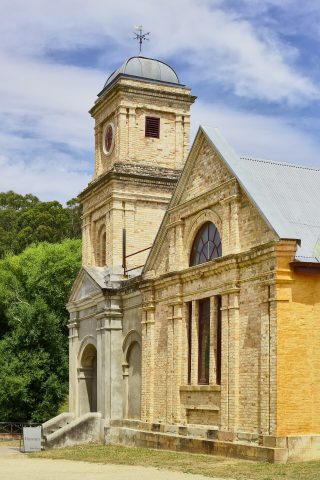
The building itself is a study in understated elegance, a reflection of its colonial origins. The façade doesn’t demand attention with grand flourishes, but there’s a careful balance in its proportions, a nod to the European theatrical traditions that inspired it. Inside, the original details still breathe—wooden balconies worn smooth by time, delicate plasterwork, and chandeliers that cast a warm, flickering light. The auditorium is intimate, small enough that the distance between stage and audience feels almost nonexistent. It’s the kind of space where a whisper carries, where the energy of a performance lingers long after the curtain falls.
Hobart in the 19th century was a place of contradictions—a remote penal colony on the edge of the known world, yet also a growing settlement where free settlers sought new beginnings. The Royal Theatre emerged as a cultural anchor in this rough-and-tumble environment, offering an escape from the hardships of daily life. Here, social divides momentarily dissolved as audiences gathered to watch Shakespearean dramas, lighthearted operettas, and lively vaudeville acts. The theatre wasn’t just entertainment; it was a vital thread in the fabric of the community, hosting balls, charity events, and gatherings that brought people together in ways few other places could.
Like many historic buildings, the Royal has faced its share of challenges. Over the years, it has been renovated and restored, though always with an eye toward preserving its original character. In the 1980s, it nearly met the wrecking ball to make way for modern development, but public outcry saved it. Today, it stands as a protected heritage site, a decision that feels entirely justified. There are few places in Australia where the past feels so palpably alive, where the weight of history isn’t just preserved but actively experienced.
The theatre’s programming has evolved with the times, though it has never lost its distinct identity. While you might catch a contemporary play or an experimental performance by a local troupe, the Royal doesn’t try to compete with the grand stages of Sydney or Melbourne. Instead, it embraces its own rhythm, offering something more personal. There are no extravagant sets or high-tech effects here—just the raw, unfiltered connection between performers and their audience. It’s the kind of place where a small gesture on stage can feel monumental, where the absence of spectacle makes the experience all the more intimate.
Beyond the performances, the Royal offers a glimpse into the life of a theatre that has seen generations come and go. Walking through its narrow corridors, you can almost hear the echoes of past audiences—the rustle of programs, the murmur of anticipation, the applause that once filled the air. Even on quiet days, when the seats are empty, there’s a sense of life humming just beneath the surface. It’s as if the building itself remembers what it’s been through, and that memory lingers in the air.
Hobart is often overlooked as a cultural destination, dismissed as a sleepy port city with little to offer beyond its scenic landscapes. But places like the Royal Theatre remind you that the city has depth, a quiet resilience shaped by its history. The theatre isn’t just a venue; it’s a symbol of how art can endure, how it can bring people together across decades and social divides. In an age where so many cultural spaces feel sterile or overly commercialized, the Royal remains refreshingly authentic. It doesn’t try to be anything other than what it is—a place where the past and present coexist, where every performance is a continuation of a story that began nearly two centuries ago.
For locals, the theatre is a point of pride, a piece of their shared history. For visitors, it’s a chance to step into a different time, to experience Hobart not just as it is today, but as it once was. Whether you come for a play, a tour, or simply to soak in the atmosphere, the Royal offers something rare: a sense of connection—not just to the art on stage, but to the people who have walked through its doors over the years. It’s a reminder that some places aren’t just built; they’re lived in, loved, and passed down, one performance at a time.