Port Arthur sits on the Tasman Peninsula, an hour’s drive from Hobart, where the wind moves through empty courtyards and the stone walls seem to hold the weight of voices long gone. This is not just a place where history is preserved—it lingers in the air, in the creak of old carts, the echo of hammers from the dockyard, the scuff of boots on cobblestones. If you stand still and listen, the past feels almost tangible.
Established in 1830 as a British penal settlement, Port Arthur was designed to house convicts transported to Australia. The crimes that sent them here ranged from petty theft to murder, but this was no ordinary prison. It was an experiment in control, where punishment and reward shaped daily life. Good behaviour could ease a prisoner’s conditions, while defiance led to solitary confinement or hard labour. The architecture reflected this system—barracks, a church, a hospital, and workshops arranged to monitor every movement.
The most feared part of the settlement was the separate prison block, reserved for the most dangerous or unruly inmates. Here, men were kept in near-total isolation, confined to narrow cells with little light or air. Today, visitors can step inside these spaces, standing in the dim silence and wondering how anyone endured years of such confinement. Many didn’t. Some lost their minds.
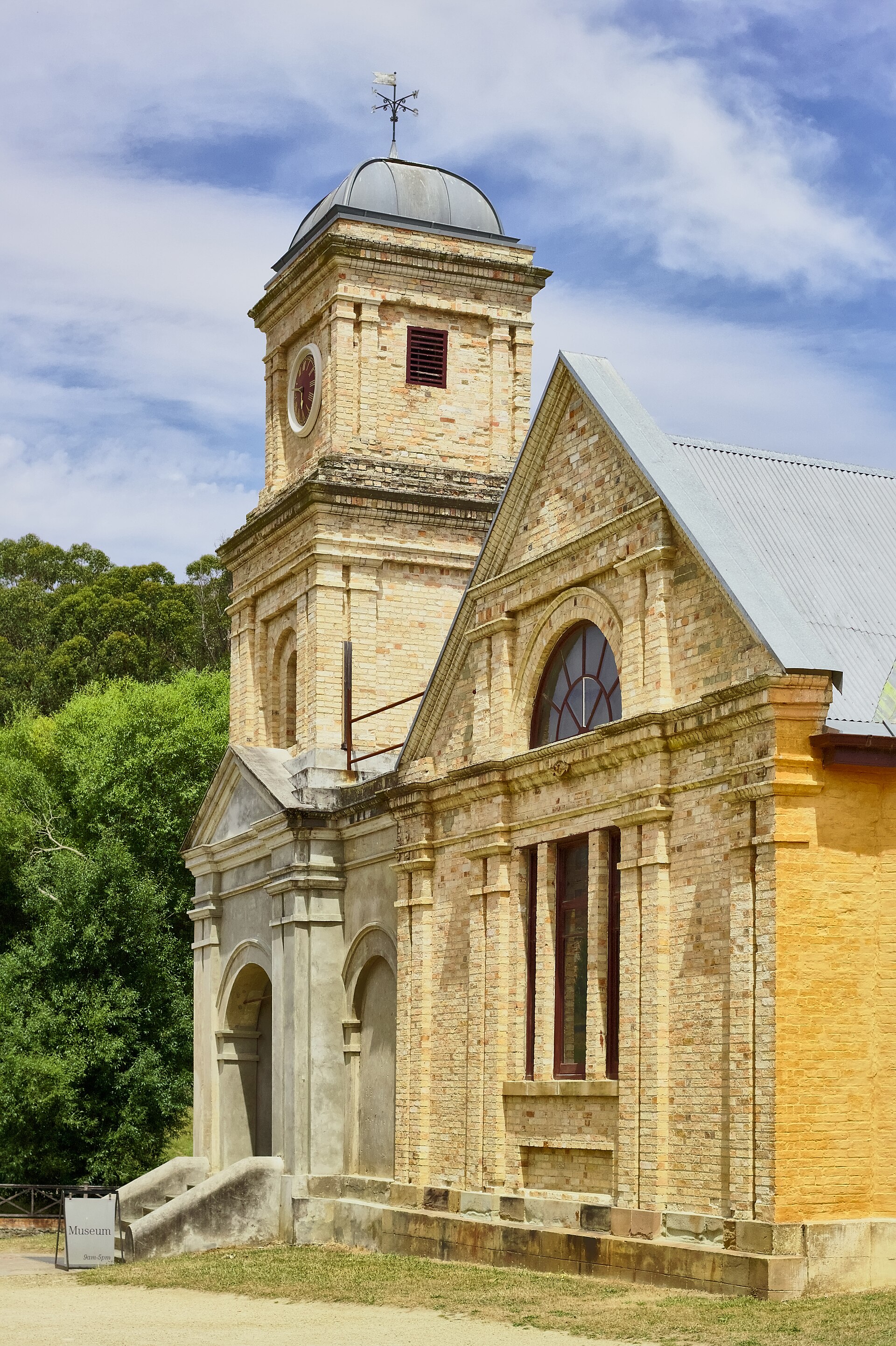
Yet Port Arthur was more than just a place of punishment. It was a functioning community, albeit one built on forced labour. Convicts worked in the dockyards, constructing ships, or quarried stone for buildings. Some were skilled craftsmen, their work still visible in the intricate carvings on doors, the wrought-iron grilles, and the precise stonework. Workshops produced clothing, shoes, and furniture. There were schools, a church—even a semblance of normal life, however constrained.
The Church of St David, built in 1836, served both convicts and free settlers. Now, only its ruins remain—cracked walls, the remnants of pews, a weathered altar. Nearby lies the cemetery, where those who never lived to see freedom were buried. The headstones, worn by time, mark lives that ended too soon.
By 1877, the penal settlement had closed, and the buildings began to decay. For decades, the site faded from memory, until the 20th century brought renewed interest. Today, Port Arthur is one of Australia’s most significant historical sites, where tours explore not just the system of punishment but the human stories behind it—the lives of prisoners, guards, and the families who lived alongside them.
In 1996, Port Arthur became the site of a national tragedy when a lone gunman opened fire in the café, killing thirty-five people. The country was shaken, and the event left another layer of history on the land. Now, a memorial garden stands where the café once was, a quiet place of reflection.
Walking through Port Arthur is like stepping into another time. You wander the empty yards, peer into the cells, stand by the water’s edge. The cry of gulls, the rustle of wind through the trees—it’s easy to imagine what life here must have been like in the 19th century. This is an open-air museum, but its power doesn’t come from exhibits. It comes from the questions it raises: What does freedom mean? And what lengths will people go to take it away?