Hobart has a way of slowing time down, and the Royal Tasmanian Botanical Gardens is one of those rare places where the world feels still. There’s no hum of the port, no traffic, no gulls crying overhead—just the rustle of leaves, the quiet lap of water, and the occasional murmur of visitors who somehow find themselves speaking softer, as if the gardens demand it.
Stretching along the banks of the Derwent River, these gardens began in 1816, when Tasmania was still known as Van Diemen’s Land—a remote, rugged place at the edge of the known world. They weren’t just meant to be beautiful; they were designed as a living laboratory, a place to gather plants from across Australia and beyond. The early directors believed almost anything could grow here, from native eucalypts to exotic palms, and today the collection holds over six thousand species.
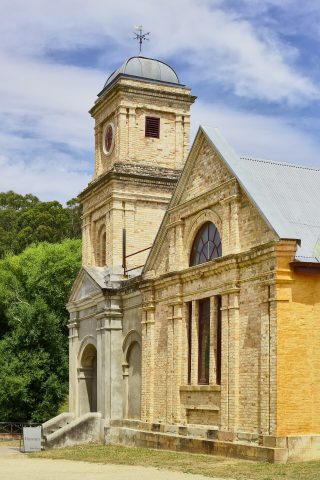
The paths wind between flowerbeds, curve around ponds, and lead to old pavilions where seeds were once stored. The oldest structure is a mid-19th century sandstone conservatory, its walls now softened by moss, its interior kept warm and humid for tropical plants that would otherwise never survive Tasmania’s cooler climate.
The Japanese Garden arrived later but quickly became a favorite. Designed by Japanese craftsmen, it feels like a quiet corner lifted from another country—stone lanterns, a stream trickling over smooth rocks, and maples that blaze red in autumn. It’s a place where the careful balance of nature and human touch is especially clear.
Tasmania’s unique plants take center stage here. The island is famous for its biodiversity, with many species found nowhere else. There’s the towering Tasmanian blue gum, a eucalyptus that can reach seventy meters high, and delicate native orchids that hide in the undergrowth. Rhododendrons bloom in summer, camellias in winter, and every season brings something new to notice.
For those who want to learn more, guided walks explain the gardens’ history and ecology, but there’s no need to follow a set route. You can wander the paths, watching how the light shifts through the trees or how the scent of flowers changes with the breeze.
The gardens are woven into Hobart’s story. In the 19th century, governors, scientists, and explorers strolled these paths. Some of the trees still standing today were planted in those early years—a grand oak marking the gardens’ opening, a plane tree said to have shaded Charles Darwin during his visit. By the 20th century, the gardens had become a public space, open to everyone.
There are no strict rules here. You can sit on a bench by the duck pond, cross a small bridge over a stream, or spread out a picnic on the lawn. In summer, the grass fills with families; in winter, concerts sometimes drift through the air. The café near the entrance serves tea and coffee, a small comfort on cooler days.
For locals, the gardens are part of everyday life. People come to jog, take photos, or walk their dogs. Children learn about plants, insects, and birds through educational programs, and the small shop sells seeds and seedlings—little pieces of the gardens to take home.
What makes the Royal Tasmanian Botanical Gardens special is how effortlessly history, science, and nature come together. You can spend an hour here or a whole day. There’s no pretense, no spectacle—just the quiet presence of old trees, the soft sound of water, and the sense that some places, like this one, are meant to be savored slowly.