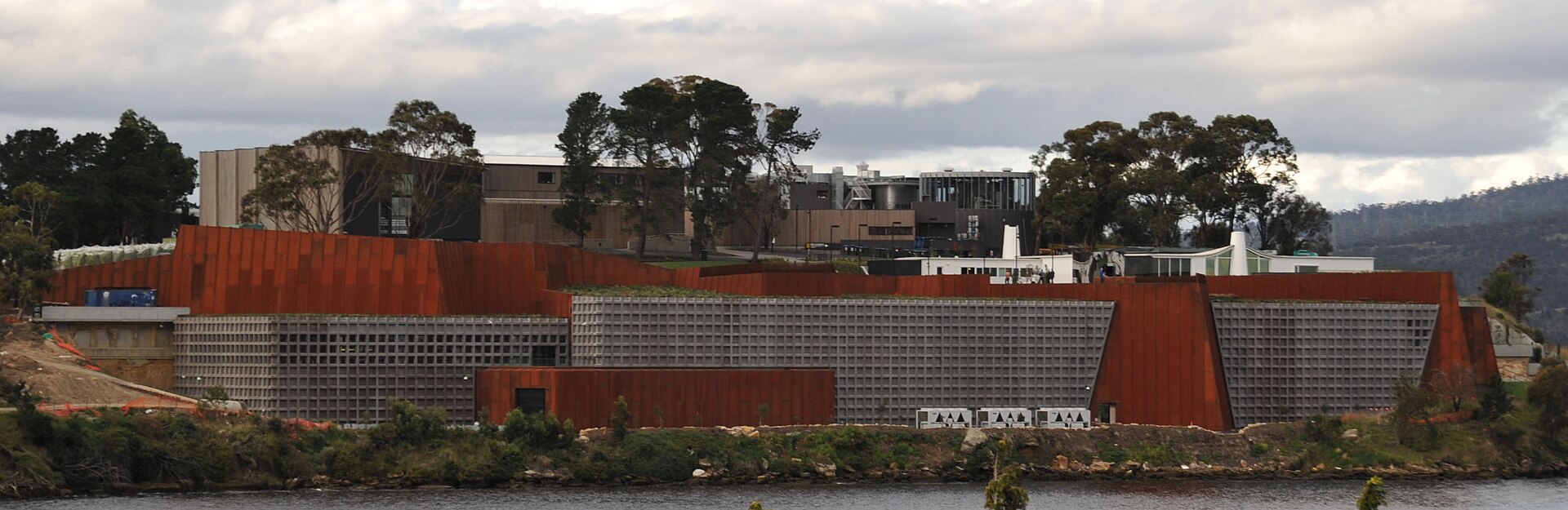
MONA, the Museum of Old and New Art in Hobart, isn’t just another gallery. It’s a place that defies easy description, challenging what a museum should be. Perched on the banks of the Derwent River, its raw concrete walls and sharp modern lines blend into the landscape rather than dominate it. The building feels like part of the terrain, its angular forms contrasting with the soft curves of the surrounding hills and water. There’s no sense of the usual museum solemnity here—no hushed reverence or carefully curated distance. Instead, it’s a space designed to provoke thought, debate, and even a little discomfort, just as its founder, David Walsh, intended.
Walsh, a mathematician-turned-collector with a taste for the unconventional, opened MONA to the public in 2011 after decades of amassing a private collection. But this wasn’t just about displaying art; it was about rethinking its role in modern life. The museum sits on the grounds of a former winery, and that connection to the land and its history is palpable. Walsh didn’t follow the traditional museum playbook. Instead, he created a place where art rubs shoulders with science, philosophy, and even gambling—reflecting his own eclectic interests. The result is a space that feels more like a personal journey than a formal exhibition.
The architecture is a key part of the experience. The building was designed to immerse visitors rather than simply showcase art. Winding corridors, unexpected level changes, and dramatic shifts in light and shadow make the journey through MONA feel like stepping into a living artwork. The underground galleries are particularly striking, with their high ceilings and minimalist lighting creating an almost cathedral-like atmosphere. There are no traditional labels here. Instead, visitors are given handheld devices that offer context, commentary, and even a touch of irreverence, depending on the exhibit.
The collection spans millennia, from ancient artifacts to cutting-edge contemporary works. You’ll find Egyptian mummies, classical sculptures, Renaissance paintings, and pieces by modern artists. But the real draw is the contemporary collection, where art often blurs the line between provocation and profundity. One of the most talked-about installations is a working model of the human digestive system, complete with real-time processes that some visitors find fascinating and others find unsettling. Another interactive piece responds to movement, shifting and changing as people walk past. These aren’t just exhibits; they’re experiences that demand engagement.
MONA isn’t a place for passive observation. The art here doesn’t just hang on walls—it challenges, unsettles, and sometimes even offends. A permanent exhibition on mortality features a mechanical human figure that gradually decomposes, forcing visitors to confront ideas about life and death that most people prefer to avoid. It’s not shock value for its own sake; it’s an attempt to start conversations about things that matter. Other works explore themes of love, power, and human nature, often in ways that are as thought-provoking as they are unconventional.
But it’s not all provocation. There are quieter moments too. A gallery dedicated to ancient artifacts offers a glimpse into lives lived thousands of years ago, while the museum’s library houses rare books and manuscripts for those who prefer a slower pace. Upstairs, a restaurant with floor-to-ceiling windows overlooks the river and mountains, providing a perfect spot to reflect on what you’ve seen—or to simply catch your breath after the emotional rollercoaster of the galleries below.
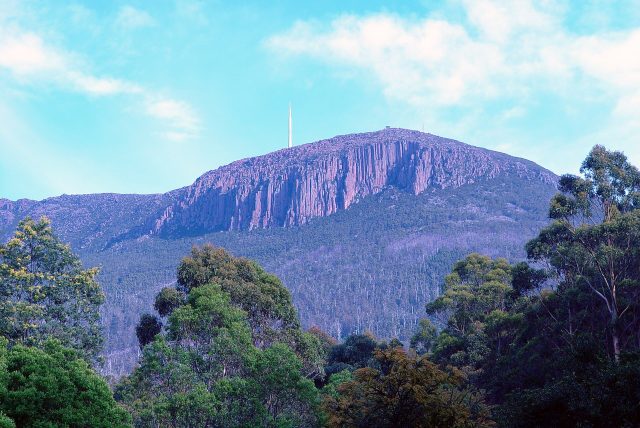
Hobart itself is a city of contrasts. As Australia’s southernmost capital, it’s a place where colonial history meets modern life, where rugged wilderness sits alongside urban charm. MONA has become one of its defining landmarks, not because it fits neatly into the idea of what a museum should be, but because it refuses to. There’s no clear division between old and new here—just as in life, the past and present coexist, sometimes uncomfortably, sometimes beautifully.
Visiting MONA is an experience that stays with you long after you leave. Whether you’re an art lover or just a curious traveler, there’s something here for everyone—though you might not always like what you find. It’s not a place for easy answers or familiar comforts. Instead, it’s a space that asks questions, challenges assumptions, and leaves you with more to think about than when you arrived. If you’re looking for a traditional museum, this isn’t it. But if you’re open to something different, MONA might just change the way you see art—and maybe even the world.