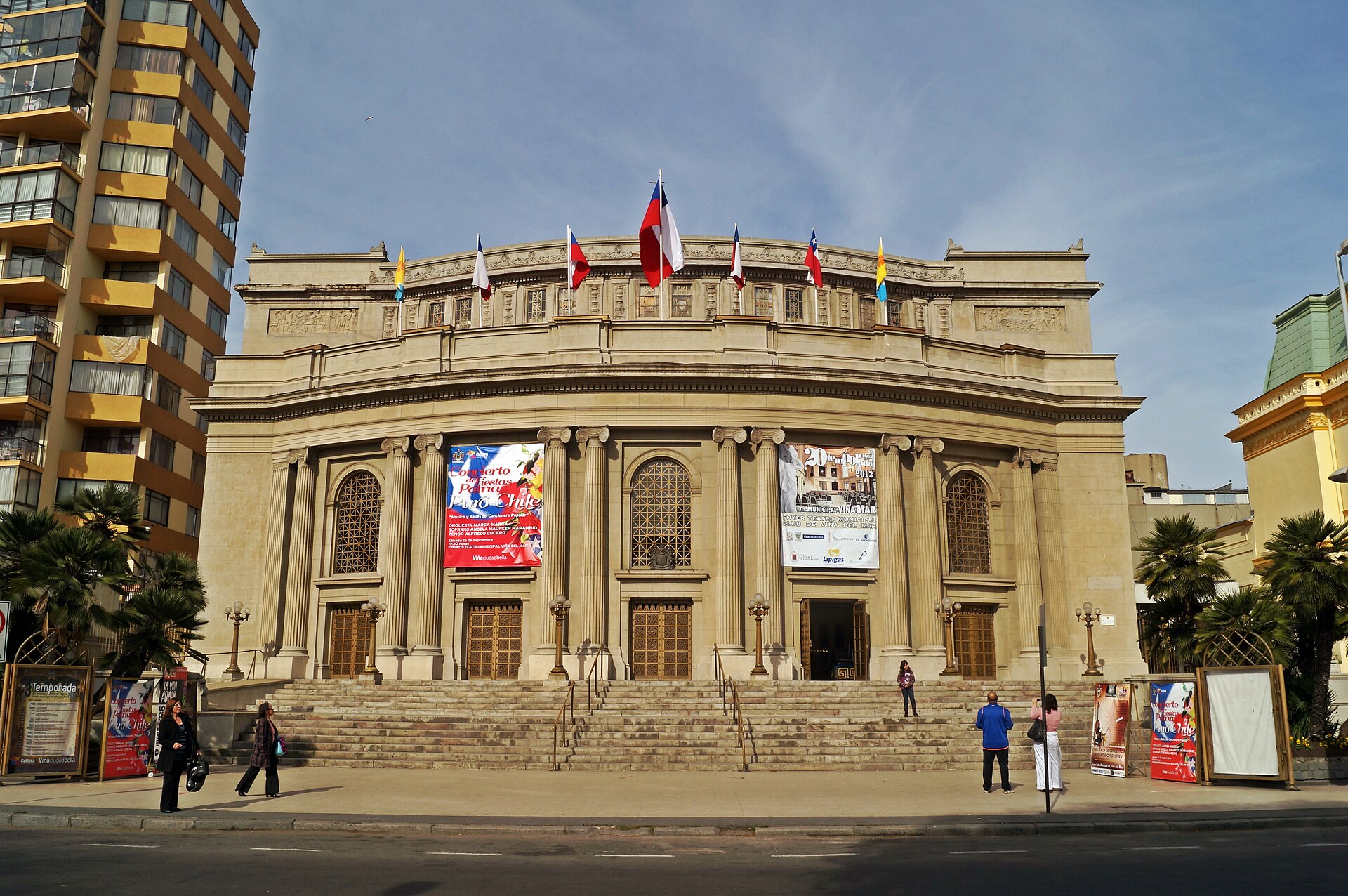
Viña del Mar’s Teatro Municipal is one of those rare places where time seems to pause, preserving the spirit of an era long past. Built in the early 20th century, it wasn’t just another building—it became a cornerstone of the city’s cultural identity, where art and architecture merged into something greater. At the time, Viña del Mar was transforming from a quiet coastal village into a fashionable resort, and the theater emerged as its cultural heartbeat, a place where locals and visitors alike gathered to experience something beyond the ordinary.
The theater’s architecture is a graceful blend of neoclassical elegance and Chilean charm. Its façade, with its columns and tall windows, echoes the grand European theaters of the 19th century, yet there’s something distinctly local in its lightness, its sunlit simplicity. Inside, the original decor still lingers—delicate plasterwork, crystal chandeliers, and polished wood paneling—creating an atmosphere that feels both grand and intimate. Even if opera or ballet isn’t your usual interest, the space itself invites you to slow down, to take in the details that make it special.
The theater’s history is deeply intertwined with Viña del Mar’s rise as a cultural hub. In the 1930s, it wasn’t just a venue for performances but a gathering place for society—charity concerts, political meetings, and evenings where artists and intellectuals from Santiago and beyond would converge. The city was already gaining a reputation for its festivals, and the theater played a central role in shaping that identity. Today, it continues that legacy, hosting everything from classical productions to modern experimental works, adapting to the changing tastes of its audience.
One of the theater’s most enduring connections is with the Viña del Mar International Song Festival, an event that has drawn global stars to the city for decades. While the festival itself takes place at a larger venue, the Teatro Municipal often serves as its cultural counterpart, hosting press conferences, intimate concerts, and artist meet-and-greets. For many Chileans, the festival and the theater are inseparable symbols of the city—both evoke the warmth of summer, the joy of music, and the sense of celebration that defines Viña del Mar.
Stepping inside, the theater feels like a world apart. The auditorium, with its red velvet seats and gilded accents, strikes a balance between opulence and intimacy. There’s no sense of cold formality here—just the feeling of a space where every performance is an event. Even on quiet weekdays, the theater hums with history. You can wander up to the balcony for a view of the stage and the stalls below, or linger in the foyer, where photographs of past performers line the walls, each one a reminder of the artists who have stood on this stage over the years.
But the Teatro Municipal isn’t just a relic of the past. Today, its program reflects the city’s evolving cultural scene, offering everything from classical plays to contemporary dance, jazz concerts, and children’s shows. The theater strives to appeal to a broad audience, welcoming both longtime opera enthusiasts and younger crowds drawn to experimental performances. In the summer, when Viña del Mar is at its liveliest, the theater becomes a quiet refuge—a place to escape the heat and noise and lose yourself in the world of live performance.
For visitors, the theater offers a chance to experience Chilean culture beyond the usual tourist trail. Even if you don’t catch a show, it’s worth stepping inside to soak in the atmosphere. Occasionally, guided tours provide a deeper look into the theater’s history and its role in the city’s life. And if you’re lucky, you might stumble upon a rehearsal or a small concert—moments that often leave a lasting impression.
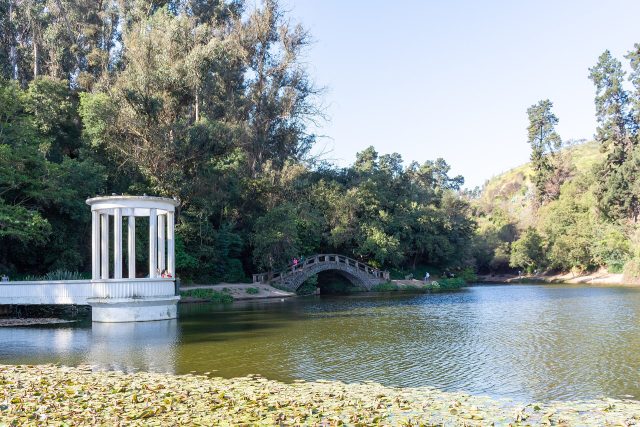
Viña del Mar is often called the "Garden City," and the Teatro Municipal embodies that spirit. It doesn’t dominate the landscape but fits naturally into it, surrounded by palm trees, parks, and quiet streets. There’s no rush here, no urban frenzy—just a steady rhythm of its own. The theater lives on, not as a monument to the past, but as a living space where art, history, and beauty remain accessible to anyone who seeks them.