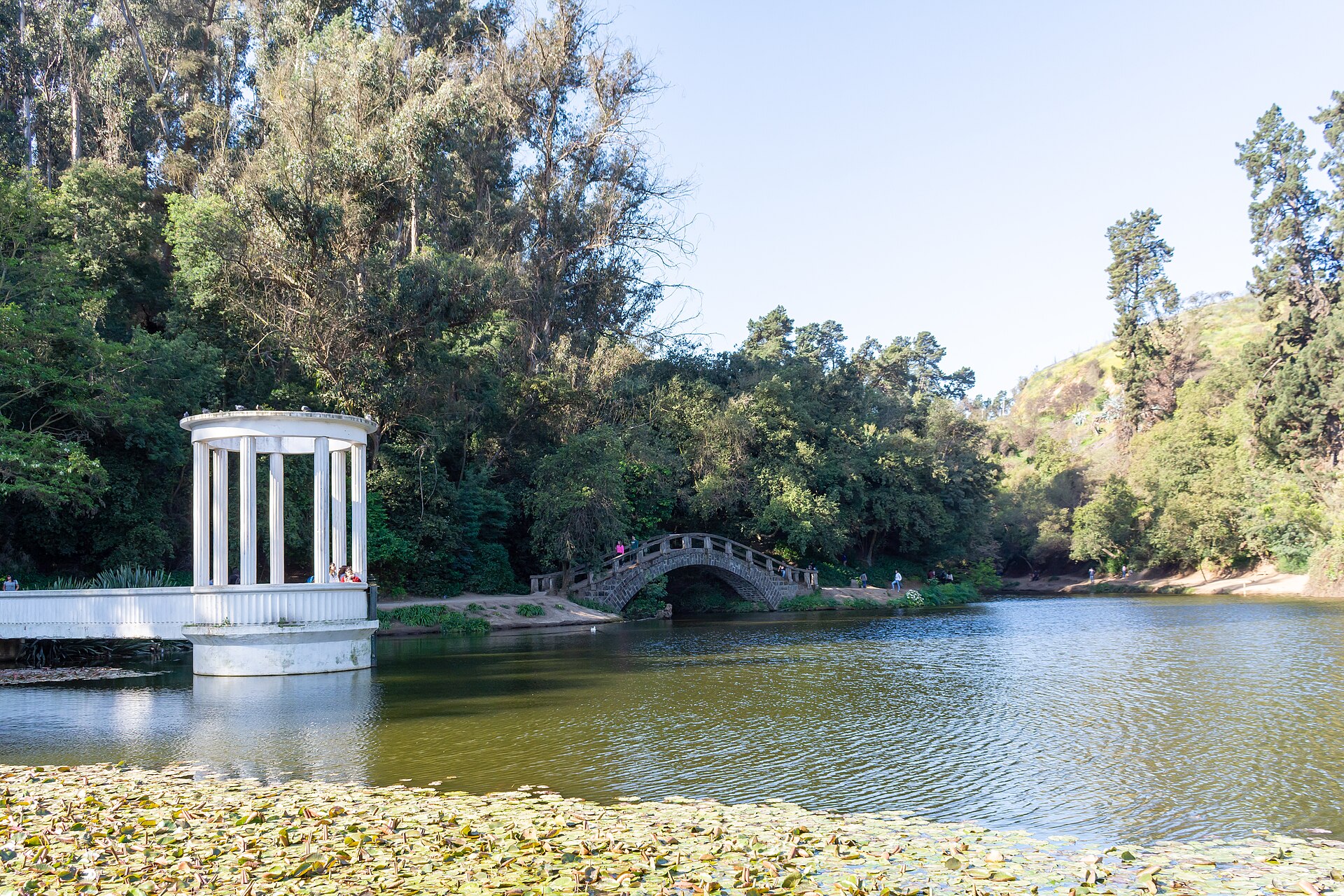
Viña del Mar’s National Botanical Garden is one of those rare places where nature and history feel inseparable, as if time moves at its own unhurried pace. Tucked within the heart of this coastal city, the garden sprawls across rolling hills, where every bend in the path reveals something new—a dense thicket of exotic plants, a quiet pond mirroring the sky, or a towering tree brought here from some distant corner of the world. It’s not just a collection of flora; it’s a living museum where Chile’s native plants coexist with species from across the globe, all thriving under the same sun.
The story of this place begins in the early 20th century, when it was part of the private estate of the Vergara family, one of the most prominent in the region. By 1918, the property had passed into state hands, and in 1951, it was officially designated as a botanical garden. Over the decades, the grounds expanded, new species were introduced, and today, the garden is home to over three thousand plants, many of them rare or endangered. A particular focus is placed on Chile’s native flora, including unique endemic species that can’t be found anywhere else.
The architecture here is as compelling as the plants themselves. The original estate buildings, constructed in the early 1900s, still carry the elegance of their time—thick stone walls, high ceilings, wooden beams, and large windows that flood the interiors with light. The main house, surrounded by ancient trees, stands as a reminder of the aristocratic life that once filled these grounds. Now, it houses administrative offices and a small museum where visitors can learn about the garden’s history and the people who shaped it. Nearby, greenhouses maintain a carefully controlled climate for plants that need warmth year-round.
One of the garden’s highlights is its collection of cacti, gathered from across South America. Here, you’ll find everything from towering giants that stretch several meters high to tiny species barely visible among the rocks. The section dedicated to Chilean cacti is especially striking, showcasing plants that have adapted to the harsh conditions of the Atacama Desert. Equally captivating is the water garden, where lilies and lotuses float on the surface of ponds, surrounded by ferns and mosses. In warmer months, the garden comes alive with families picnicking, photographers framing the perfect shot, and nature lovers simply soaking in the quiet.
Beyond its role as a tourist attraction, the garden serves as an important scientific and educational hub. Researchers work here to preserve rare plant species, and programs for students of all ages offer insights into botany, ecology, and the region’s history. During the summer, guided tours provide deeper context, and for those who want to explore further, there’s a library filled with rare books on Chile’s flora. In recent years, the garden has also become a venue for cultural events—classical concerts, art exhibitions, and even open-air theater performances that blend seamlessly with the surroundings.
The atmosphere here is one of quiet tranquility. Unlike the bustling beaches of Viña del Mar, the botanical garden offers a retreat from the noise of the city. Walking its paths feels like stepping back in time, with old trees casting wide shadows perfect for sitting with a book or simply daydreaming. Mornings often bring a light mist that slowly lifts under the sun, while evenings fill the air with the scent of blooming flowers. Spring is especially magical, when everything bursts into color, and autumn paints the leaves in shades of gold and crimson.
Despite its scientific and cultural importance, the garden remains accessible to everyone. Entry is affordable, with discounts often available for children and seniors. The grounds are well-maintained, with paved paths, benches, and designated rest areas overlooking ponds or flowerbeds. For those planning a longer visit, there’s a café where you can grab a coffee or a light meal without leaving the garden. While summer brings more visitors, there’s always a quiet corner to be found, even in the busiest months.
Viña del Mar is often known for its beaches, casinos, and lively nightlife, but the National Botanical Garden offers a different side of the city—one that’s peaceful, unhurried, and full of natural beauty. It’s a place where you can spend hours wandering, watching the landscape shift with each step. There are no crowds rushing for photos, no pushy vendors—just nature, history, and silence. That’s probably why locals love it so much; it’s a part of their daily lives, a place to visit in any season, where the air is fresh and the world feels a little slower.