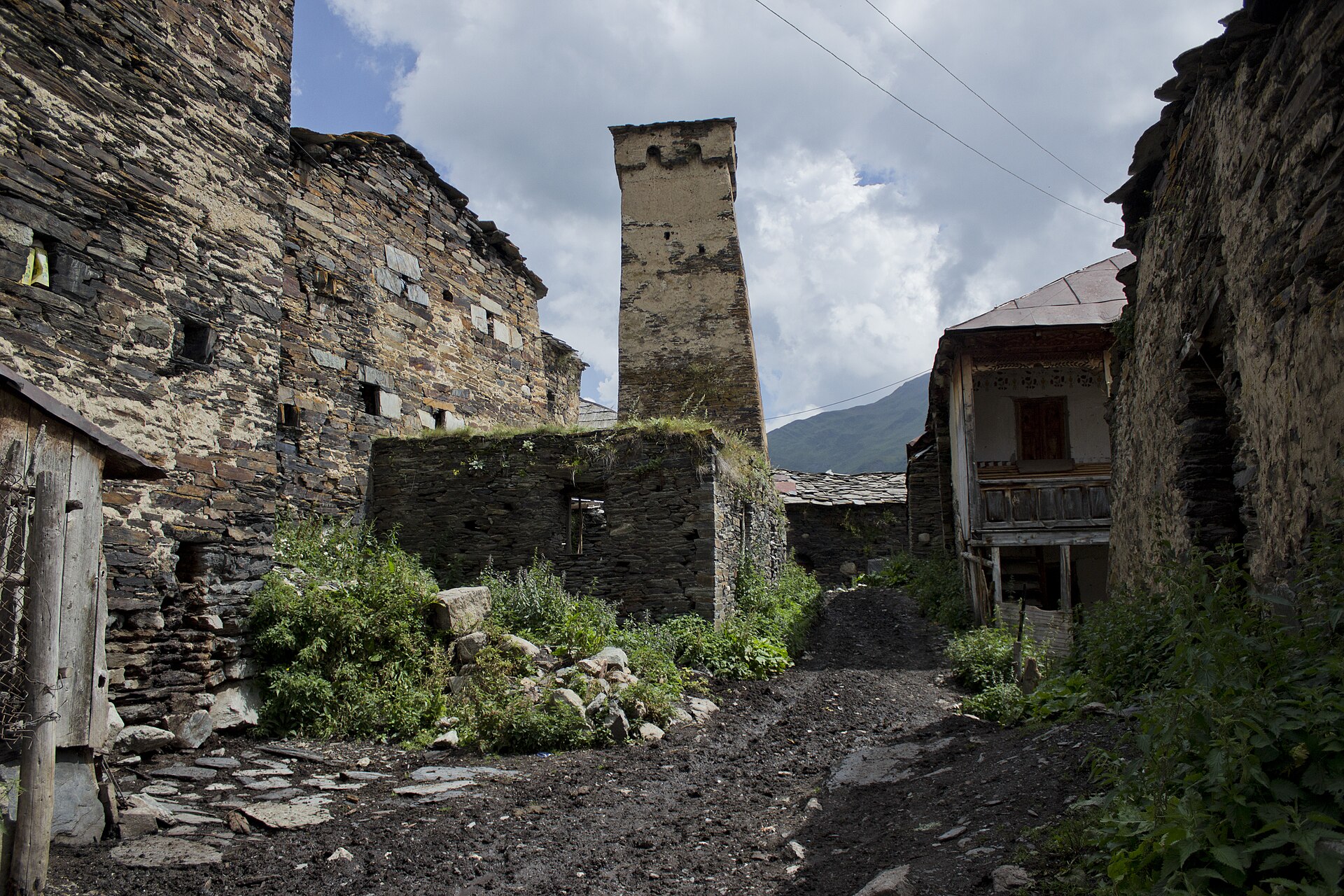
Perched high in the Caucasus Mountains, the Svan towers of Ushguli stand as silent witnesses to centuries of resilience. This cluster of stone structures sits in one of Europe’s highest permanently inhabited settlements. Built for survival, these towers were part of a society that thrived in isolation, where each stone laid helped secure a future in a harsh land.
Ushguli consists of four hamlets at nearly 2,200 meters above sea level. The towers here rise from the rugged landscape, their slate-gray walls matching the cliffs. Made from locally sourced schist without mortar, the stones fit together so precisely that the seams are hard to see. This dry-stone technique was essential—earthquakes demanded flexible structures, and the Svan people perfected a method that ensured durability.
The towers share a common design: narrow, tapering upward to three or five stories, with small slit windows. Inside, wooden ladders or notched logs connect the floors. The ground floor held livestock and supplies; the middle floors were living spaces. The upper levels, reached only by retractable ladders, became fortresses during raids. Families retreated upward, pulling the ladders behind them, and defended through narrow openings. Some towers still show signs of past conflicts—charred beams, pockmarked walls.
These towers are not relics. Many remain in use as storage sheds, workshops, or homes. Inside, you might find rusted farming tools beside centuries-old walls, a modern stove next to a traditional hearth, or a satellite dish on a roof that has sheltered generations. The people here preserve their heritage, passing down stories of the builders and customs that shaped their community. Weddings and festivals still follow rituals unchanged for hundreds of years.
In 1996, Ushguli became a UNESCO World Heritage Site as part of Upper Svaneti. Yet life here hasn’t stopped. The same towers that once protected families from invaders now shield them from harsh winters, when snow can isolate the village for months. In summer, visitors come to see a way of life that has endured. Even then, Ushguli stays quiet, far from crowds and commercialism.
Reaching Ushguli takes effort. The drive from Mestia, the regional hub, lasts about three hours along a winding mountain road. The route offers views of glaciers and jagged peaks, including Ushba, often called the Matterhorn of the Caucasus. Smaller Svan villages appear along the way, each with its own towers, but none as concentrated as Ushguli’s. Here, nearly twenty towers rise from the earth, their silhouettes unmistakable against the sky.
The village moves at its own pace. No busy streets or tourist traps—just cowbells and the cry of eagles. Life follows the seasons, not clocks. In the evenings, as the sun sets, the towers cast long shadows. Locals gather around fires, sharing stories passed down through generations. Their voices carry history that feels both personal and timeless.
For those who visit, Ushguli offers more than a glimpse into the past. It’s a place where time slows, where history lingers in every stone. The towers stand as proof of adaptation—how necessity became art in a land both beautiful and unforgiving. They show that history isn’t just in books; it’s etched into the landscape, waiting for those who look closely.