Pleven is a city where history isn’t confined to museums—it seeps through the cobblestones, lingers in the air, and surfaces in unexpected places. Among its quiet treasures is Storgosia, the ruins of an ancient Roman city tucked into the heart of modern Pleven. This isn’t just an archaeological site; it’s a place where layers of time unfold, revealing how empires rose and fell, how cultures intersected, and how ordinary lives were shaped by forces far beyond their control.
Storgosia emerged during the Roman Empire as a strategic outpost, a crossroads where major routes connected the Danube to the interior of the Balkans. It sat at the intersection of roads linking key Roman centers like Nicopolis ad Istrum, Serdica, and Philippopolis, making it a vital stop for legions, merchants, and travelers. By the 3rd and 4th centuries, the city flourished—public buildings, baths, and temples rose within its sturdy walls, which shielded it from the raids that plagued the empire’s frontiers. But as Rome’s power waned, so did Storgosia. By the 6th century, its streets had faded beneath the earth, leaving only fragments to hint at its past.
What remains today is modest but telling. Excavations, which began in the mid-20th century, have uncovered sections of the city’s fortifications, a basilica, baths, and residential quarters. The most striking discovery is the early Christian basilica from the 4th century, one of the oldest in Bulgaria. Its mosaic floors, adorned with geometric patterns and early Christian symbols, have survived remarkably well, offering a glimpse into the artistry and devotion of the time. Nearby, the ruins of Roman baths evoke the daily rhythms of the city—places where people not only bathed but also gossiped, struck deals, and escaped the heat.
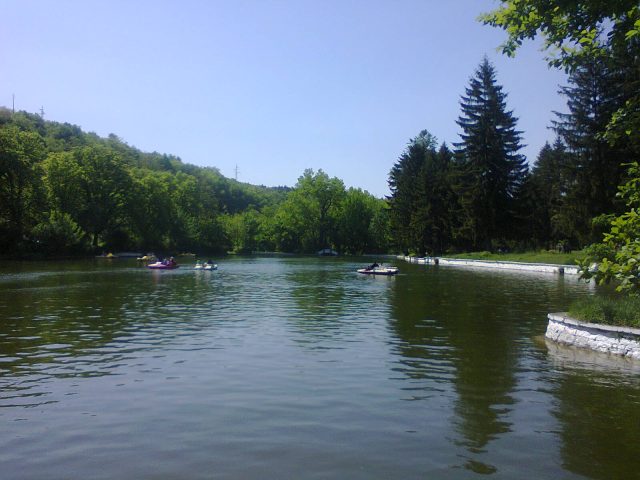
Storgosia sits on a gentle rise within Kaylaka Park, a green oasis that’s a favorite retreat for locals. The park’s winding paths and shaded groves make it an ideal spot for a leisurely walk, especially in spring and summer when the air is sweet with blossoms. The ruins blend seamlessly into the landscape, unobstructed by high fences or barriers. Visitors can wander freely among the stones, tracing the same paths once trodden by Roman soldiers and traders. Some areas are sheltered to protect fragile mosaics and crumbling walls from the elements, but the site retains an open, unpolished feel.
For history enthusiasts, Storgosia is a rare find. It’s a place where different eras overlap, where Roman foundations lie beneath medieval Bulgarian and Ottoman structures. This layering tells a story of continuity—Pleven has always been a crossroads, a place where Byzantines, Bulgarians, and Turks left their mark. In the Middle Ages, a Bulgarian settlement arose on the site, and later, under Ottoman rule, new buildings took shape. The ruins remind us that history isn’t linear; it’s a patchwork of influences, each era building on the last.
Visiting Storgosia doesn’t require any special preparation—just curiosity and a willingness to step into the past. There’s no admission fee, and informational signs in Bulgarian and English help guide visitors through the site. It’s worth noting, though, that this isn’t a reconstructed open-air museum. Many areas are still being excavated, and some sections may be closed for restoration. The site feels alive in a way that polished historical attractions often don’t, as if the past is still being uncovered, one layer at a time.
Weekdays are the best time to visit, when the park is quiet and the ruins can be explored at a leisurely pace. Sitting on one of the benches, it’s easy to imagine the sounds of the ancient city—the clatter of hooves, the murmur of voices, the distant clang of a blacksmith’s hammer. Occasionally, archaeologists work on-site, and if you’re lucky, they might share insights about recent discoveries. Their presence adds another layer to the experience, a reminder that history is still being written.
Storgosia isn’t just a relic of the past; it’s woven into the fabric of modern Pleven. Locals come here to walk, relax, and take photos against the backdrop of the ruins. In the summer, the site occasionally hosts open-air concerts and performances, where ancient stones seem to come alive under the glow of lights. For travelers, Storgosia is often an unexpected discovery. Pleven is more commonly associated with the Russo-Turkish War, and its Roman roots are less frequently mentioned. Yet that’s part of what makes the site special—it offers a quieter, more intimate connection to history.
There’s no fanfare here, no crowds jostling for the best view. Storgosia doesn’t compete with the grand Roman ruins of Italy or Greece, and perhaps that’s its strength. The history here feels personal, almost understated. Standing among the ruins, it’s impossible not to reflect on the countless lives that passed through this place—the soldiers, merchants, and families who once called it home. In that quiet reflection, the past doesn’t feel distant at all. It feels like a conversation, one that continues with every visitor who takes the time to listen.