Pleven’s Kaylaka Park is one of those places where nature and history blend almost without notice. It sits on the edge of the city, a quiet expanse of greenery that feels far removed from the urban bustle, though it’s only a short walk from the center. The park follows the contours of a shallow valley, its slopes covered in oak and beech trees that have stood here for generations. In spring, the forest floor is dotted with wildflowers, and in autumn, the leaves turn shades of gold and russet, creating a soft, shifting canopy overhead. The air carries the scent of damp earth and pine, especially after rain, and the only sounds are the rustling of leaves and the occasional call of birds.
The park’s origins are tied to the late 19th century, when Pleven was still part of the Ottoman Empire. After the Russo-Turkish War, the area became a favored spot for leisure among the city’s growing Bulgarian population. Wealthy merchants and local officials would come here to escape the summer heat, building small villas and pavilions along the valley. Some of these structures still stand, though most have been repurposed or left to the elements. The most notable remnant is the old stone bridge near the park’s entrance, a simple but elegant arch that once carried carriages and pedestrians across a now-dry stream. It’s easy to imagine the clatter of hooves and the murmur of conversations from another era as you walk beneath it.
Kaylaka’s real significance, however, lies in its role during the Siege of Pleven in 1877. The park was part of the defensive perimeter around the city, where Russian and Romanian troops clashed with Ottoman forces in one of the bloodiest campaigns of the war. The hills here provided strategic vantage points, and remnants of earthworks and trenches can still be found if you know where to look. A small monument near the park’s eastern edge marks the spot where a key battle took place, though it’s modest compared to the grand memorials elsewhere in Pleven. For those interested in history, the park offers a more understated, almost intimate connection to the past—one that isn’t overshadowed by grand narratives or tourist crowds.
Beyond its historical layers, Kaylaka is simply a place to wander. The trails are well-trodden but never crowded, winding through the woods and along the ridges with no particular destination in mind. Some paths lead to clearings where locals gather for picnics, their laughter carrying through the trees. Others descend into small ravines where streams trickle in the wetter months, forming shallow pools that reflect the sky. There’s a sense of timelessness here, as if the park has always existed in this state of quiet, unhurried life. In the early morning, mist often lingers between the trees, softening the outlines of the landscape, while in the evening, the setting sun casts long shadows across the slopes.
One of the park’s most distinctive features is its open-air theater, carved into the hillside near the northern edge. Built in the mid-20th century, it’s a relic of a time when Pleven sought to establish itself as a cultural hub. The stage is framed by stone walls, and the seating area, though weathered, still offers a sweeping view of the valley. Occasionally, performances are held here—folk concerts, poetry readings, or small theatrical productions—but even when empty, the space has a certain presence. The acoustics are surprisingly good, and on still days, the sound of voices or music carries effortlessly through the trees.
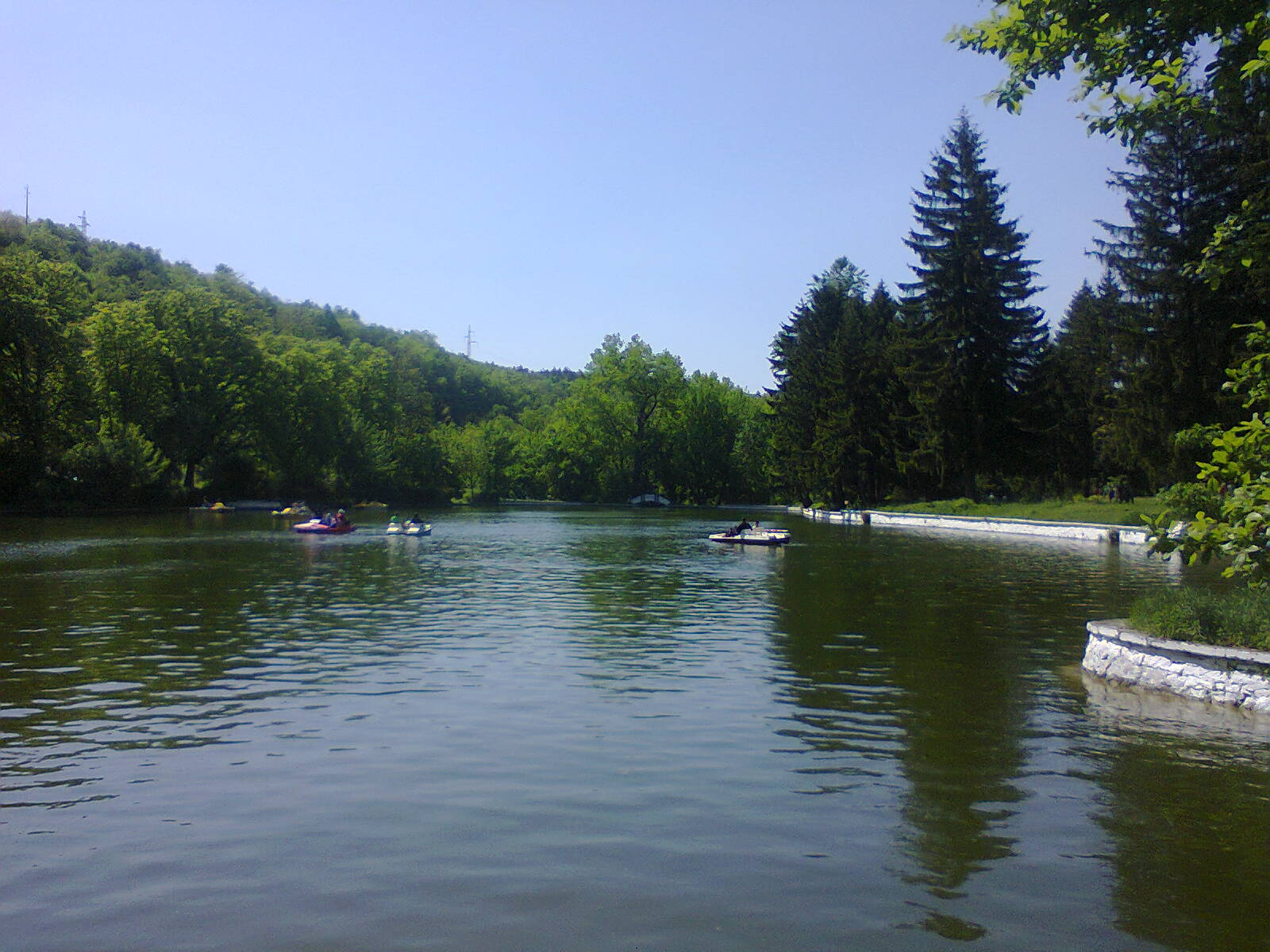
For those who prefer a more active visit, the park has a network of cycling and jogging paths that loop through the woods and along the ridges. The terrain is gentle enough for casual riders but offers enough variation to keep things interesting. In winter, when snow blankets the ground, the trails are popular with cross-country skiers, though the park never feels overrun. There’s also a small lake near the western entrance, its surface usually calm and dotted with waterfowl. It’s a peaceful spot to sit for a while, watching the ducks glide across the water or listening to the distant hum of the city beyond the trees.
What makes Kaylaka special isn’t any single attraction but the way it absorbs the rhythms of daily life. Locals come here to walk their dogs, meet friends, or simply escape the noise of the city for an hour or two. There’s no grand entrance, no ticket booth, no guided tours—just a place that has grown organically over time, shaped by the people who use it. On weekends, families spread out blankets under the trees, children chase each other through the undergrowth, and old men play backgammon on benches, their games stretching into the afternoon. The park doesn’t demand attention; it invites you to slow down and notice the small things—the way the light filters through the leaves, the scent of wild thyme underfoot, the distant chime of a church bell from the city below.
Kaylaka isn’t the kind of place that makes it onto postcards or travel brochures. It doesn’t have the dramatic landscapes of the Rila Mountains or the ancient ruins of Plovdiv, but that’s part of its charm. It’s a place where history feels lived-in rather than preserved, where nature isn’t staged for visitors but simply exists, indifferent to who passes through. Whether you come here for the quiet trails, the glimpses of the past, or just the chance to sit under a tree and do nothing at all, the park has a way of making time feel a little less hurried. And in a world where so many places are designed to be seen and photographed, that’s a rare quality.