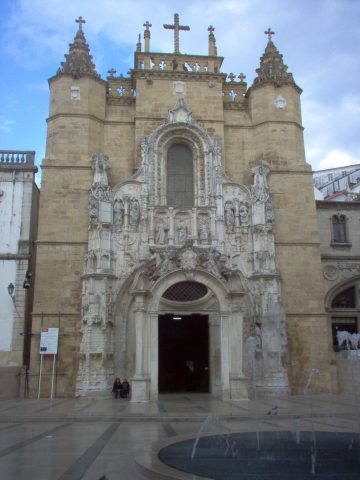
Coimbra’s Old Cathedral stands as a quiet witness to Portugal’s medieval past, a place where the weight of history lingers in every stone. Built in the twelfth century, it was the first Romanesque church erected in the country after the Reconquista, when Christian forces reclaimed the Iberian Peninsula from Moorish rule. More than just an architectural relic, the cathedral has borne witness to pivotal moments in Portuguese history—coronations of kings, the prayers of early university students, and the shifting fortunes of a city that was once the nation’s capital. Its thick walls, narrow slit windows, and sturdy buttresses were designed not only for worship but for defense, a necessity in an era of constant upheaval.
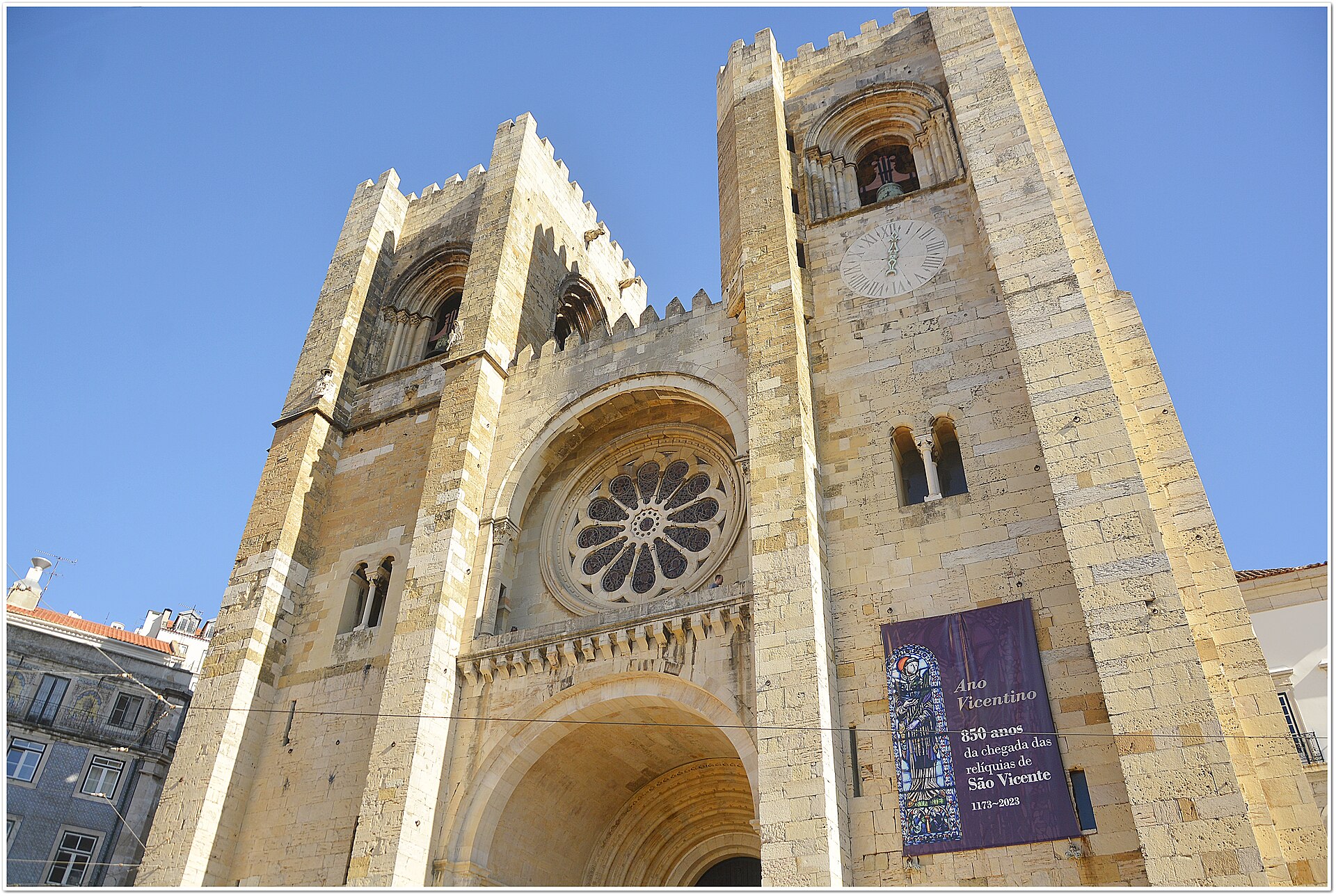
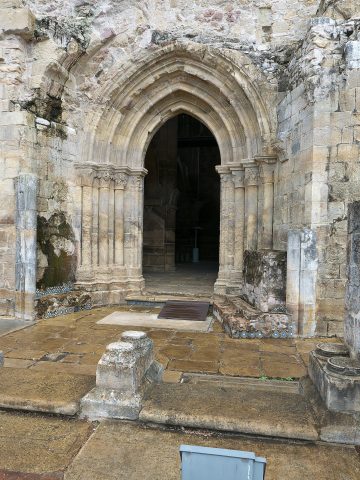
The exterior of the cathedral is austere, embodying the Romanesque style’s preference for solidity over ornamentation. The façade is spare, adorned only with a few reliefs, among them the striking image of lions supporting the columns of the main portal. These lions are more than decorative; they symbolize strength and protection, a reminder that the cathedral was both a spiritual and political heart of the city. Above the entrance, a small rose window—one of the earliest in Portugal—filters muted light into the interior. The overall effect is one of disciplined geometry: clean lines, balanced proportions, and a deliberate absence of excess. Even the later-added bell tower blends seamlessly into the structure, preserving its unadorned dignity.
Inside, the cathedral’s vastness is immediately striking. The high vaulted ceilings and broad nave, divided by massive columns, draw the eye toward the altar, where kings once stood in ceremony. The walls are nearly bare, with only a handful of medieval frescoes surviving the centuries, their colors faded and details worn away. Yet the carved capitals atop the columns remain vivid, each one unique. Some depict biblical scenes, others mythical creatures or everyday life, offering a glimpse into the minds of the artisans who shaped them. The cloister, a later Gothic addition, provides a cool, serene retreat. Its arched walkways frame a quiet courtyard where the past feels almost tangible—one can easily imagine a medieval monk or a harried student hurrying through its shadows.
The cathedral’s history is deeply intertwined with that of Coimbra itself. For centuries, the city served as Portugal’s capital, and the Old Cathedral was the stage for its most significant events. Even after the capital moved to Lisbon, the building retained its symbolic importance. In the thirteenth century, with the founding of the University of Coimbra, the cathedral became part of academic life. Students prayed here before exams, and some even lived in the adjoining cells. That connection endures today. Coimbra is a city of youth, and the Old Cathedral, despite its age, doesn’t feel out of place among the bustle of student life. Instead, it stands as a bridge between eras, a place where the past and present coexist.
Time has left its marks on the cathedral. Earthquakes, fires, and renovations have all taken their toll, particularly the devastating earthquake of the eighteenth century, which required extensive repairs to the vaults and façade. Yet these scars only add to its character, like the lines on an old face that tell a story. In the nineteenth century, there were even plans to demolish the cathedral to make way for modern development, but the people of Coimbra refused to let it go. To them, it was more than just a building—it was a piece of their identity, a link to the generations that came before.
Today, the Old Cathedral remains one of Coimbra’s most visited sites, though it lacks the crowds that flock to other medieval landmarks in Europe. Locals come here for moments of quiet reflection, while tourists wander its halls, tracing the contours of history. The cloister is a particularly peaceful spot, where one can sit on a stone bench and lose themselves in the intricate patterns of the arches. From the choir loft, the view stretches over the city, a patchwork of red-tiled roofs and winding streets. In the evening, when the setting sun bathes the cathedral in golden light, its ancient walls seem to glow from within, as if holding onto the warmth of centuries.
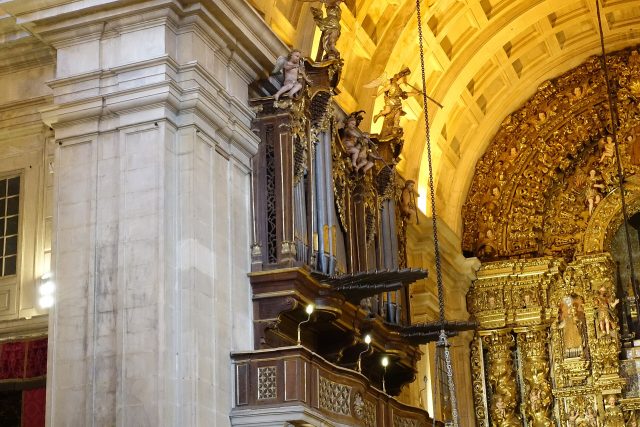
This is not a museum but a living place of worship. Services are still held here, the organ’s music filling the nave, and on feast days, the sound of the choir echoes through the stone halls. During Christmas, the cloister hosts a nativity scene, drawing families who come to admire the traditional figures of saints and wise men. In summer, street musicians sometimes perform in the square outside, their melodies mingling with the peal of the cathedral bells. These moments make it clear that the Old Cathedral is more than just a monument—it’s a part of the city’s daily rhythm, a place where history and modern life intersect.
Coimbra itself is a city of contrasts. Medieval stone buildings stand alongside lively student hangouts, the hush of ancient churches gives way to the buzz of university lecture halls, and the past and present exist side by side. The Old Cathedral embodies this duality. It has seen kings and scholars, townspeople and pilgrims, all passing through its doors. Perhaps that’s why it feels so compelling—it offers something for everyone. Some come seeking a connection to history, others a moment of stillness, or simply the chance to gaze out over the city from the heights of the choir loft. Few places in the world make the past feel as immediate as this one does. Here, history isn’t just remembered; it’s still being lived.