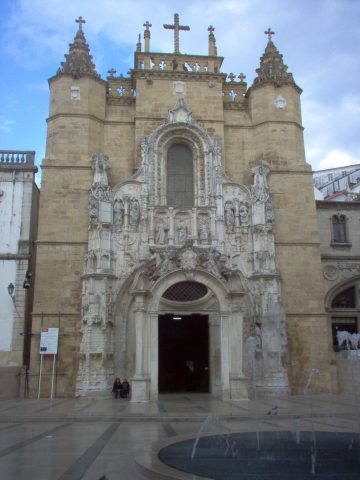
Perched on the banks of the Mondego River, the ruins of Santa Clara-a-Velha Monastery stand as a quiet witness to Coimbra’s layered past. This is not just another historical site—it’s a place where the weight of centuries lingers in the cool stone arches, the hush of the cloister, and the faint echo of footsteps on worn flagstones. The river, winding lazily around the remains, seems to carry the whispers of the people who once filled these halls: queens, nuns, and poets whose lives were woven into the fabric of the city.
Founded in the early 14th century at the behest of Queen Isabel of Aragon, the monastery was conceived as a sanctuary for the Poor Clares, an order of Franciscan nuns. Isabel, renowned for her piety and charity, chose this spot on the left bank of the Mondego—a retreat from the bustle of Coimbra yet close enough to remain part of its daily rhythm. Legend has it that she spent her final years here, devoted to prayer and aiding the poor. Her tomb, adorned with delicate Gothic carvings, still rests within the monastery church, drawing visitors who come as much for history as for quiet reflection.
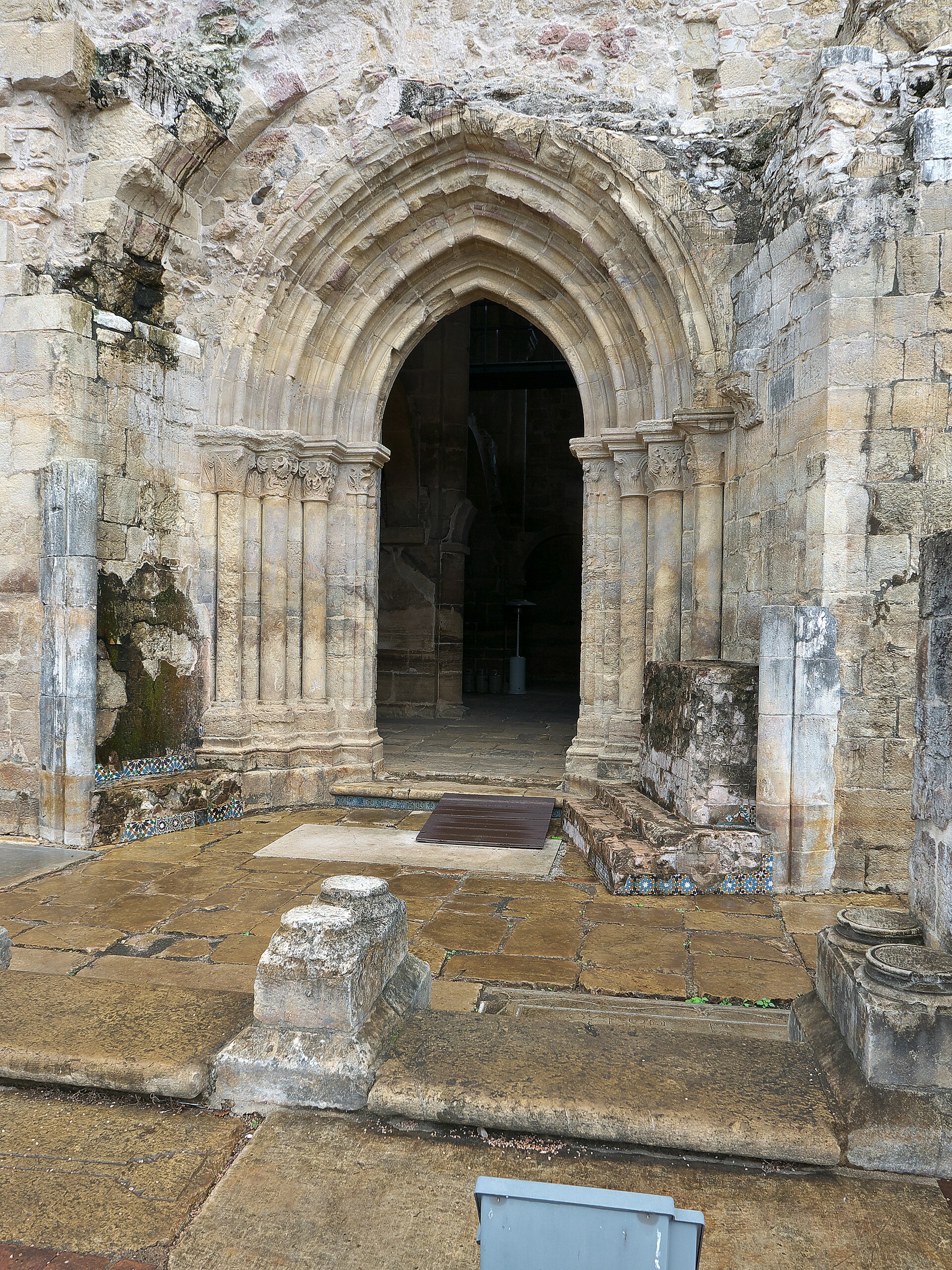
The architecture of Santa Clara-a-Velha tells a story of shifting tastes and enduring resilience. Originally built in the Gothic style, the monastery underwent several transformations, most notably in the 17th century when Baroque elements were added—ornate portals, twisted columns, and intricate stucco work. Yet time and the river proved relentless. Frequent floods, particularly devastating in the 18th century, forced the nuns to abandon the site. They relocated uphill, establishing the new Santa Clara-a-Nova Monastery, while the old one slowly succumbed to decay.
What remains today is a fragment of its former grandeur: the towering facade of the church with its pointed windows, the skeletal remains of the cloister’s arcades, and scattered walls that once enclosed a world of devotion. Yet these ruins don’t feel abandoned so much as paused, as if the nuns might return at any moment. Perhaps it’s because the site isn’t just a relic—it’s a living part of Coimbra’s landscape. Locals come here to stroll along the river, sit by the water, or simply escape the noise of the city. The ruins, half-reclaimed by nature, have a way of making the past feel tangible.
The Mondego River is as much a part of Santa Clara-a-Velha’s story as the stones themselves. Over the centuries, it has been both a lifeline and a threat—nourishing the monastery with its waters one moment, swallowing its foundations the next. Today, the river has receded, leaving behind silt and the faint scars of old floods. But its presence is still felt, especially at dusk, when the setting sun casts long shadows across the water, and the ruins seem to breathe with the slow, deep rhythm of time.
Coimbra was once Portugal’s spiritual and intellectual heart, and Santa Clara-a-Velha was at its core. In the Middle Ages, the monastery was a place of burial for the city’s elite, a sanctuary for pilgrims, and a site of royal prayers. Even after its decline, its ruins continued to inspire. By the 19th century, as Europe rediscovered the romance of Gothic architecture, Santa Clara-a-Velha became a symbol of a lost era—beautiful, melancholic, and untouchable. Poets and artists were drawn to its crumbling walls, seeing in them a reflection of their own longing for the past.
Today, the monastery is open to visitors, though it remains less frequented than Coimbra’s more famous landmarks. Those who do come often leave with more than just photographs. There’s a sense here of stepping into a different time, of glimpsing the lives of those who walked these paths centuries ago. It’s a place that invites contemplation, where the boundaries between past and present blur. Maybe that’s why Santa Clara-a-Velha still draws people—not just tourists, but those seeking a moment of quiet, a connection to something larger than themselves.
In recent decades, restoration efforts have sought to preserve what remains, treating each crack in the stone and each weathered fragment with care. The work is slow, deliberate, respectful of the stories embedded in the ruins. Whether Santa Clara-a-Velha will ever be fully restored is uncertain, but perhaps that’s not the point. Its power lies in its imperfection, in the way it carries the past not as a museum piece, but as something alive—etched into the very air, the water, the light that dances across the river at sunset.