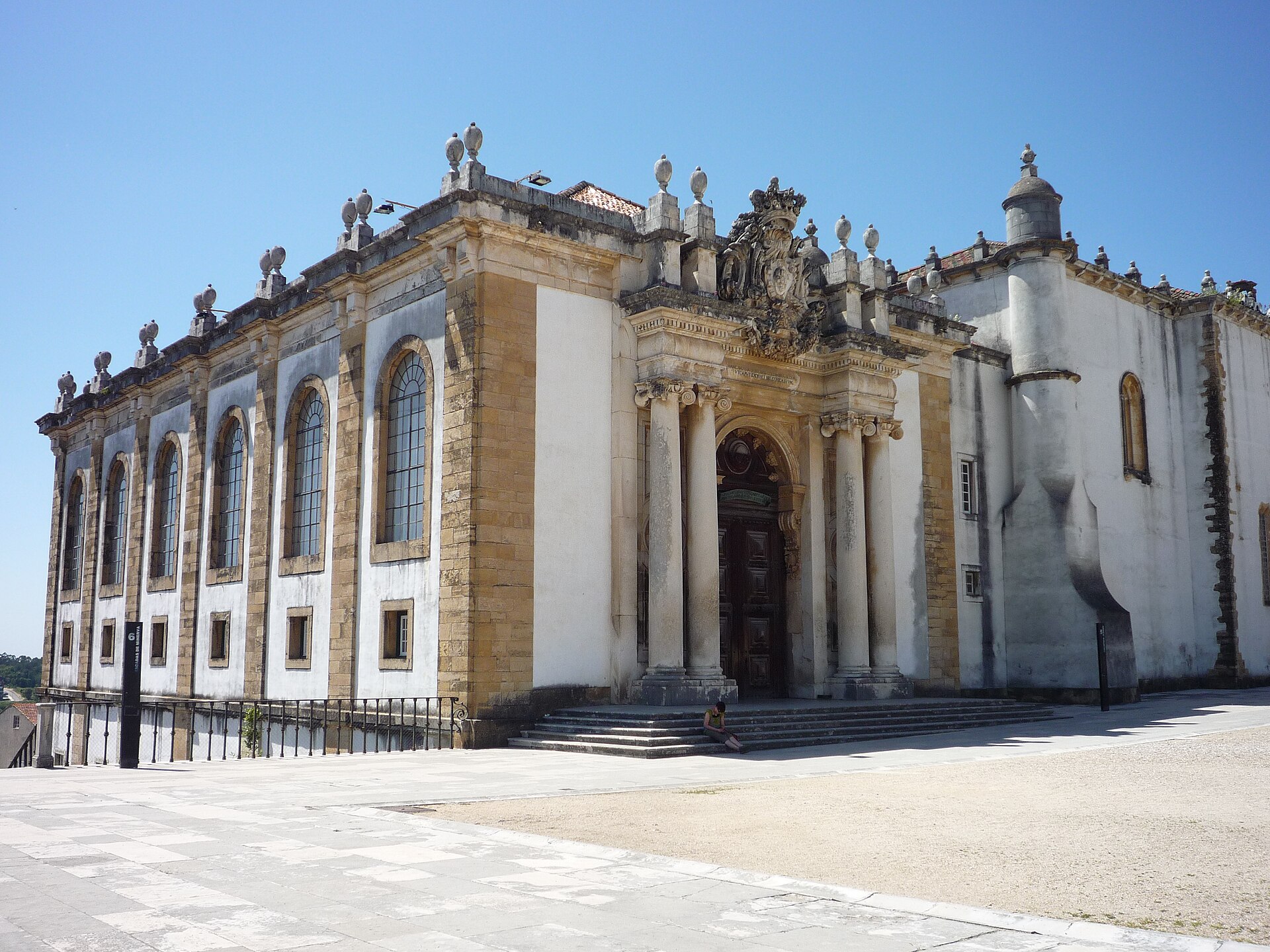
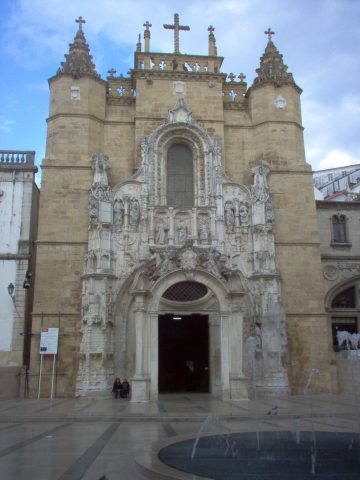
The Joanina Library in Coimbra is one of those rare places that feels untouched by time, as if it weren’t built by human hands but shaped by history itself. Tucked within the ancient walls of the University of Coimbra, founded in the 13th century, it has preserved not just books but the very spirit of the Enlightenment for centuries. From the outside, the building appears austere—thick stone walls, tall barred windows, a classical portal crowned with a coat of arms. Yet step inside, and you enter another world entirely, one of gilded wood, whispered knowledge, and quiet grandeur.
The library’s main hall is breathtaking from the first moment. Three vast naves stretch into the distance, divided by towering columns, while the ceilings are adorned with intricate frescoes where floral motifs intertwine with allegorical figures. Floor-to-ceiling bookshelves, carved from dark wood and inlaid with gold, line the walls. Each shelf is a masterpiece of Baroque craftsmanship, its curves and gilded details meticulously designed to evoke reverence and awe. There is nothing accidental here—every line, every flourish serves a purpose, creating an atmosphere of solemnity that lingers long after you leave.
Commissioned in the 18th century by King João V, a monarch renowned for his patronage of the arts and sciences, the library was part of a broader vision to transform Coimbra into Portugal’s intellectual heart. The king spared no expense, enlisting the finest European craftsmen to bring his ambition to life. Yet beauty was not the only consideration. The marble floors, for instance, were chosen to protect the books from damp, while the ventilation system was designed to maintain the perfect climate for preserving ancient tomes. Even the smallest details were carefully planned to ensure the library would endure.
At the heart of Joanina lies its greatest treasure: its collection. Housing around 250,000 volumes, the library holds some of the rarest books in existence, including incunabula, early printed works, and manuscripts by medieval scholars and philosophers. The most prized sections focus on theology, law, medicine, and astronomy—fields that defined intellectual pursuit in the 18th century. Many of these books were acquired from across Europe, making the collection a testament to the era’s global exchange of knowledge. Though the library remains an active academic resource, access to its most fragile volumes is strictly controlled, ensuring their survival for future generations.
One of the library’s most charming quirks is its unconventional guardians. Instead of modern climate control or chemical treatments, Joanina relies on a natural solution: bats. These nocturnal creatures have lived in the library for centuries, emerging at night to hunt insects that might otherwise damage the books. Their presence is so integral to the library’s ecosystem that they’ve become part of its lore. Visitors rarely see them during the day, but knowing they’re there adds a touch of whimsy to the experience, a reminder that some traditions defy the march of progress.
A visit to Joanina is less about sightseeing and more about stepping into another era. The creak of wooden floors, the scent of aged paper, the soft light filtering through high windows—everything here feels deliberate, as if the space itself is breathing history. Even the students who study within its walls seem to move more quietly, as though reluctant to disturb the centuries-old silence. The library was never meant for haste. It exists to slow you down, to invite reflection, to let the weight of the past settle over you through the pages of its books.
Today, Joanina is both a working library and a museum, drawing visitors from around the world. Yet unlike many tourist attractions, it doesn’t rely on spectacle or gimmicks. Its power lies in its authenticity—there are no reconstructions, no replicas, only the real thing, from the books to the furniture. Perhaps that’s why it leaves such a lasting impression. In an age of digital archives and virtual libraries, Joanina offers something increasingly rare: a tangible connection to the past, one that lingers in the mind long after you’ve left.
Coimbra is a city where history seeps from every stone, and the Joanina Library is one of its most vivid testaments. It is more than a repository of books; it is a symbol of knowledge passed down through generations. Here, you can spend an hour or an entire day tracing the spines of ancient volumes, deciphering Latin inscriptions, or simply sitting in silence, listening to the rustle of pages. Time moves differently within these walls, and when you finally step back into the sunlight, you carry with you the quiet certainty of having touched something enduring, something far greater than mere architecture.