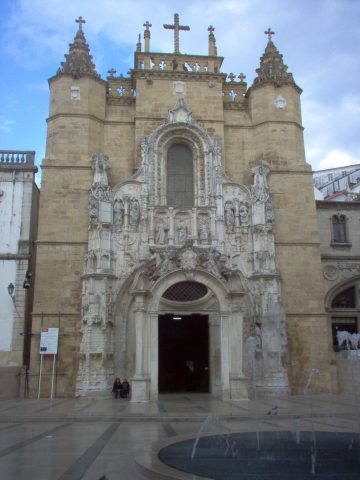
Coimbra’s New Cathedral stands as a quiet testament to Portugal’s golden age, a place where the grandeur of the Renaissance meets the rhythms of everyday life. Built in the sixteenth century, it arrived at a moment when Portugal’s influence stretched across oceans, its cities flush with the wealth of distant colonies. Unlike older churches that grew in stature over centuries, this cathedral was conceived from the start as a monument—one meant to reflect Coimbra’s rising importance not just as a university town, but as a spiritual and political hub. Kings occasionally resided here, bishops wielded considerable power, and the city pulsed with the energy of scholars, merchants, and clergy. The cathedral was meant to embody that confidence, a statement of permanence in an era of expansion.
The architecture is a study in contrasts, where restraint and elegance coexist. The façade, carved from pale limestone, appears almost austere at first glance—clean lines, minimal ornamentation, just a few niches with saints and the royal coat of arms above the entrance. But step inside, and the space unfolds with a different kind of richness. Soaring vaults and sturdy columns create an impression of vastness, while the side chapels, adorned with gilded altarpieces, hint at the Baroque transformations that followed. The high altar is particularly striking, a meticulously crafted assembly of marble and gold where every figure and flourish serves a purpose. There’s nothing accidental about its design; even the placement of statues follows a strict hierarchy, mirroring the divine order of the time.
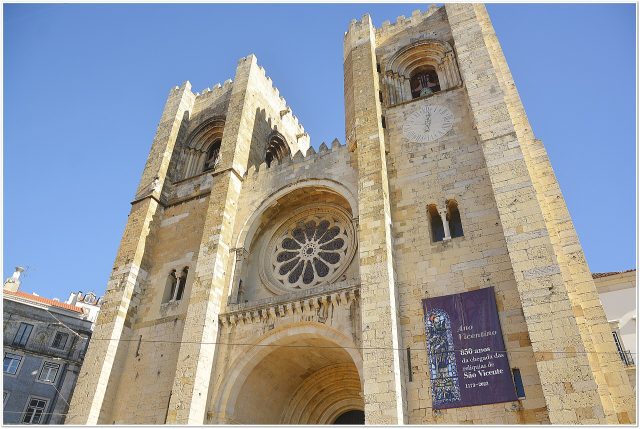
The name "New Cathedral" might seem misleading, given its nearly five centuries of existence. But Coimbra already had an older one, built in the twelfth century when the city was still finding its place in the kingdom. That earlier cathedral, with its Romanesque severity, spoke of a Portugal locked in the Reconquista, a fortress of faith against Moorish rule. The New Cathedral, by contrast, was born in an age of stability. It wasn’t built for defense, but for celebration—a shift reflected in its very stones. Where the Old Cathedral feels like a relic of struggle, the New one exudes assurance, its proportions designed to inspire rather than intimidate.
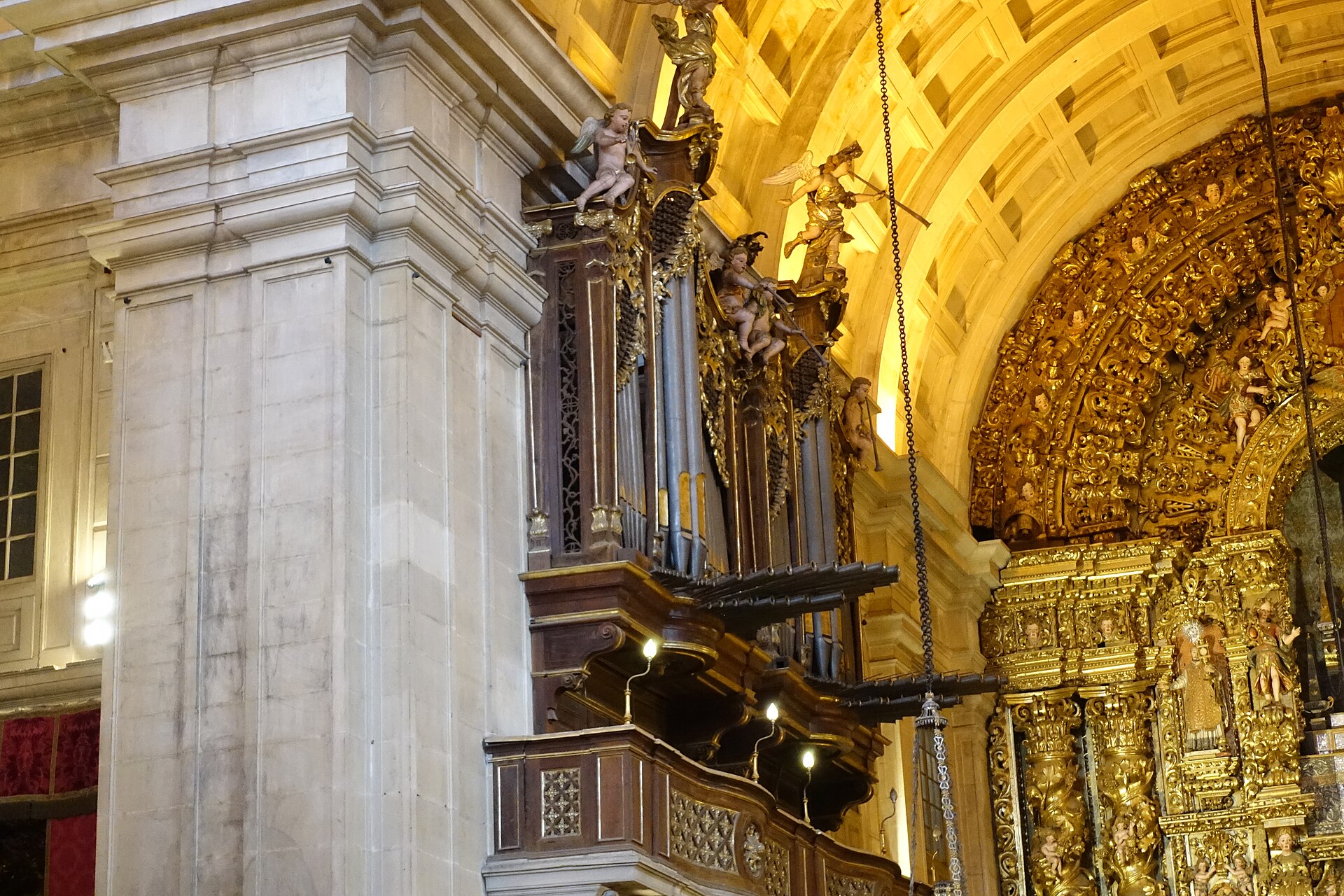
Inside, the cathedral rewards those who take their time. The choir stalls, intricately carved from wood, once seated the canons who governed the church’s affairs. The organ, installed in the eighteenth century, remains one of the oldest in Portugal, its pipes still capable of filling the nave with sound. The walls bear the marks of different eras—frescoes and paintings that range from Renaissance clarity to Baroque drama—some faded by time, others still vibrant. The Chapel of Saint Peter holds a silver reliquary containing the remains of a local saint, a focus of devotion that draws crowds each year on his feast day. The air then hums with hymns, the scent of candle wax, and the murmur of prayers, a reminder that this is still a living place of worship.
Yet the cathedral’s role extends beyond religion. It has long been woven into Coimbra’s daily life, a place where locals come to escape the heat of summer or the chill of winter, where students and professors might pause between lectures, and where visitors wander in search of something intangible. The acoustics are remarkable; when organ concerts are held here, the music seems to rise and linger in the vaulted ceilings, turning the space into something almost alive. For many in Coimbra, the cathedral is a familiar landmark, a backdrop to countless moments—first dates, quiet reflections, or the simple act of showing a friend around the city.
The building also tells a story of cultural exchange. Coimbra has always been a crossroads, a city where ideas and influences collided. The cathedral’s design bears traces of this: Italian artisans contributed to its construction, leaving behind motifs that wouldn’t look out of place in Florence or Rome. But there are distinctly Portuguese touches, too, like the azulejos—traditional blue-and-white tiles—that adorn some of the chapels. These panels depict biblical scenes with a local flair, a nod to Portugal’s enduring traditions even as it embraced the Renaissance. The blend feels natural, as if the cathedral absorbed the best of what surrounded it.
Today, the New Cathedral sits at the heart of Coimbra’s old quarter, surrounded by narrow streets where life moves at its own unhurried pace. Nearby cafés serve strong coffee and pastéis de nata, while small shops sell handmade ceramics and lace. In warmer months, street musicians often play on the square outside, their melodies mingling with the cathedral’s bells. For tourists, it’s a chance to step into history; for locals, it’s a constant, a reminder of the city’s layered past. The cathedral doesn’t demand attention—it simply exists, as it has for centuries, a silent witness to the comings and goings of the city.
Restoration work over the decades has ensured the cathedral remains standing, though not without leaving its mark. The process was careful, aimed at preserving rather than erasing the passage of time. Some gilding has worn thin, frescoes have dulled, and the stone bears the patina of age. But these imperfections are part of its charm. The cathedral doesn’t strive for perfection; it wears its history openly, cracks and all. There’s a humility in that, a sense that it belongs to the people who pass through its doors as much as to the kings and bishops who once filled its pews.
What makes the New Cathedral enduring is its ability to feel both timeless and immediate. It doesn’t overwhelm with spectacle or grand gestures. Instead, it offers something quieter—a sense of continuity, a place where the past isn’t cordoned off but allowed to breathe. Whether you come seeking solace, inspiration, or just a moment of stillness, the cathedral meets you without pretense. It doesn’t need to announce its importance; it simply is. And in that simplicity lies its power. It has stood through centuries of change, and it will stand for centuries more, a steady presence in a world that never stops moving.