Santa Cruz Monastery in Coimbra is one of those rare places where Portugal’s past feels almost tangible, as if the weight of centuries lingers in the very air. Founded in the early 12th century, it wasn’t just a religious sanctuary but a cornerstone of the nation’s identity. The monastery became the final resting place of Portugal’s first kings—Afonso Henriques, who declared the country’s independence, and his son Sancho I—whose marble tombs still stand as silent witnesses to an era when Coimbra was the heart of a fledgling kingdom. The stones here seem to whisper of medieval power struggles, the forging of a nation, and the quiet determination that shaped Portugal’s earliest days.
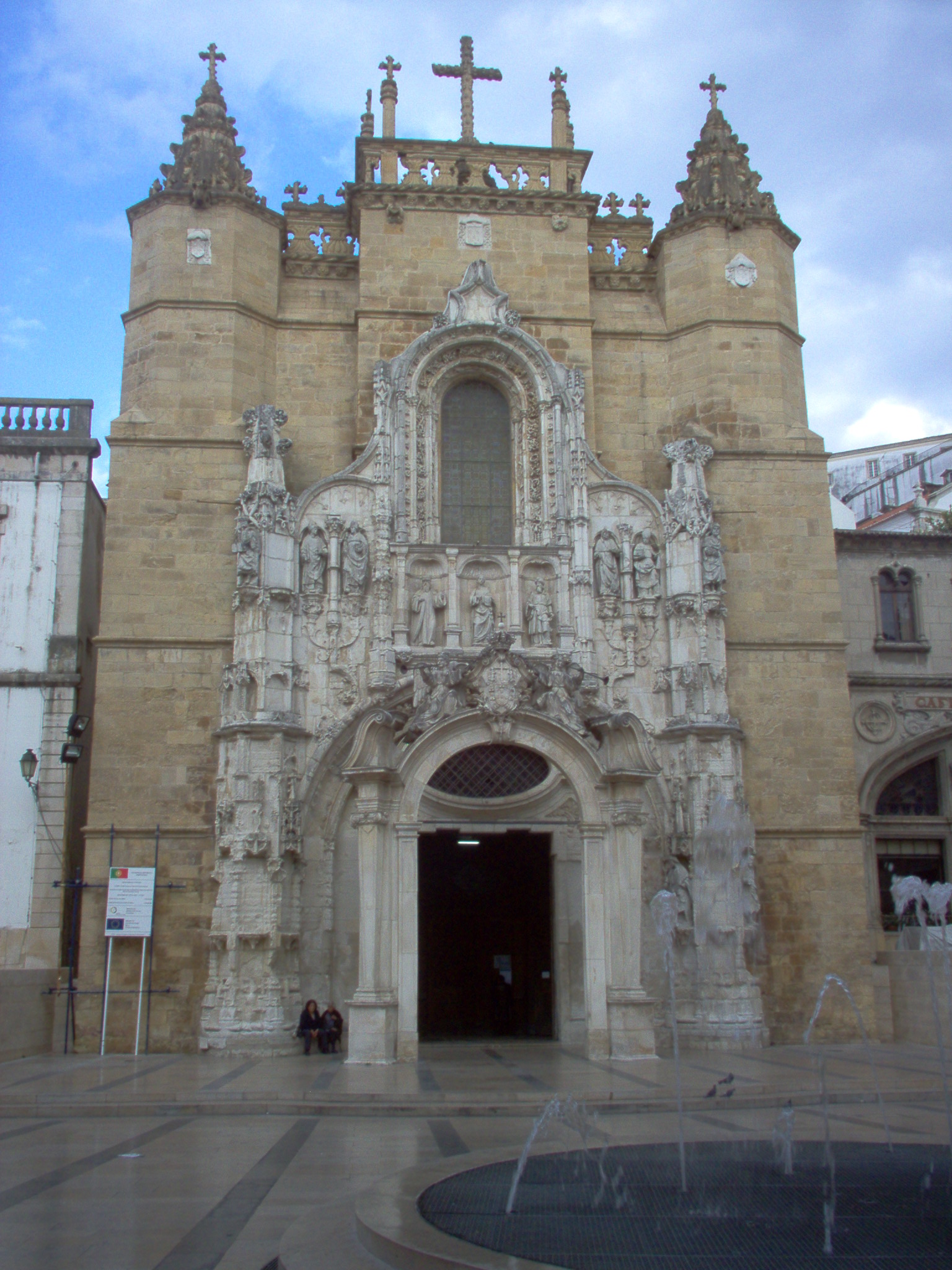
The architecture of Santa Cruz is a layered story told in stone, each era leaving its mark. Originally built in the Romanesque style, the monastery evolved over time, absorbing influences from Gothic, Manueline, and Renaissance design. The main façade is particularly striking, adorned with intricate carvings that blend religious iconography with the maritime symbols of Portugal’s Age of Discoveries. Inside, the cloister offers a moment of stillness, its arched galleries framing a sunlit courtyard where the past feels close enough to touch. It’s easy to imagine the monks who once walked these paths, their footsteps echoing between prayer and scholarship.
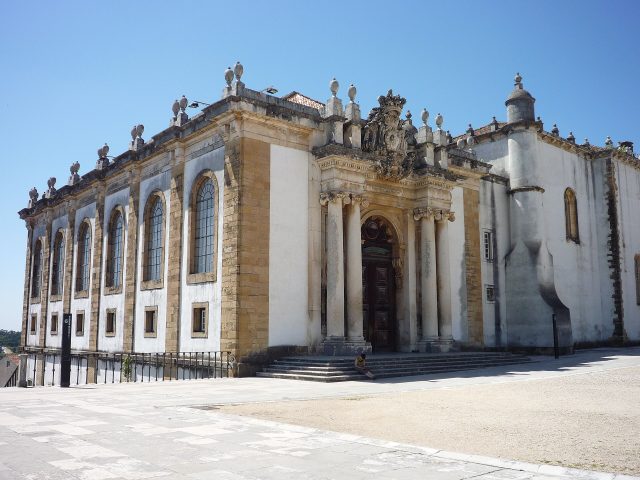
Beyond its spiritual role, Santa Cruz was an intellectual hub. The monastery housed one of Portugal’s earliest libraries, where monks painstakingly copied and translated ancient manuscripts. Its school educated future scholars, theologians, and even royalty, laying the groundwork for the country’s intellectual traditions. Today, fragments of that legacy remain in the form of rare books, maps, and documents displayed within its walls—a reminder of how deeply knowledge and faith were intertwined in this place.
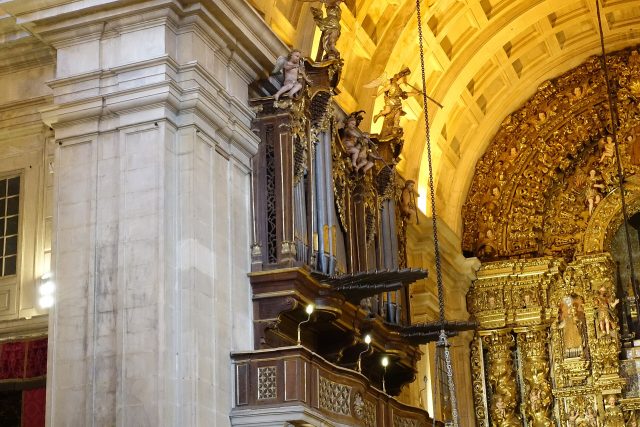
The monastery’s church is a space of quiet grandeur, its high vaulted ceilings and stained-glass windows bathing the interior in soft, shifting light. The golden altarpiece gleams against the stone, while frescoes depict scenes from the lives of saints. But the true heart of the church lies in its royal tombs. Carved from marble, they depict Afonso Henriques and Sancho I in repose, their effigies a testament to the birth of a nation. These aren’t just graves; they’re symbols of Portugal’s earliest struggles and triumphs, a physical link to the men who shaped its destiny.
Now a working monastery and museum, Santa Cruz welcomes visitors into its centuries-old halls. You can wander through former monks’ cells, climb to the upper galleries for a sweeping view of Coimbra, or simply sit in the cloister, listening to the murmur of the fountain. The city unfolds below—a patchwork of red-tiled roofs, university spires, and the slow curve of the Mondego River. On certain evenings, the monastery comes alive with the sound of classical music, the notes of an organ or choir drifting through the stone corridors, as if time itself has softened.
There’s a sense of timelessness here that’s hard to find in more crowded tourist spots. Even in high season, Santa Cruz retains a quiet dignity, its rhythms unchanged by the passing years. You might spend hours tracing the details of a carved doorway or lingering in a shadowed corner of the cloister, where the only sounds are the wind through the arches and the distant chime of a clock. It’s a place that invites reflection, where the past isn’t just remembered but felt.
Coimbra itself is a city steeped in history, its streets lined with medieval buildings and its air thick with the energy of students. But Santa Cruz is its soul. The monastery sits on a square where locals gather at cafés, where the scent of freshly baked bread mingles with the aroma of coffee, and where the hum of conversation blends with the splash of a nearby fountain. It’s easy to picture the monks who once stepped beyond these walls to buy supplies at the market or the university students who sought solace here before exams.
More than just a monument, Santa Cruz is a living piece of Portugal’s cultural fabric. It has survived wars, fires, and the slow march of time, yet its essence remains intact. For artists, writers, and musicians, it continues to be a source of inspiration. For visitors, it offers something rare—a chance to step beyond the surface of history and connect with the people and events that shaped a nation. Portugal may be known for its coastline, its wine, and its sunlit plazas, but places like Santa Cruz remind us that its true depth lies in the stories etched into its oldest stones.