Himarë’s Old Town is one of those rare places along Albania’s coast where time seems to slow down, as if the hours themselves have settled into the rhythm of the waves. Perched on a hillside overlooking the Ionian Sea, the old quarter—known locally as Himarë e Vjetër—feels suspended between past and present. Its narrow, stone-paved streets wind between houses with terracotta roofs, their whitewashed walls glowing under the Mediterranean sun. There are no crowded promenades here, no souvenir shops blaring music, just the quiet hum of daily life: the murmur of voices, the clatter of shutters opening in the morning, the distant crash of waves against the shore.
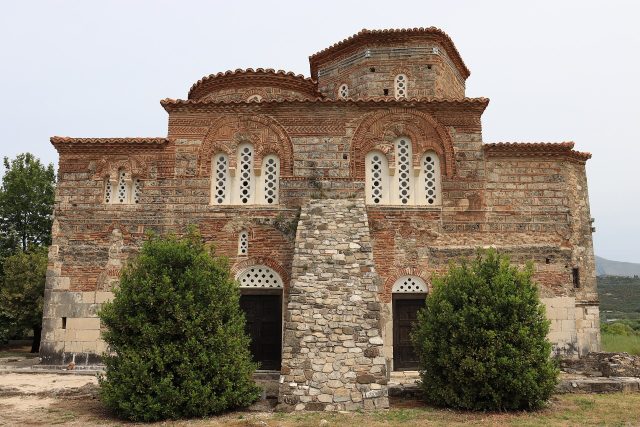
The history of Himarë stretches back centuries, woven into the fabric of the region long before modern borders took shape. Ancient records place it within the kingdom of Epirus, a crossroads of cultures where Greek, Illyrian, and later Byzantine influences converged. By the Middle Ages, the town had become a strategic stronghold, caught between the ambitions of Venice and the expanding Ottoman Empire. Each era left its mark—Byzantine churches with faded frescoes, Venetian fortifications, Ottoman mosques—though Himarë is perhaps best known as a bastion of Albania’s Greek minority. Even today, Greek is spoken in the streets, and traditions endure that have faded elsewhere in the country.
The architecture of the Old Town is a quiet testament to this layered past. Houses cling to the hillside, their stone walls blending seamlessly with the landscape, as if they’ve grown from the earth itself. Built from local limestone, many have taken on a warm, honeyed hue over the years, their thick walls and small windows designed to keep out the summer heat. Wooden balconies with intricate carvings jut out over the streets, offering shade and a place to linger in the evenings. The town’s squares are small and intimate, shaded by plane trees where elderly men play backgammon and women gather to chat over coffee. There’s no grand design here, just a sense of organic harmony, as if the buildings and the land have shaped each other over generations.
Dominating the skyline is the old fortress, its weathered walls visible from miles away. Originally built during the Byzantine era, it was later reinforced by the Venetians and Ottomans, each leaving their own additions to the structure. Today, only ruins remain, but the scale of the fortress is still imposing. Climbing to the top rewards you with a sweeping view of the coast—jagged cliffs to the north, golden beaches to the south, and the endless blue of the Ionian Sea stretching to the horizon. On clear days, the water shimmers under the sun, its surface broken only by the occasional fishing boat or the shadow of a passing cloud.
What makes Himarë special, though, isn’t just its history or its views, but the way life unfolds here. There are no luxury resorts or tourist traps, just family-run tavernas where the food is simple and honest. The local cuisine is a blend of Albanian and Greek traditions—grilled fish caught that morning, olive oil pressed from nearby groves, feta cheese made in the village, and wine from small vineyards tucked into the hills. In the evenings, the scent of herbs and charcoal fills the air, mingling with the sound of guitars and the occasional burst of laughter. It’s the kind of place where a meal can last for hours, where the conversation matters more than the clock.
The pace of life in the Old Town is unhurried, almost deliberate. Mornings begin slowly, with the creak of wooden shutters and the clink of cups as coffee is poured. Children kick balls through the streets, old men sit on benches watching the world go by, and women in long skirts carry baskets of figs or fresh bread. Everyone knows each other, and strangers are met with curiosity rather than suspicion. There’s no need to rush here; the days stretch out like the shadows in the late afternoon, long and golden.
For those used to the noise of modern travel, Himarë can feel like a revelation. There are no itineraries to follow, no must-see attractions demanding attention. Instead, the town invites you to wander—down a side street that leads to a hidden church, up a steep path to the fortress at sunset, or simply to sit on a bench and watch the light change over the sea. The beaches nearby are quieter than those in more popular destinations, their pebbled shores lapped by clear water. Some are tucked into coves only accessible by foot, where the only sounds are the cry of gulls and the rustle of wind through the pines.
Yet Himarë’s Old Town isn’t frozen in time. It’s a living place, where the past and present coexist without fuss. Locals take pride in their heritage, pointing out the old churches or sharing stories of the fortress, but they’re just as likely to invite you into their homes for a glass of raki or a plate of stuffed peppers. Tourism hasn’t reshaped the town into something it’s not; instead, visitors are absorbed into its rhythm, whether they stay for a day or a week. There’s no grand spectacle here, just the quiet beauty of a place that has endured, adapting without losing what makes it unique.
Those who come to Himarë often find themselves returning. It’s not the kind of destination that dazzles with grandeur, but one that lingers in the memory—like the taste of salt on the breeze, or the way the light catches the whitewashed walls at dusk. It’s a place where the sea feels closer, the air clearer, and the days longer. And perhaps that’s the real draw: not the promise of something extraordinary, but the chance to step into a world where time moves at its own pace, and the simple act of being present feels like enough.