Hebron’s Old City is one of those rare places where history isn’t just remembered—it’s lived. Walking through its narrow, winding streets feels like stepping into a palimpsest of time, where layers of the past remain visible in the worn stone beneath your feet. This is a city that has been continuously inhabited for thousands of years, mentioned in the Hebrew Bible as the burial site of the patriarchs Abraham, Isaac, and Jacob, along with their wives. For Jews, Christians, and Muslims alike, Hebron holds deep spiritual significance, a place where faiths intersect and sometimes collide.
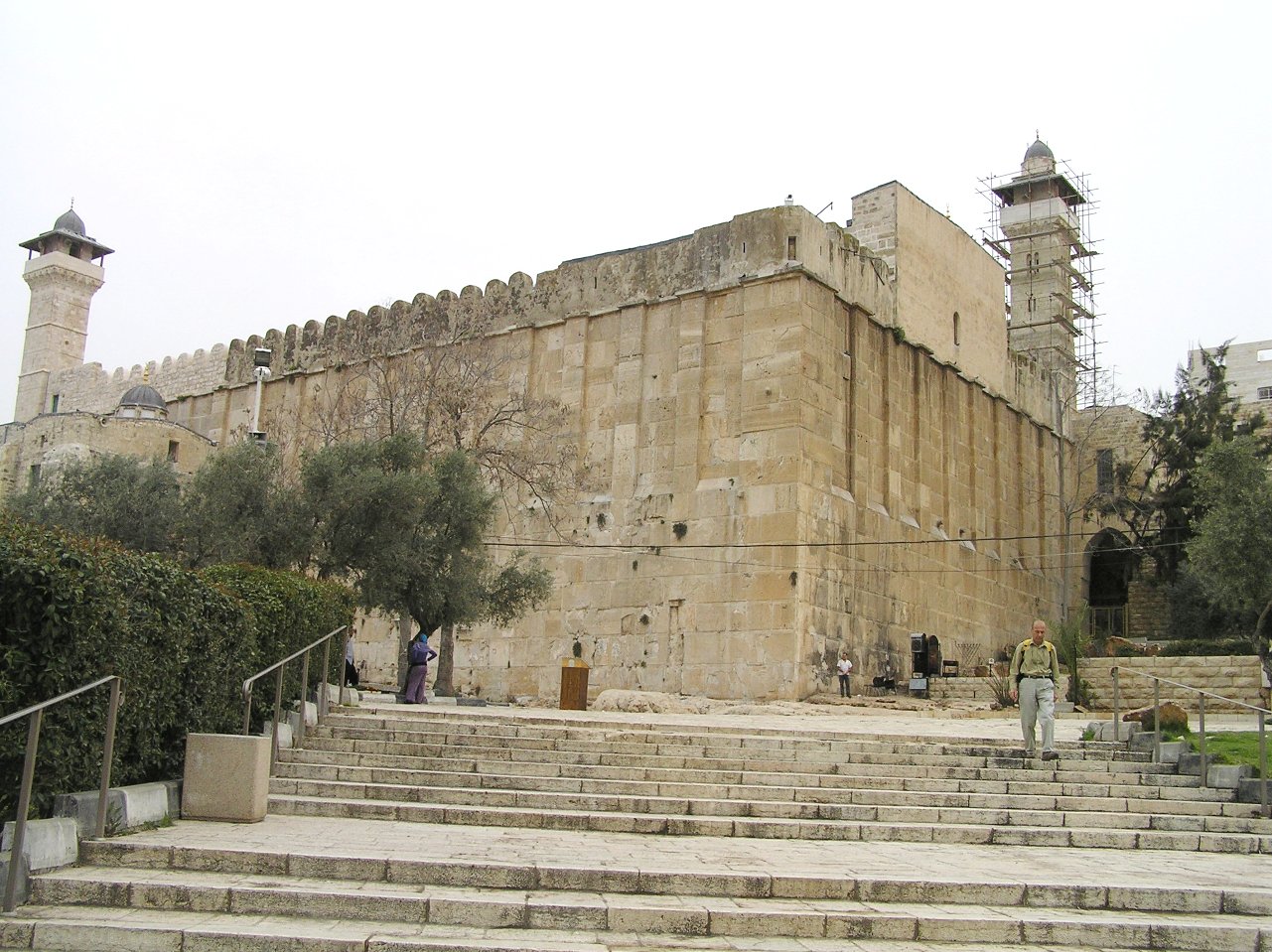
The architecture here tells its own story. The streets are paved with uneven slabs of limestone, polished smooth by centuries of footsteps—pilgrims, merchants, and locals moving through the same spaces generation after generation. The buildings, constructed from the same pale stone, bear the marks of different eras. Ottoman-era wooden doors, heavy and intricately carved, stand alongside Mamluk arches that once framed bustling market stalls. The most striking structure, though, is the Cave of the Patriarchs, also known as the Ibrahimi Mosque. Built during the time of Herod the Great, its massive stone blocks evoke the grandeur of Jerusalem’s ancient Temple, a reminder of the city’s long and complex past.
Life in the Old City moves at its own unhurried pace. In the mornings, the air is thick with the scent of za’atar and cardamom as shopkeepers lay out their wares—jars of olive oil, pyramids of spices, trays of sticky sweets. The markets are a riot of color and sound, with vendors calling out prices in Arabic and Hebrew, their voices mingling with the clatter of metalworkers and the occasional bleat of a goat being led through the crowd. Old men sit in the shade of awnings, sipping coffee from tiny cups, while children dart between the stalls, their laughter echoing off the stone walls. It’s a place where the boundaries between Israeli and Palestinian life blur, where you might pay in shekels at one stall and dinars at the next, where the same street can feel like two different worlds depending on which direction you’re facing.
At the heart of the Old City lies the Cave of the Patriarchs, a site that has been sacred for millennia. According to tradition, Abraham purchased the land here to bury his wife Sarah, and over time, it became the final resting place for the biblical patriarchs and matriarchs. The structure above the cave is a patchwork of history itself—built by Herod, expanded by the Crusaders, and later transformed into a mosque. Today, it’s divided into a synagogue and a mosque, with separate entrances and a palpable tension in the air. The heavy stone walls seem to absorb the weight of centuries, the prayers of countless pilgrims, the echoes of conflict and devotion.
The markets of the Old City are where the city’s living culture is most visible. Here, you’ll find everything from hand-embroidered dresses and intricately patterned ceramics to old coins and bits of antique jewelry. One of the most famous crafts is Hebron glass, made using a technique that dates back to the 13th century. The glassblowers’ workshops are open to visitors, where you can watch as molten glass is shaped into delicate vases, beads, and ornaments, their deep blues and greens catching the light. It’s a craft that has survived wars and occupations, a small but stubborn thread connecting the present to the past.
Hebron’s history is not an easy one. The Old City has been a flashpoint for decades, its streets witnessing violence, displacement, and division. In 1929, a pogrom left dozens of Jews dead, and after the 1967 Six-Day War, Israel took control of the city. Today, parts of the Old City are under Palestinian Authority rule, while others remain under Israeli control, with checkpoints and barriers marking the invisible lines that divide them. The separation is visible in small ways—the currency accepted at a stall, the language on a shop sign, the uniforms of the soldiers patrolling the streets. It’s a place where history isn’t just something you read about; it’s something you feel in the tension of a glance, the hesitation before crossing a street.
Yet for all its complexity, the Old City has a way of drawing you in. There’s a quiet resilience here, a sense that life, in all its messy, beautiful ordinariness, continues despite everything. You can spend hours wandering the labyrinthine alleys, losing yourself among the arches and staircases that seem to lead nowhere and everywhere at once. In the courtyards, ancient cisterns collect rainwater, their surfaces still smooth after centuries of use. On the walls, faded Ottoman seals and British Mandate-era graffiti hint at the layers of rule that have shaped this place. When the markets close and the crowds thin, the city takes on a different rhythm. The calls to prayer from the minarets mix with the distant sound of church bells, and for a moment, it’s possible to imagine what this place might have been like centuries ago.
For those who come to Hebron not just as pilgrims but as travelers, the Old City offers a glimpse into everyday Palestinian life. There are no luxury hotels here, no polished tourist attractions—just the raw, unfiltered reality of a city that has seen too much and yet refuses to be defined by its struggles. In the rooftop cafes, you can try musakhan, a dish of roasted chicken with sumac and caramelized onions served on flatbread, or falafel made from a recipe that hasn’t changed in generations. As the sun sets over the Judean hills, the stone buildings glow with a warm, golden light, and the city feels suspended in time. It’s a place that demands more than just a quick visit, a place that lingers in your memory long after you’ve left.