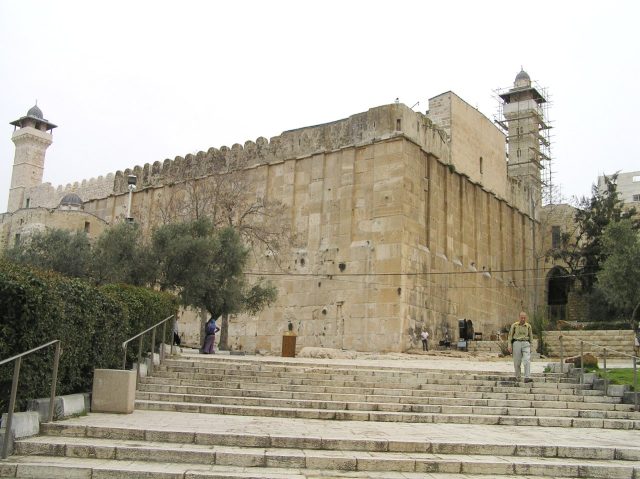
Hebron’s market, known locally as the Souk, is one of those rare places where time seems to slow just enough to let you catch your breath. Tucked within the labyrinth of the old city, it isn’t just a marketplace—it’s the heartbeat of Hebron, a place where generations, cultures, and traditions have intertwined for centuries. Walking through its narrow alleys feels like stepping into a living archive, where every stone and shadow carries the weight of history.
The architecture here tells a story of layers built upon layers. The low stone arches, wooden beams, and cobblestone paths create the kind of atmosphere you’d expect from a medieval Middle Eastern bazaar. Many of the shops and workshops have been passed down through families, their owners still using techniques that haven’t changed in generations—whether it’s pottery-making, leatherwork, or basket-weaving. The details stand out: intricately carved wooden doors, wrought-iron window grilles, and old lanterns that once guided merchants and travelers through the dimly lit passages.
Beyond commerce, the Souk is a social hub where people from all walks of life converge. Mornings are especially lively, with vendors arranging their goods, shoppers haggling over prices, and children darting between stalls. The air is thick with the scent of spices, fresh bread, and coffee, mingling with the earthy aroma of old stone and dried herbs. Olive oil and olive oil soap are among the market’s most famous products—Hebron has long been known for them, and local producers take pride in offering samples to visitors.
The market’s history is inseparable from that of Hebron itself, one of the oldest continuously inhabited cities in the world. References to it appear in ancient texts, and archaeological evidence suggests that trade has flourished here since Canaanite times. Over the centuries, the Souk has seen the rise and fall of empires—Roman, Byzantine, Arab, Crusader, Mamluk, and Ottoman—each leaving its mark on the city’s fabric. During the Middle Ages, Hebron was a key stop on the trade route between Damascus and Cairo, and the market played a central role in the region’s economy.
Today, the Souk remains a vital part of daily life, not just for locals but also for pilgrims and travelers. It’s a place where you can buy fresh produce, handmade crafts, and traditional goods, but more than that, it’s where you can witness the rhythm of the city. Hospitality is woven into the experience—vendors often offer coffee or tea, even if you’re just browsing. It’s not just politeness; it’s a cultural norm where conversation is as important as the transaction itself.
Yet the Souk also exists in a city shaped by complex realities. Hebron is divided, and the market sometimes finds itself at the intersection of these boundaries. Some areas are freely accessible, while others are restricted or closed off entirely. This creates an atmosphere where history and modernity collide in unexpected ways. For visitors, it can feel disorienting, but it’s also a reminder of how the city adapts while holding onto its identity.
A walk through the Souk is an immersion in sensory overload. The sounds of vendors calling out, children laughing, and hammers striking metal blend with the occasional call to prayer from a nearby mosque. The colors are just as vivid—spices piled high in sacks, vibrant fabrics draped over stalls, and the warm glow of lanterns as evening falls. The market is at its most atmospheric in the late afternoon, when the light softens and the crowds thin, leaving behind a quiet that still hums with life.
This isn’t a place preserved for tourists. There’s no artificial polish, no staged performances—just the raw, unfiltered pulse of Hebron. The worn stone steps, the friendly nods from shopkeepers, the way the past and present coexist in every corner—it all feels authentic. For those who want to understand the city beyond guidebooks, the Souk offers a glimpse into its soul. It’s a place where you don’t just buy a souvenir; you leave with a sense of the people who call it home.