
Hebron
Palestine · 8 places
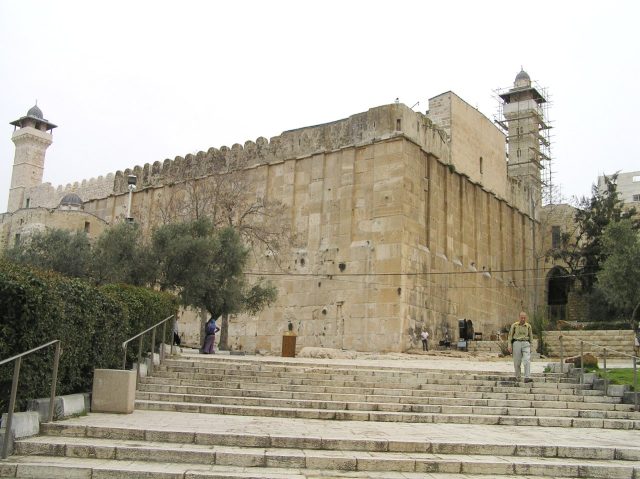
Photo: eman, Public domain
Hebron is one of those rare places where history isn’t just preserved in stone—it lives in the streets, the voices, and the daily routines of those who walk them. Perched in the Judean hills, the city has been continuously inhabited for millennia, layering biblical legends, Roman ruins, and medieval alleyways beneath the rhythm of modern Palestinian life. Most know it as the burial site of the patriarchs—Abraham, Isaac, and Jacob—a sacred place for Judaism, Christianity, and Islam alike. But Hebron is more than a pilgrimage destination. It’s a city where the past isn’t just remembered; it’s part of the market stalls, the arguments over prices, and the footsteps of those hurrying to work. The air carries the scent of spices and fresh bread, the streets hum with bargaining voices, and the weight of history is in the stones beneath your feet.
Walking through Hebron is like stepping into two worlds at once. The Old City, with its Ottoman-era houses and winding lanes, feels suspended in time, its stone walls holding centuries of stories. Yet turn a corner, and the past dissolves into the immediacy of daily life: vendors selling olive oil and handmade ceramics, children darting across cobblestone courtyards, old men sipping coffee outside their shops. At the heart of it all stands the Cave of the Patriarchs, a massive structure of ancient stone where the tombs of Abraham, Isaac, and Jacob lie beneath the shared roof of a mosque and a synagogue. For pilgrims, it’s a place of reverence; for locals, it’s where people pray, debate, or hurry past on their way to work.
Hebron doesn’t feel like other Palestinian cities. The architecture is starker, the streets narrower, the presence of soldiers more constant. The city is divided into two zones—H1, under Palestinian control, and H2, administered by Israel—an invisible line that shapes every aspect of life. Checkpoints appear without warning, some roads are blocked by concrete barriers, and the tension is visible in the way people move, the way they speak. For visitors, this division isn’t just a political footnote; it’s part of the experience, a reminder of how deeply history and conflict are woven into the fabric of the place.
Yet for all its complexities, Hebron is welcoming. Palestinians and Israeli settlers often take the time to explain, to share a story, or to invite you into a workshop where artisans craft traditional pottery. In the evenings, when the heat lifts, families spill into the streets, and the city comes alive with laughter, conversation, and the call to prayer. There are no luxury hotels or trendy cafés here, but there’s something far rarer: a place that doesn’t perform for tourists. It doesn’t soften its edges or dress up its contradictions. It simply exists, raw and unfiltered, and that’s what makes it unforgettable.
This isn’t a place that tells pretty stories. It shows life as it is—messy, resilient, and deeply human. If you want to understand Palestine beyond the headlines, Hebron offers a glimpse, but it won’t make it easy. The city doesn’t adjust to your expectations. It doesn’t apologize for its realities. It just opens the door. Whether you step through is up to you.
See & Do
All of them
Places on the map
Marker colour follows the categoryClimate and weather
Detailed weather: Hebron- Average temperature
- 17 °C
- Precipitation per year
- 0 mm
Average air temperature
°C
8
9
11
16
20
22
24
25
23
21
15
11
Jan
Feb
Mar
Apr
May
Jun
Jul
Aug
Sep
Oct
Nov
Dec


