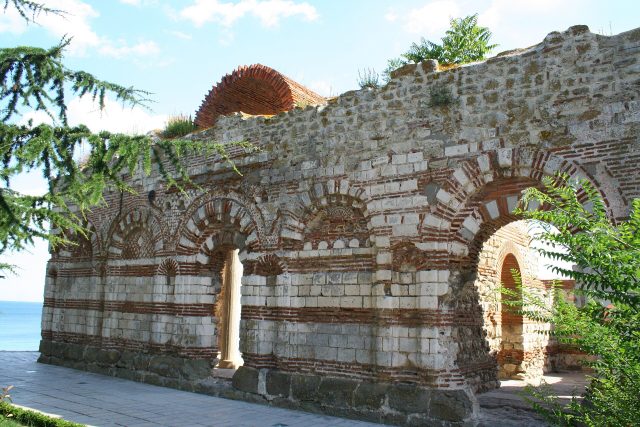
The old windmill in Nessebar is one of those places that feels untouched by time. It sits on the narrow strip of land linking the old city to the mainland, right where the water meets the shore. This isn’t just another historic building—it’s a piece of the town’s daily life from when Nessebar was a small seaside community, not a tourist hotspot.
Built in the late 1800s, the mill ground grain for the town. Nessebar already had its ancient walls and churches, but it was also a working fishing and farming village. What set this mill apart was how it worked: waves filled reservoirs, and the water’s pressure turned the millstones. It was a smart way to use the sea in a place where windmills weren’t always dependable.
The mill’s design is straightforward. A low stone base, wooden structure, and sloping roof—all made from local materials. It wasn’t built to impress, just to last. Over time, salt air and sea spray have worn its walls, making it look like it’s always been here. Today, it looks much the same as it did a hundred years ago, though it no longer grinds grain.
As Nessebar became a tourist destination, the mill lost its purpose. Fishing boats turned into yachts, and docks once piled with flour sacks now sell souvenirs. The town changed, but the mill stayed. There were plans to tear it down for new development, but locals and historians saved it. Now, it’s one of the few reminders of Nessebar’s more recent past, connecting the ancient ruins to the present.
The mill is open to the air now. You can walk around it, follow the wooden boardwalk to the shore, and picture it in use. It’s not always open inside, but even from the outside, you can see its story. The salt-crusted stone, the darkened wood, and the rusted parts that once used the sea’s power—all of it speaks of a time when life here depended on the water.
The mill stands between old and new Nessebar. On one side, medieval churches and fortress walls; on the other, hotels and restaurants. It reminds you that Nessebar’s history isn’t just ancient—it’s also about the people who lived and worked here not so long ago.
Nessebar is called an open-air museum, and the mill is one of its quietest landmarks. Unlike the grand churches or ruins, it doesn’t ask for attention. It just exists, unassuming. You might walk past it, or you might stop and think about the people who used it, the grain it ground, the stories it could tell.
If you’re in Nessebar, don’t head straight for the beach. Walk through the old town, find the mill, and sit by the water. Watch the waves, feel the sun, and try to imagine life here a century ago. In moments like these, the town feels different—not just a place to visit, but a place where time moves slowly, and the past is still close.