Nessebar is one of those rare places where history doesn’t just linger in museums or textbooks—it lives in the very stones beneath your feet. Perched on a narrow rocky peninsula jutting into the Black Sea, the town is connected to the mainland by a thin strip of land, as if clinging to the past while the modern world hums just beyond its edges. There are no neon signs here, no blaring advertisements or crowded promenades vying for attention. Instead, the air carries the salt of the sea, the murmur of waves against ancient walls, and the quiet rhythm of a place that has seen empires rise and fall without ever losing its soul.
Founded over three thousand years ago by Thracian settlers who called it Mesembria, Nessebar became a thriving Greek colony in the 6th century BCE. The Greeks built its first fortifications, temples, and public spaces, turning it into a key trading hub where goods from across the Mediterranean changed hands. Later, Romans, Byzantines, and Bulgarians each left their mark, layering the town with centuries of history. Walking through Nessebar’s Old Town—now a UNESCO World Heritage site—feels like flipping through the pages of a living history book. Cobblestone streets wind past wooden-balconied houses with terracotta roofs, while the remains of Byzantine churches stand as silent witnesses to the passage of time. The past isn’t just preserved here; it’s woven into the fabric of everyday life.
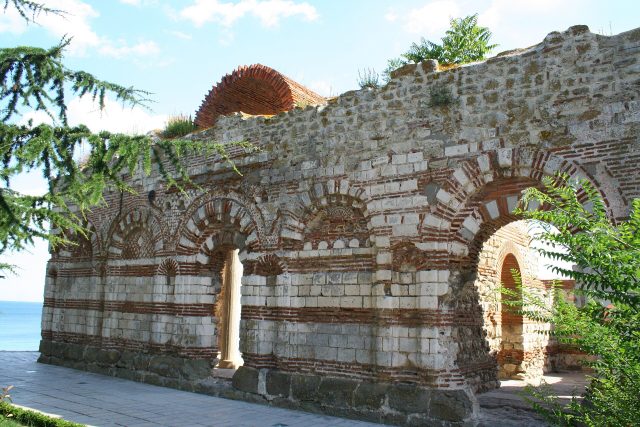
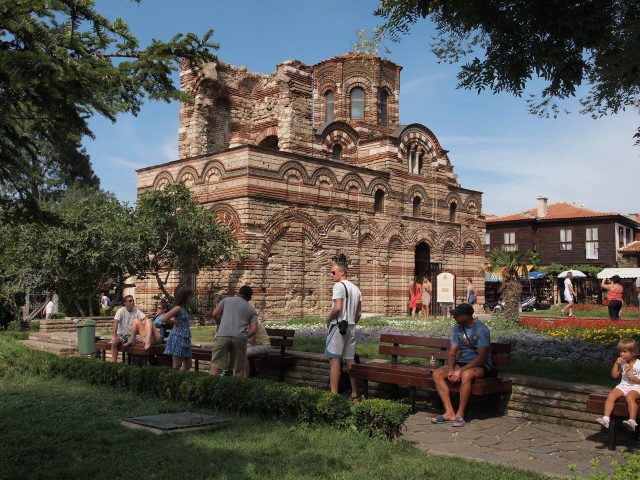
Among the town’s most striking landmarks is the Church of St. Stephen, also known as the New Metropolitan Church. Built in the 11th century, its walls are covered in vibrant frescoes depicting biblical scenes, saints, and moments from the life of Christ. What makes these paintings remarkable isn’t just their age or artistry, but their intimacy. Unlike the grand, imposing murals of larger cathedrals, these feel almost personal, as if the artists painted them not for glory, but for devotion. Nearby, the ruins of the Church of St. John Aliturgetos, dating to the 14th century, offer a different kind of beauty. Overgrown with grass and framed by the sea, its crumbling arches and faded frescoes evoke a sense of timelessness, as if the town itself is breathing through the stones.
Nessebar isn’t just a relic of the past—it’s a place where people still live, work, and go about their days amid the ruins. In summer, the town buzzes with visitors strolling along the waterfront, sipping coffee in small cafés, or browsing handmade crafts in tiny shops. Fishermen mend their nets by the harbor or sell their catch straight from their boats, while the scent of grilled fish and fresh bread drifts through the air. Winter transforms Nessebar into a quieter, more introspective place. The crowds thin, the sea grows rougher, and the town’s true character emerges—one of resilience and quiet beauty. Rain taps against tiled roofs, waves crash against the rocks, and the warm glow of lamps spills from the windows of old houses, making the streets feel like a cozy refuge from the outside world.
The architecture of Nessebar is a patchwork of styles, each era leaving its imprint on the town’s skyline. Byzantine churches stand alongside 19th-century Revival-style houses, their wooden balconies and stone foundations a testament to the town’s layered history. Some of the most charming buildings are the so-called "twin houses," narrow structures that lean against each other like old friends. Many of these homes are still inhabited, their interiors filled with antique furniture, embroidered linens, and potted plants—details that make them feel lived-in rather than merely preserved. Peering through their windows, you might catch a glimpse of a grandmother knitting in a sunlit room or a cat napping on a windowsill, reminders that Nessebar is more than just a museum; it’s a home.
The sea is as much a part of Nessebar’s identity as its ancient walls. It shapes the town’s mood, its economy, and even its people. In summer, the beaches teem with sunbathers and swimmers, while the water glows a translucent green under the Mediterranean sun. In winter, the sea turns stormy and dramatic, its waves crashing against the rocks with a raw power that feels almost primal. Locals say the Black Sea here has a healing quality, not just for the body but for the spirit. Maybe that’s why so many visitors return year after year, drawn back by something they can’t quite name—a sense of belonging, perhaps, or the quiet promise that time moves differently in a place like this.
For all its ancient roots, Nessebar isn’t frozen in the past. It has a pulse, a rhythm that shifts with the seasons. Small galleries showcase the work of local artists, while family-run taverns serve hearty Bulgarian dishes like banitsa and grilled lamb. In summer, the waterfront comes alive with music—street performers strumming guitars, classical concerts echoing through the courtyards of old churches. The town knows how to surprise you: one moment, it feels like an open-air museum; the next, a lively seaside community; and then, just as suddenly, a quiet sanctuary where the only sound is the wind rustling through the trees.
Exploring Nessebar is an exercise in slowing down. There’s no need to rush, no itinerary to follow. You can spend hours wandering the labyrinth of narrow streets, ducking into hidden courtyards or climbing the remnants of the old fortress walls for a view of the sea. Or you can do nothing at all—just sit on a bench by the water, close your eyes, and listen to the waves lapping against the shore. The town doesn’t demand anything from you except curiosity and respect for the stories it holds. And in that quiet exchange, something shifts. You begin to understand why people have been coming here for thousands of years—not just to see Nessebar, but to feel it.