Ancient Nessebar
Bulgaria · 8 places
Photo: NightBlade151, CC BY-SA 3.0
Nesebar is one of those rare places where time seems to pause, letting you take in every weathered stone, every crashing wave, and every sunset as if seeing them for the first time. Perched on a narrow rocky peninsula, the town feels suspended between sea and sky, connected to the mainland only by a thin strip of land. History isn’t locked away in museums here—it breathes in the crumbling walls of old houses, in the worn steps of ancient churches, in the rusted anchors still pulled from the bay’s depths. The town splits into two distinct halves: the old quarter, encircled by fortress walls, and the newer part stretching along the shore with its beaches, hotels, and cafés. Yet even in the modern district, the past lingers—in street names, in the architecture, in the way locals speak, their words carrying the faint lilt of a Greek accent.
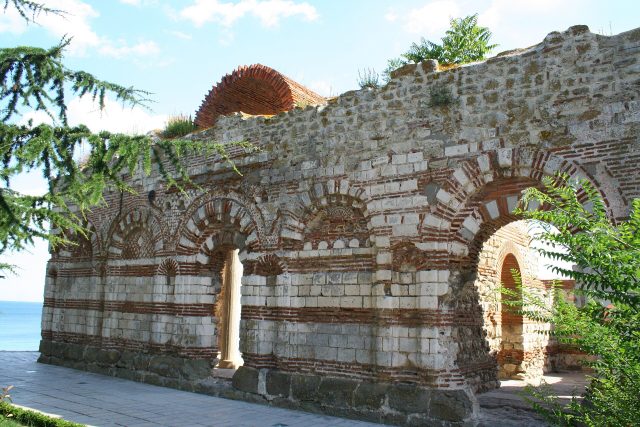
The old town is a maze of cobblestone alleys where every turn reveals something unexpected: a half-ruined basilica with faded frescoes, a wooden house with intricate balconies, or a sudden glimpse of the sea framed by an archway. Remnants of the fortress walls still stand, once built to fend off invaders, alongside churches from different eras. The most famous is the Church of St. Stephen, its interior covered in vivid biblical scenes that somehow retain their color despite centuries of exposure. Nearby, the Church of Christ Pantocrator dazzles with its ceramic decorations, a nod to Byzantine influence. Wandering through old Nesebar feels like stepping through time, each footfall echoing across the centuries.
The newer part of town tells a different story, though no less compelling. Here, the sea is closer, the beaches wider, and life moves at the unhurried pace of a seaside resort. In summer, the promenade buzzes with visitors strolling along the water, ducking into cafés with views of the bay, or buying fresh fish at the market. Winter quiets the streets, but the town never empties—it draws those seeking solitude, the sound of waves, and the sharp tang of salt in the air. While the new district lacks the density of monuments found in the old quarter, it offers a glimpse of modern Bulgaria intertwined with tradition. Fishermen’s houses still display wooden boats by their doors, and restaurants serve dishes passed down through generations.
Nesebar thrives on contrasts. It’s both a UNESCO World Heritage site and a bustling resort where thousands flock each year. You can spend the morning exploring ancient ruins and the evening dancing at a beach club or sipping wine by the shore as the sun dips below the horizon. The sea here is unpredictable—sometimes calm and inviting, other times wild, waves crashing against the rocks with thunderous force. In summer, the water warms enough for swimming well into autumn, while in winter, it turns a steely gray, mirroring the heavy skies above.
The town is small enough to explore on foot in a few hours, but rushing would be a mistake. Nesebar rewards those who linger. Spend a morning wandering the old town before the crowds arrive, swim in the sea by afternoon, and end the day at a tavern where the grilled fish is the best for miles. It doesn’t try to impress with grandeur or luxury—it simply exists, with its rough-edged history, salt-laced wind, and the quiet charm of a coastal town that refuses to let go of its past.
See & Do
All of them

Places on the map
Marker colour follows the categoryClimate and weather
Detailed weather: Ancient Nessebar- Average temperature
- 14 °C
- Precipitation per year
- 0 mm
Average air temperature
°C
4
6
7
11
17
22
24
24
20
15
10
5
Jan
Feb
Mar
Apr
May
Jun
Jul
Aug
Sep
Oct
Nov
Dec