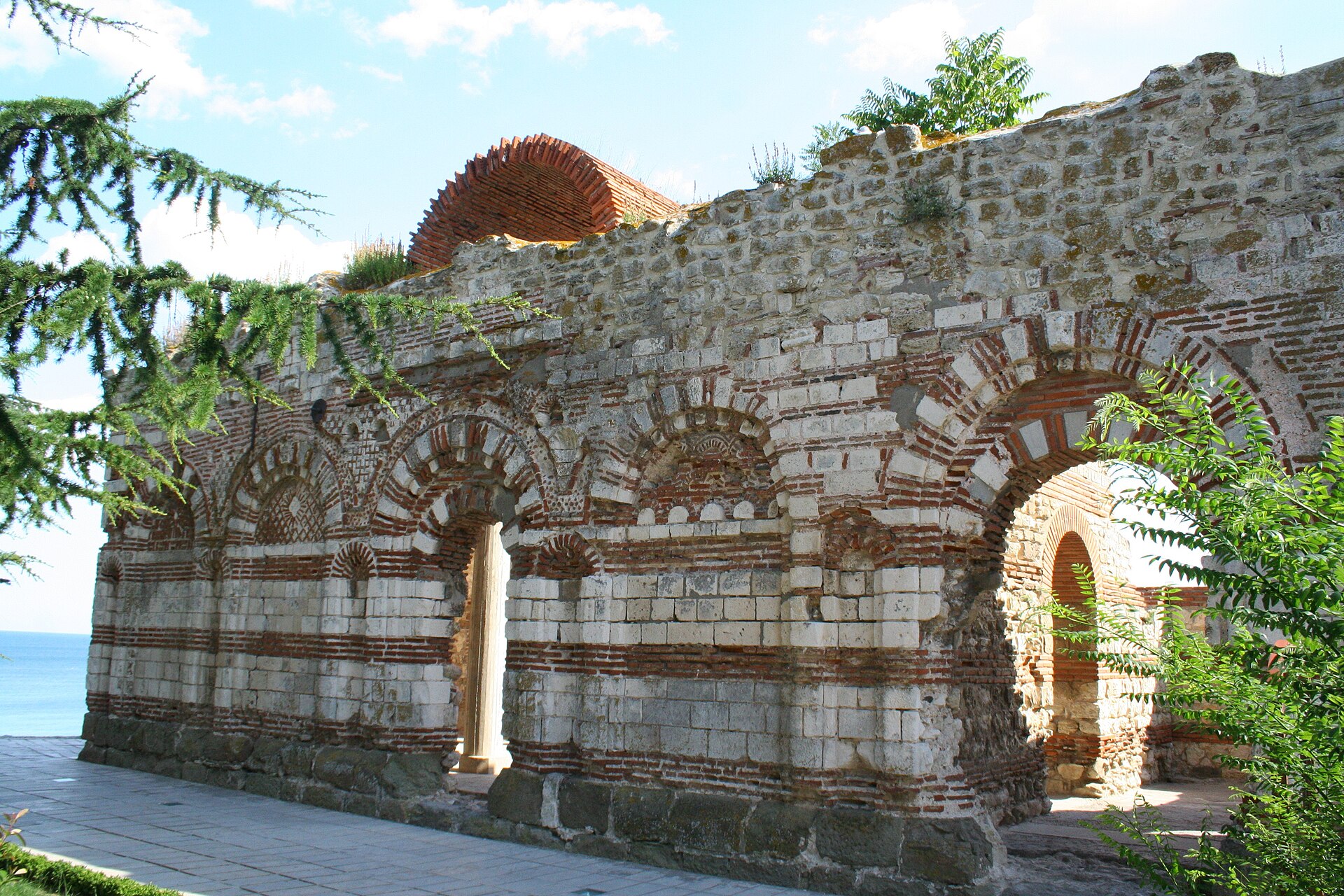
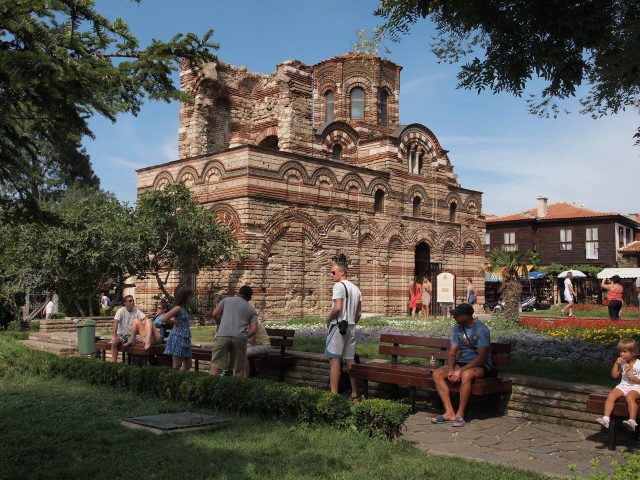
Nessebar is a place where history lingers in every stone, where the past isn’t just remembered but felt in the quiet weight of ancient walls. Among its winding lanes and weathered buildings, the Church of St. John the Baptist stands as a quiet witness to centuries of change. Built in the 11th century, it emerged during a turbulent time in Bulgarian history—after the golden age of the First Bulgarian Empire but before the Ottoman conquest. The region was no stranger to conflict, yet the church endured, its sturdy walls holding stories of faith, survival, and the slow passage of time.
The architecture is unassuming but striking, a fine example of medieval Bulgarian design. The church is small, with a single dome, constructed from a mix of stone and brick in the characteristic layered style of the era. The exterior is marked by simple arched friezes and shallow niches, giving the heavy structure an unexpected lightness. Inside, the space feels intimate, almost protective, with vaulted ceilings resting on slender columns. Narrow windows filter the light, casting a soft glow over the walls, where time has left its mark in the form of faded frescoes.
Those frescoes are the church’s greatest treasure, painted in layers across different periods. The oldest date back to the 13th century, when Byzantine influence still shaped Bulgarian art. The scenes depict biblical stories—Christ’s life, saints, angels, and prophets—rendered with a solemn grace. The figures are restrained yet expressive, their faces carrying a quiet intensity. The image of St. John the Baptist, the church’s namesake, is particularly striking, painted with care as if the artist sought to capture not just his likeness but his spirit. Later restorations added new layers, but the original vision remains visible beneath, like echoes of a distant past.
Unlike grand cathedrals or wealthy monastic churches, this was always a place for ordinary people. Nessebar in the Middle Ages was a modest but important trading town on the Black Sea coast, its rhythms dictated by the seasons and the church calendar. The Church of St. John the Baptist served its small community through earthquakes, fires, and wars, offering not just a place of worship but a refuge—a space to pause, reflect, and find solace. That sense of quiet purpose still lingers today, giving the church an understated warmth that larger, more ornate buildings often lack.
Visitors don’t flock here in the same numbers as they do to Nessebar’s more famous landmarks. Perhaps it’s because the church sits slightly off the main tourist paths, or because its modest exterior doesn’t immediately demand attention. But those who step inside often find themselves lingering longer than expected. There are no crowds, no guided tours competing for space—just the hush of the stone floor underfoot and the dim light playing over the walls. The frescoes, though worn, still feel alive. The saints’ gazes seem to follow you, and the colors, though faded, retain a depth that time hasn’t erased, only softened.
Nessebar is often called an open-air museum, and the Church of St. John the Baptist is one of its most authentic pieces. It doesn’t impress with size or splendor, but that’s precisely its strength. In a world where so much is built for spectacle, this church offers something rarer: simplicity, honesty, and a sense of continuity. Every stone, every brushstroke on the walls carries the weight of history, yet nothing feels forced or exaggerated. The church has outlasted empires and ideologies, becoming as much a part of the landscape as the sea that murmurs nearby.
From a small rise just beyond the church, the old town of Nessebar unfolds like a living postcard. Rooftops, fortress walls, and the spires of other churches stretch out in quiet harmony. Below, the Church of St. John the Baptist stands as a reminder that history isn’t just something we read about—it’s something we can still touch, still feel. The silence inside is the same as it was centuries ago, a quiet thread connecting past and present. It’s no wonder that when people leave Nessebar, it’s often this unassuming little church they remember most—not for its fame, but for its quiet truth.