Nessebar is a town where time seems to move at its own unhurried pace, especially when you wander its cobblestone streets and pause before the ancient churches that dot the landscape. Each one carries a piece of history, but few feel as quietly enduring as the Church of Saint Paraskeva. It stands on a slight rise, almost as if watching the world change around it, its unassuming exterior belying the depth of its past. Built between the 13th and 14th centuries, it belongs to an era when Nessebar was a vital religious and commercial hub of the Second Bulgarian Empire, a place where faith and resilience were woven into the very stones of its buildings.
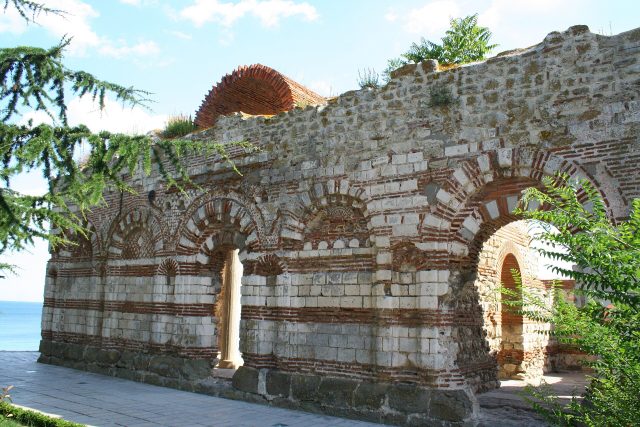
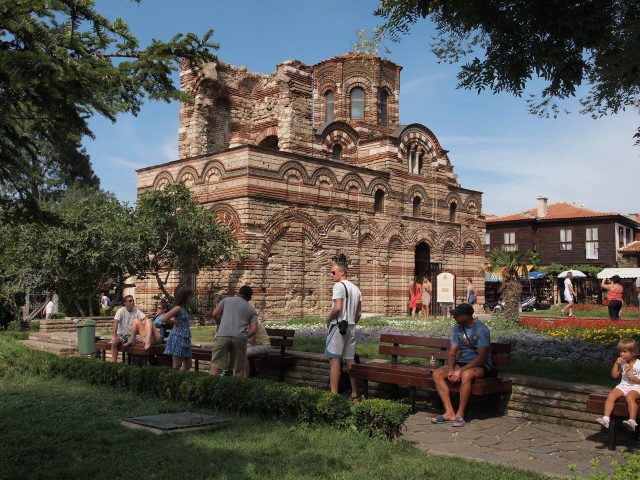
The church’s architecture is a testament to the medieval Bulgarian style of its time—a small, single-naved structure with a semicircular apse, constructed from alternating layers of stone and brick. The pattern gives the walls a rhythmic texture, a nod to Byzantine traditions that shaped much of the region’s ecclesiastical design. Arched friezes and recessed niches soften the heaviness of the masonry, lending the building an unexpected lightness. Inside, fragments of frescoes remain, their once-vibrant colors faded by time and dampness. Though the images are now faint, they offer a glimpse into the church’s former splendor, when every wall told a story in vivid hues.
Saint Paraskeva, the church’s namesake, was a revered figure in the Orthodox world, known as a healer and protector. In medieval Bulgaria, her name was particularly significant, often invoked by women and families seeking solace or divine intervention. The church in Nessebar likely served not just as a place of worship for locals but also as a destination for pilgrims in search of comfort or miracles. Today, services are no longer held here, yet the sense of reverence lingers. The silence inside is broken only by the occasional footsteps of visitors or the whisper of wind through narrow windows, a reminder of the countless prayers once offered within these walls.
Nessebar is often called an open-air museum, and the Church of Saint Paraskeva is one of the reasons why. It stands among other medieval churches, each with its own narrative, but this one feels strangely intimate. Perhaps it’s the size—unlike the grander Church of Saint John Aliturgitos or Saint Stephen, it doesn’t overwhelm with scale. Instead, it invites quiet reflection, a chance to step away from the crowds and simply be in a space that has endured for centuries. The worn stones and faded frescoes don’t demand admiration; they simply exist, as they have for generations.
The old town surrounding the church is a place where past and present intertwine effortlessly. Narrow lanes wind toward the sea, lined with houses topped by terracotta roofs and wooden balconies that hint at Nessebar’s former life as a bustling trading post. In the Middle Ages, merchants from Genoa, Venice, and Constantinople filled its markets, while local craftsmen plied their trades. The Church of Saint Paraskeva would have witnessed it all—festive processions, moments of fear during pirate raids, and the slow encroachment of Ottoman rule. Today, the stones remember what the history books sometimes forget: the lives of ordinary people who once gathered here in hope and hardship.
Visiting the church is less about ticking off a landmark and more about stepping into another time. There are no grand decorations or dazzling displays, just the quiet dignity of a building that has seen centuries pass. Inside, the play of light and shadow through the narrow windows creates a shifting mosaic on the walls. The frescoes, though worn, still carry traces of their former beauty, while the old stone floor feels warm despite its cool surface. It’s a place where the past isn’t just preserved—it’s still alive, breathing in the silence.
Nessebar is a town where history isn’t confined to textbooks; it’s something you can touch, hear, and even smell. The Church of Saint Paraskeva is one of those places where that connection feels strongest. Unlike some of the town’s more famous sites, it isn’t roped off or sanitized for tourists. It remains part of the living fabric of Nessebar, a quiet presence that doesn’t ask for attention but rewards those who take the time to notice. You might come here in the early morning, when the first light spills across the ancient walls, or linger as evening falls, when the air is thick with the scent of the sea. Either way, the church stands as it always has—unassuming, timeless, and just a little mysterious.
These days, Nessebar draws its share of visitors, but the Church of Saint Paraskeva remains off the beaten path. That’s probably why it hasn’t lost its authenticity, why it still feels like a place of genuine history rather than a staged attraction. There are no souvenir stalls or guided tours here, just the quiet hum of the past mingling with the sound of waves in the distance. For those who see history not as a series of dates but as a living, breathing thing, this church is a rare find. It doesn’t need fanfare or exaggerated praise—it simply is, and that’s enough.