FNB Stadium, better known as Soccer City, stands on the edge of Johannesburg like a monument to something far bigger than sport. Built in 1987, it was never just a place to watch football. From the beginning, it existed in a landscape shaped by struggle—right here in Soweto, where the streets still carry the weight of apartheid’s legacy. The stadium didn’t just witness history; it became part of it, a stage for moments that changed the country.
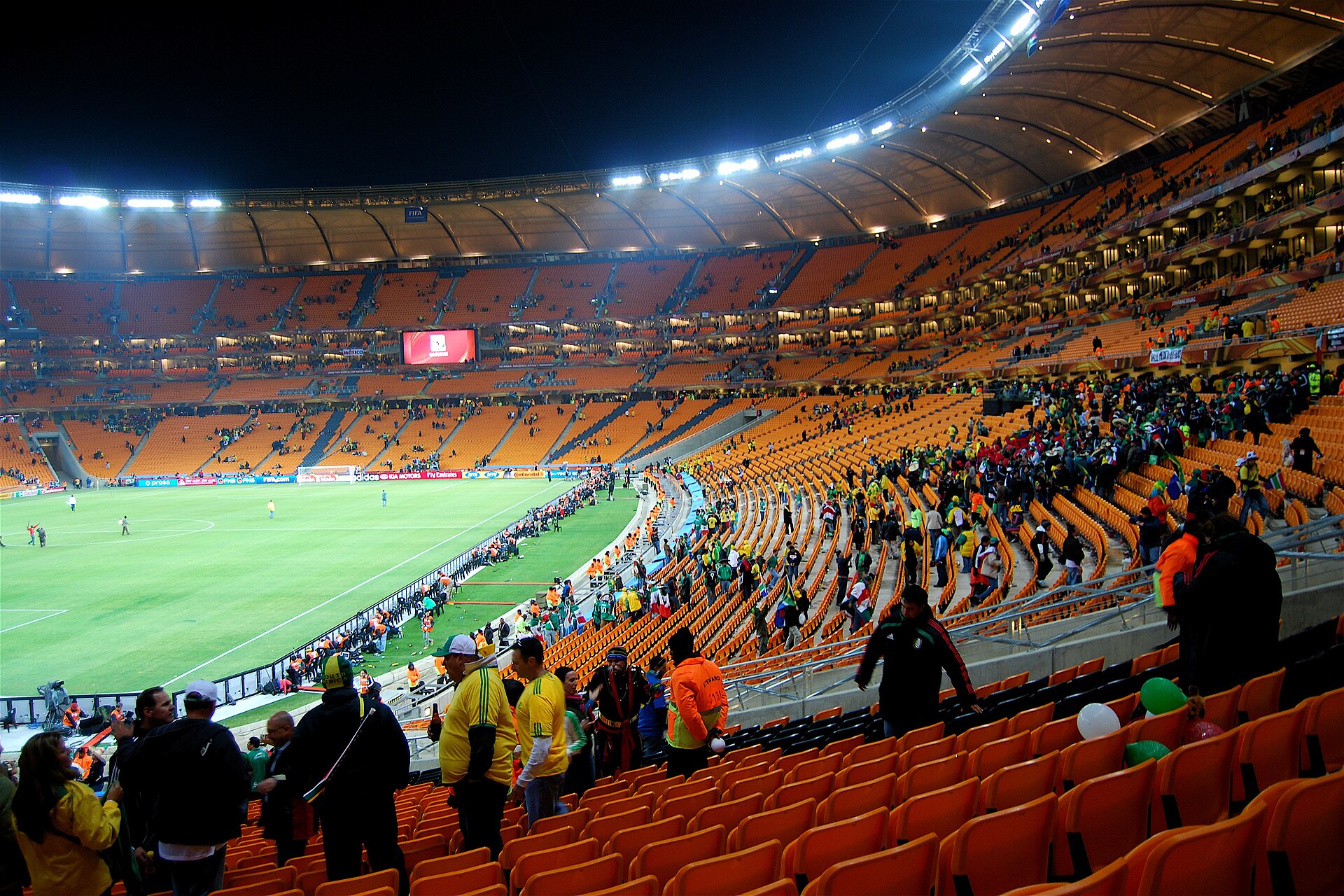
The design is impossible to ignore. The outer shell curves like a calabash, the traditional African gourd used for everything from carrying water to making music. The architects didn’t just want a stadium; they wanted a symbol, something that would feel rooted in the continent’s identity. At night, the lights glow warm against the concrete, turning the structure into a beacon visible from miles away. Inside, the scale is overwhelming—over ninety thousand seats arranged so that even from the highest tier, the field feels close. The acoustics carry every chant, every drumbeat, as if the sound itself is part of the architecture.
This is where Nelson Mandela addressed a crowd of thousands in 1990, just days after his release from prison. The speech wasn’t just a political event; it was a turning point, a public declaration that the old South Africa was ending. Two decades later, the stadium hosted the 2010 World Cup final, the first ever held on African soil. When Spain and the Netherlands walked onto that pitch, it wasn’t just a game—it was proof that a country once divided could come together, even if only for ninety minutes. The world watched, and for a moment, the stadium wasn’t just a place; it was an idea.
But Soccer City isn’t just about the past. On match days, it pulses with life in a way few places do. The stands fill with fans in bright jerseys, their songs and dances spilling onto the field. The energy isn’t confined to the game—it’s in the air, in the way strangers high-five after a goal, in the way the whole stadium seems to move as one. Even if you don’t follow football, the experience is visceral. It’s not just about the sport; it’s about the people who fill the seats, the ones who’ve made this place their own.
Beyond the stadium, the surrounding park offers a quiet contrast. Families spread out blankets for picnics, kids kick balls on the grass, and locals come to escape the noise of the city. Nearby, Soweto’s other landmarks—Hector Pieterson Museum, Mandela House—tell their own stories, but Soccer City holds its own. It’s a place where the past and present collide, where a World Cup final and a community football match can exist in the same space.
The stadium doesn’t feel like a relic or a tourist attraction. It feels lived-in, imperfect, like the country itself. On non-match days, you can take a tour—walk through the tunnels where players prepare, stand on the field, or visit the small museum that traces the history of South African football. There’s no grand narrative here, just the sense that this place has seen it all: triumph, heartbreak, ordinary days. It’s not polished, and that’s part of its charm.
Soweto is a place of contradictions—wealth and poverty, tradition and change, struggle and hope. Soccer City embodies that. It’s not a perfect symbol, but that’s what makes it real. The stadium doesn’t just represent South Africa; it is South Africa, with all its flaws and resilience. Whether it’s hosting a global event or a local match, it never feels distant. It’s always alive, always part of the community.
If you visit Johannesburg, Soweto deserves a place on your itinerary, and Soccer City is more than just a stop. It’s a place where history isn’t just remembered—it’s felt. You don’t have to love football to understand its significance. The stadium doesn’t ask for admiration; it simply exists, as much a part of the landscape as the streets around it. And like those streets, it has stories to tell—if you’re willing to listen.