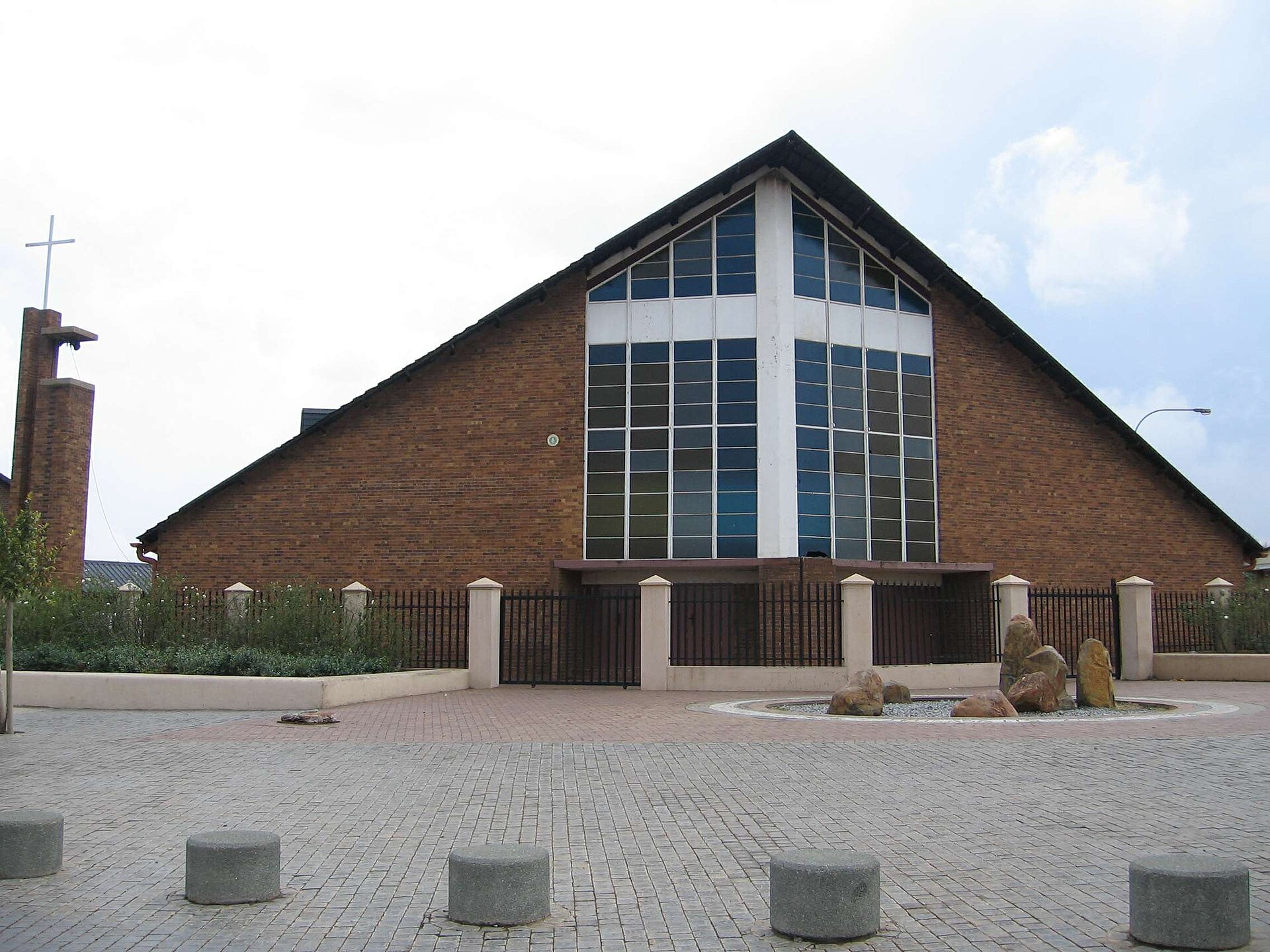
Regina Mundi Church in Soweto is one of those rare places where South Africa’s history feels tangible, almost alive. Built in 1962, it was never just a place of worship. During apartheid, when the country’s laws enforced racial segregation with brutal efficiency, this church became a sanctuary—a space where Black South Africans could gather without fear, where activists met in secret, and where prayers for justice were whispered beneath its high ceilings. The building itself is unassuming, a quiet witness to decades of struggle, its walls holding stories that shaped a nation.
The architecture is simple, almost austere, reflecting the constraints of its time. There are no soaring Gothic arches or stained-glass windows here, just brick and concrete designed to hold as many people as possible. Inside, the space is vast and open, with wooden pews stretching toward a modest altar. The air carries the scent of aged wood and polish, a reminder of countless services where sermons spoke not only of faith but of dignity in the face of oppression. It’s not a grand cathedral, but there’s a weight to the simplicity—a sense that this place was built for purpose, not for show.
Regina Mundi played a pivotal role during the Soweto Uprising in 1976, when thousands of students took to the streets to protest the forced use of Afrikaans in schools. Police opened fire, and many of the wounded fled here for safety. The scars of that day remain visible: bullet holes still pockmark the walls and altar, left untouched as a stark reminder of the violence that unfolded. These marks aren’t just relics; they’re part of the church’s living memory, a testament to the lives lost and the resilience of those who survived.
After apartheid ended, the church didn’t fade into obscurity. Instead, it became a place of reflection and reconciliation, drawing visitors from all walks of life—tourists, politicians, former activists. Guided tours recount the events of the past, and occasional exhibitions explore the broader fight for human rights. In 1997, Nelson Mandela called Regina Mundi the "people’s church," a title that underscores its role in uniting South Africans across divides. Even now, it remains a space where history isn’t just remembered but felt.
Soweto today is a neighborhood of contrasts, where the past and present coexist in unexpected ways. The church stands on a busy street, surrounded by shops, homes, and the hum of daily life. Yet stepping inside is like crossing into another era. The hush of the interior, the dim light filtering through plain windows, the creak of old floorboards—it all transports you to a different time. Visitors speak in low voices, as if reluctant to disturb the quiet reverence of the place.
This isn’t the kind of attraction that advertises itself with flashy signs or souvenir stalls. There are no guided scripts here, no sanitized narratives. Instead, the church offers something rarer: an unfiltered encounter with history. The bullet holes, the worn pews, the faint echoes of past gatherings—all of it speaks to a struggle that wasn’t abstract but deeply human. For some, it’s a pilgrimage; for others, a lesson in resilience. Even those who arrive by chance often leave with the sense that they’ve touched something profound.
In recent years, Soweto has evolved into a destination for travelers seeking authenticity. Once stigmatized as dangerous, the area now draws visitors curious about its history and culture. Regina Mundi remains one of its most compelling sites, not because it’s trendy or polished, but because it refuses to be anything other than itself. It doesn’t need to be grand or glamorous; its power lies in its honesty.
A visit here isn’t just about ticking off a landmark. It’s about listening—to the stories of those who fought, to the silence of those who were lost, to the quiet defiance of a place that refused to be silenced. There are no loud tour guides or didactic plaques, just the weight of history pressing in from all sides. It’s a place that makes you think about how fragile peace can be, and how much it costs to preserve it.
Regina Mundi is more than a relic of South Africa’s past; it’s a living part of its present. It stands as a reminder that freedom isn’t given—it’s fought for, often at great cost. And perhaps that’s why it still draws people in, not as a museum piece, but as a place where the past isn’t just remembered but honored. In a world that often moves too fast, this church offers a moment to pause, to reflect, and to remember what it means to stand for something greater than yourself.