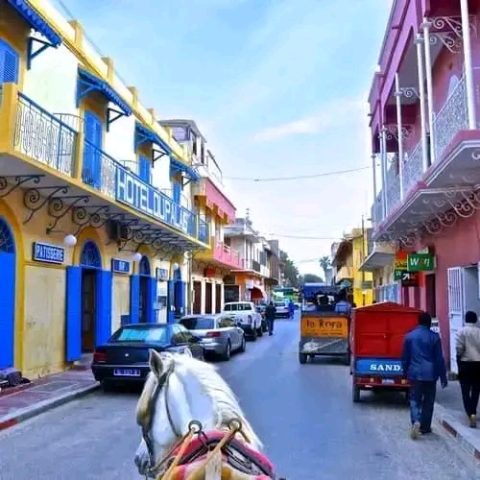
Saint-Louis Island moves at its own pace, where history lingers in salt-worn walls and the slow rhythm of the Senegal River. At its heart stands St. Louis Cathedral, a building that doesn’t demand attention but draws it. Built in the mid-19th century, it was the first Catholic church in West Africa, marking the changes sweeping through the region. At the time, Saint-Louis was the capital of French Senegal, and the cathedral served as both a place of worship and a symbol of colonial influence.
The architecture is simple. Whitewashed walls, tall narrow windows, and twin towers flank the entrance, echoing 19th-century French churches but adapted to local climate and materials. Inside, high ceilings and simple columns create an open, airy space. Wooden pews face the altar, their worn surfaces bearing marks of generations of worshippers. There are no gilded altarpieces or elaborate frescoes—just calm.
Saint-Louis has always been a city of layers. Founded by the French in the 17th century, it grew into a key trading post and later the first capital of French West Africa. The cathedral was part of that transformation, serving as a spiritual home for European settlers while signaling colonial presence. Yet the city’s identity has never been singular. Muslims, Christians, and followers of traditional beliefs have long coexisted here, and the cathedral feels like one part of the city’s fabric.
Today, the cathedral remains active. On Sundays, the organ fills the nave, and church bells ring over the island, mingling with calls to prayer from nearby mosques. On weekdays, tourists visit, and worshippers kneel in prayer. Outside, the square bustles with vendors, children playing football, and the river lapping against the quay. The cathedral isn’t separate from this life—it’s part of it.
Over the years, the building has changed. Restorations have strengthened it against winds and floods, and updates reflect shifting needs. After Senegal’s independence in the 1960s, the cathedral hosted concerts, exhibitions, and political gatherings. History is visible in uneven floorboards, repaired plaster, and the way light falls through the windows.
The exterior has a weathered charm. Paint is chipped, wooden doors darkened by time, and palms sway gently. Walk along the riverside promenade, and you’ll see the Senegal River flowing toward the Atlantic. On the opposite bank, dunes stretch endlessly.
For many Senegalese, St. Louis Cathedral holds personal memories—baptisms, weddings, moments of reflection. It’s no longer just a Catholic church; it’s a space where people of different backgrounds find stillness or celebration. That’s why it doesn’t feel out of place in a city where Islam is the dominant faith. It belongs to those who have shaped it.
Visiting isn’t about checking a sightseeing list. It’s about sitting on a wooden pew, listening to the silence. The creak of floorboards, the light through the windows, the faint scent of incense—these details connect you to something larger. In a fast-moving world, places like this remind you that some things endure.