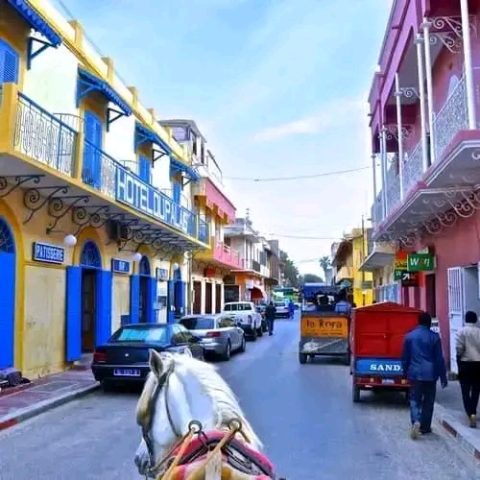
Saint-Louis Island has a way of holding time in its streets, where the past lingers in the shade of old buildings and the rhythm of daily life. The Museum of Art and Traditions is one of those quiet places where the city’s layered history feels almost tangible. Housed in a colonial-era building, it stands in one of the oldest neighborhoods, its walls bearing the weight of an era when Saint-Louis was the capital of French West Africa. Back then, this was a place of bustling trade and administration, where decisions were made that would shape the region. The building itself, with its high ceilings and wide verandas, still carries the echoes of those days, though today it serves a different purpose—preserving not just the colonial legacy, but the deeper cultural roots that existed long before European influence arrived.
The museum’s collection is small but deliberate, each piece telling a story that goes beyond its physical form. Traditional masks from the Wolof, Serer, and Fula peoples line the walls, their meanings known only to those initiated in their symbolism. Nearby, everyday objects—wooden mortars for grinding grain, clay pots, intricately embroidered fabrics—offer a glimpse into the lives of the people who once used them. Music holds a special place here, not just as an art form but as a living tradition. Drums, koras, and balafons weren’t just for celebrations; they carried news, passed down knowledge, and kept histories alive. The museum doesn’t just display these instruments—it invites visitors to imagine the sounds that have filled these streets for generations.
One of the most compelling sections is dedicated to the crafts that have defined Saint-Louis for centuries. The city has always been a place of skilled artisans—blacksmiths, jewelers, weavers, and woodcarvers whose work reflected both utility and beauty. Some of the pieces on display are remarkable in their craftsmanship: delicate silver and gold jewelry worn by women of noble families, or intricately carved wooden panels that once adorned doors and windows. What’s striking is how these traditions haven’t faded. Many of the techniques are still passed down through families, and even today, markets in Saint-Louis sell goods made using the same methods as those from hundreds of years ago.
While the museum is rooted in history, it doesn’t ignore the present. Works by contemporary Senegalese artists hang alongside the traditional pieces, creating a dialogue between past and present. Paintings, sculptures, and photographs show how modern creators reinterpret age-old motifs—masks and patterns reimagined in bold new ways, ancient symbols given fresh meaning. It’s a reminder that culture isn’t static; it evolves, even as it stays connected to its origins. The museum doesn’t just preserve the past—it shows how that past continues to shape the present.
The building itself is part of the story. It’s one of the few remaining examples of colonial architecture in Saint-Louis, with its airy rooms, thick wooden doors, and a central courtyard that once served as a gathering place. Today, that courtyard still offers a quiet respite from the heat, shaded by old trees. Occasionally, small exhibitions or concerts are held there, bringing the space back to life in much the same way it was used decades ago. Standing in the cool shade, it’s easy to imagine the conversations that once took place here—merchants negotiating deals, families sharing news, or simply people seeking a moment of rest from the midday sun.
Saint-Louis has always been a city of contrasts—where grand colonial mansions stand beside humble clay houses, and modern life unfolds alongside ancient traditions. The museum reflects this duality, showing how European influences intertwined with African heritage to create something entirely unique. It’s not just a place to observe history; it’s a place where history feels alive, still shaping the city and its people. The exhibits don’t try to tell the whole story—that would be impossible. Instead, they offer fragments, glimpses into the lives of those who came before, leaving visitors to piece together the rest.
Walking through the museum, it’s hard not to think about how much of the world’s history is tied to ordinary objects. A wooden spoon, a woven basket, a piece of jewelry—each carries the weight of generations. Traditions that might seem outdated to some are still very much alive here, passed down through families and communities. In Saint-Louis, this connection between past and present is especially strong. The city was once a crossroads of trade and culture, and in many ways, it still is. The museum is just one place where that continuity is visible, but it’s a powerful one.
What makes the Museum of Art and Traditions special is its ability to make history feel personal. It’s not a grand narrative of empires or conquests, but a collection of small, human stories—how people lived, what they valued, how they expressed themselves. The museum doesn’t just display artifacts; it invites visitors to step into that world, if only for a little while. And in a city like Saint-Louis, where the past is never far from the surface, that invitation feels particularly meaningful.