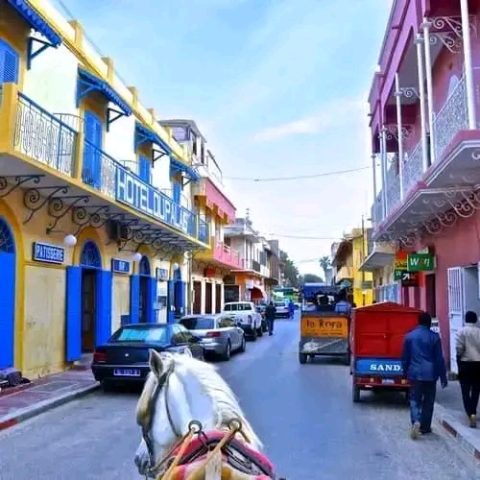
Saint-Louis Island carries the weight of its history in the salt-tinged air. The Senegal River and the Atlantic set the rhythm of daily life here. At its core sits Marché Sindiel, a market that has endured empires, economic shifts, and time itself. It’s where the past and present meet—not just in goods, but in the sounds, scents, and stories of those who pass through.
The market’s architecture is simple. Corrugated metal roofs shield vendors and shoppers from the sun, while open stalls encourage wandering. Light filters through gaps in the roof, casting shifting patterns on worn concrete floors. There’s no grand design, just a maze of stalls that have settled into place over decades. The buildings show their age, their surfaces scuffed, but that’s part of the market’s character. This isn’t a place staged for visitors; it’s where people have lived, worked, and traded for generations.
What brings people to Sindiel isn’t just what’s sold, but the life that unfolds around it. The market mirrors Senegal itself. You’ll find the day’s fresh catch—fish still glistening from the Atlantic—alongside piles of produce in bold colors. Spices are sold in bulk: paprika, piri-piri, cumin. Then there are the crafts—handwoven baskets, silver jewelry, and fabrics dyed in indigo and red, their patterns rooted in tradition. Many items are made on the spot. Watching a craftsman shape bone into a pendant or weave palm fronds into a basket is part of the experience. Vendors offer samples—a slice of mango, a spoonful of tamarind paste—and refusing feels like turning down an invitation.
Sindiel is tied to Saint-Louis’s history, once one of West Africa’s most important trading hubs. In the 18th and 19th centuries, goods from the continent’s interior and coastal regions flowed through its alleys. The city’s past isn’t without shadows—it was a key port in the transatlantic slave trade. Today, the market bears little physical trace of that era, but the weight of history lingers. Some colonial-era scales remain, their brass plates worn smooth. The narrow passageways, once crowded with porters, now hum with shoppers and the clatter of metal bowls. The market has weathered storms, both real and metaphorical, but it endures.
To visit Sindiel is to step into Senegal’s unfiltered reality. There are no souvenir shops or performances for tourists. The market runs on its own rhythms, unchanged for decades. Some vendors call out, their voices blending into the noise, while others wait quietly in the shade, sipping mint tea. Bargaining is expected, but it’s not a fight—it’s a conversation. Prices shift with the time of day, the vendor’s mood, and the rapport you build. For many sellers, this market is their livelihood.
Early morning is the best time to visit. Fishermen arrive with their catches, farmers with carts of vegetables and fruit. The air is thick with the scent of the sea, spices, grilled fish, and fresh bread. By midday, the pace slows. The crowds thin, and the market relaxes. This is when you can explore the quieter corners—stalls selling handmade sandals, dried herbs, or old coins and postcards.
Sindiel is where cultures meet. Saint-Louis has always been a crossroads, and the market reflects that. Wolof, Fulani, and Serer people trade alongside those from Mauritania, Mali, and beyond. Each group brings its own traditions and flavors. The market is a mix of languages—French, Wolof, Pulaar—spoken side by side. You’ll see women in bright *boubous* next to young men in jeans, a reminder of how old and new coexist in Senegal. The market doesn’t just serve the city; it connects it to the countryside and the wider region.
For visitors, Sindiel offers more than postcard images. It’s messy, loud, and sometimes overwhelming. There are no pristine aisles or air conditioning, but there’s something real here. Watch a fishmonger clean his catch. Listen to women haggling over greens. Breathe in the scent of woodsmoke and mint. Time moves differently in Sindiel. Buying a mango can turn into a conversation. Every corner holds a story.
The market has its own rules and pace. It draws you in, but it’s not for those who prefer things neatly packaged. For those willing to embrace the chaos, Sindiel offers a rare chance to see Saint-Louis—and Senegal—as they truly are.