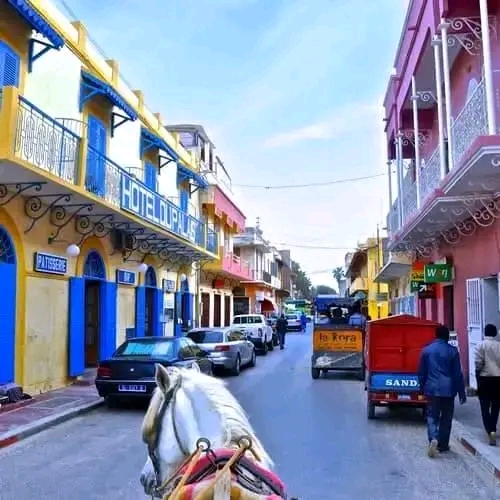
Saint-Louis feels like a place where time has paused, and nowhere is that more evident than on the slender island of Sor. This narrow strip of land along the Senegal River was once the heart of French colonial administration, and today its streets, houses, and even the air itself carry the weight of that history. There’s no rush here, no modern city chaos—just the slow rhythm of life set by weathered facades, creaking wooden shutters, and the steady murmur of waves lapping against the sandy shore.
Sor isn’t just a neighborhood; it’s the historical core of Saint-Louis, where every stone seems to whisper its own story. Founded in the 17th century as a French trading outpost, the city long served as a vital link between Europe and West Africa. It was a place where deals were struck, politics were shaped, and a unique culture emerged from the blend of African traditions and European influences. Walking along the riverfront, you can almost hear the echoes of sailboats docking with their cargoes, the debates in the squares over the fate of the colonies, the clatter of hooves on cobblestones.
The architecture of Sor is a living history lesson. The narrow streets are paved with uneven stones, and the two- and three-story houses—with their wooden balconies and intricately carved doors—bear the marks of colonial design. Many buildings reflect the styles of 18th- and 19th-century France, adapted to the local climate with high ceilings, wide verandas, and shutters to block the harsh sun. The Guinea Quarter stands out, where the grand homes of wealthy merchants and officials still line the streets. Though time has worn their facades, the craftsmanship remains striking—delicate stucco work and European motifs seamlessly woven into the African landscape.
Yet Sor isn’t just an open-air museum. It’s a place where life goes on, day by day, in its own unhurried way. Mornings bring vendors with baskets of fruit and fresh fish, children hurrying to school, and elders gathered on benches, sharing news. By evening, the streets hum with music drifting from cafes and courtyards. There’s no touristy veneer here, just an authenticity that reveals itself in small gestures—a nod, a smile, an invitation to sit and chat over tea. The people are warm but not intrusive, and if you linger, you might hear a story or two about the city’s past.
The river has always been Sor’s lifeline. For centuries, it fed the city, providing work for fishermen and traders, and today it still divides the historic center from the newer districts. Along the banks, you’ll see traditional pirogues—long, narrow boats used for fishing—and in the evenings, families gather to watch the sunset. The water shifts color with the light: silver in the morning, deep blue by midday, and a soft pink at dusk. It’s a sight that draws artists and photographers, who come to capture the quiet beauty of the scene.
Sor is also a crossroads of cultures. French is spoken here, but so are Wolof, Fula, and other local languages. The city’s traditions reflect the influences of migrants from across Africa, as well as the customs brought by European settlers. This blend is especially evident in the food. Senegalese spices meet French techniques in dishes like *thieboudienne*—fish and rice cooked with vegetables and a fiery sauce—or in the cafes serving fresh baguettes and *café Touba*, a spiced coffee that’s become a local specialty.
Though Saint-Louis is no longer Senegal’s capital, Sor remains its cultural heart. Festivals, concerts, and art exhibitions fill the calendar, drawing both locals and visitors. The International Jazz Festival is particularly famous, bringing musicians from around the world to perform in the historic streets. But even on ordinary days, creativity thrives here—graffiti adorns walls, bands rehearse in courtyards, and small galleries showcase the work of Senegalese artists.
A walk through Sor is a journey through time, not because the past is frozen here, but because it exists side by side with the present. Old houses stand next to newer buildings, traditional crafts coexist with modern life, and young people, though glued to their phones, still honor the legacy of their ancestors. It’s a place where you can feel the pulse of real Africa, rooted in history but very much alive. There’s no hurry, just the steady flow of life, as unhurried as the river that shapes this remarkable island.