Sonargaon feels like a place where time has settled into the cracks of history, leaving behind a quiet, almost forgotten elegance. Once a thriving hub of trade and power, it served as the capital of Bengal’s sultans and a vital port where merchants from across Asia and beyond exchanged silks, spices, and precious metals. Today, the remnants of its past are scattered across the landscape, not as grand monuments, but as fragments of a story that still lingers in the air. Just an hour’s drive from the chaos of Dhaka, Sonargaon exists in a different rhythm—one that moves with the slow pace of rural life, where the weight of history is felt more than seen.
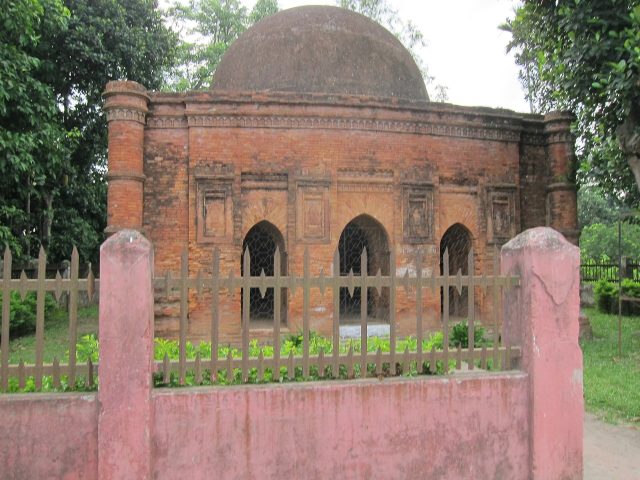
The ruins here are not arranged for visitors; they appear almost by accident, as if the land itself decided to preserve them in their natural state. The most striking among them is Pancharatna Mandir, a five-spired Hindu temple built in the 18th century. Its red-brick walls, adorned with delicate carvings, once belonged to a larger religious complex, but now the temple stands alone, surrounded by overgrown vegetation and silence. Nearby, the skeletal remains of old mosques, mausoleums, and palace structures emerge from the greenery like pieces of a puzzle left unfinished. There’s no grand narrative tying them together—just the quiet persistence of the past.
Sonargaon’s golden age came under the rule of Isa Khan, a 16th-century feudal lord whose influence turned the city into a center of culture and commerce. It was a time when poets, scholars, and musicians gathered at his court, and his palace was said to rival the opulence of any in the region. Today, only fragments of his residence remain—crumbling foundations and weathered walls—but they hint at the scale of what once was. Locals still speak of those days with pride, though the details have faded with time, leaving behind a sense of reverence rather than precise memory.
The Meghna River was the lifeblood of Sonargaon, a bustling waterway that connected Bengal to the wider world. Ships from Arabia, China, and Europe once docked along its banks, unloading goods and ideas that shaped the region. The river is quieter now, its waters no longer crowded with merchant vessels, but it remains central to the lives of those who live along its shores. A walk along the bank offers glimpses of fishing boats, women washing clothes, and children playing in the shallows—scenes that have changed little over the centuries. The river still carries the echoes of a time when it was more than just a body of water; it was a highway linking continents.
Unlike many historical sites, Sonargaon doesn’t feel like a tourist attraction. There are no souvenir stalls, no guided tours with flags, no crowds jostling for the best photo. Instead, there are narrow paths winding between ruins, the occasional farmer leading a cow along a dirt road, and the sense that time here moves differently. The people are friendly but unobtrusive, happy to point out a hidden ruin or share a story, but never pushing for a sale. It’s a place for those who want to feel history rather than just see it—a rare opportunity to step into the past without the distractions of the present.
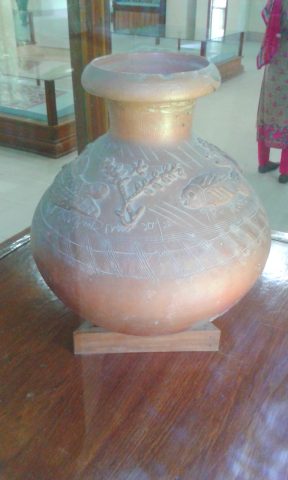
A short distance from the ruins lies the Folk Art and Craft Museum, a small but evocative collection of objects that tell the story of rural Bengal. Traditional looms, clay pots, handwoven textiles, and even old wooden boats fill the space, each item a testament to the skills passed down through generations. The museum isn’t grand, but it has a warmth to it, especially when local artisans demonstrate their crafts—weaving baskets, painting pottery, or spinning thread. Watching their hands move with practiced ease, it’s clear that these traditions are still very much alive, even if the world around them has changed.
Beyond the historical sites, Sonargaon is also a window into the everyday life of rural Bangladesh. The villages surrounding the ruins are where the real rhythm of the place unfolds. Fields of rice and jute stretch out under the sun, while markets buzz with activity in the early mornings, women in vibrant saris selling fresh produce and spices. The roads are often little more than muddy tracks, especially after rain, and power outages are a common occurrence. But these are not inconveniences here—they’re just part of life, unremarkable to those who live it. There’s no tourist veneer, no attempt to package the experience for outsiders. What you see is what you get: a place where people live much as they have for generations.
Visiting Sonargaon is a chance to see Bangladesh beyond the usual narratives of poverty or progress. It’s a place where history isn’t confined to museums but seeps into the very fabric of the land—the crumbling walls, the lazy river, the stories told over cups of sweet tea. There’s no need to rush or follow a set itinerary. You can wander the ruins at your own pace, sit by the river and watch the water flow, or duck into a roadside tea stall where locals debate politics or cricket. It’s in these quiet moments that the true essence of travel reveals itself—not just as a way to see new places, but as a way to connect with something deeper, something timeless. Sonargaon doesn’t demand attention; it simply offers itself, and those who take the time to listen will find that its stories are still very much alive.