Panevėžys is a city that often slips under the radar, overshadowed by Lithuania’s more famous destinations like Vilnius or Kaunas. Yet it’s here, in this quiet corner of the country, that you’ll find the Cathedral of Christ the King—a place that doesn’t demand attention but quietly earns it. Tucked away on a peaceful street where life moves at its own unhurried pace, the cathedral feels like a natural part of the city’s rhythm rather than a grand monument. Its architecture is understated, almost modest, but there’s a quiet strength in its clean lines and muted tones. Step inside, and the world outside seems to fade, replaced by a sense of stillness that lingers long after you leave.
Built in the 1930s, the cathedral arrived at a time when Lithuania was navigating profound change. The country had only recently regained independence after centuries of foreign rule, and the interwar period was marked by both hope and uncertainty. Panevėžys, though not a major political center, was very much part of this story. The cathedral’s construction wasn’t just about faith—it was a statement of resilience, a way for the community to anchor itself in tradition as the world around it shifted. When Soviet rule followed World War II, the cathedral became even more significant. In an era when religious life was suppressed, it remained one of the few places where people could gather openly, a silent but powerful symbol of endurance.
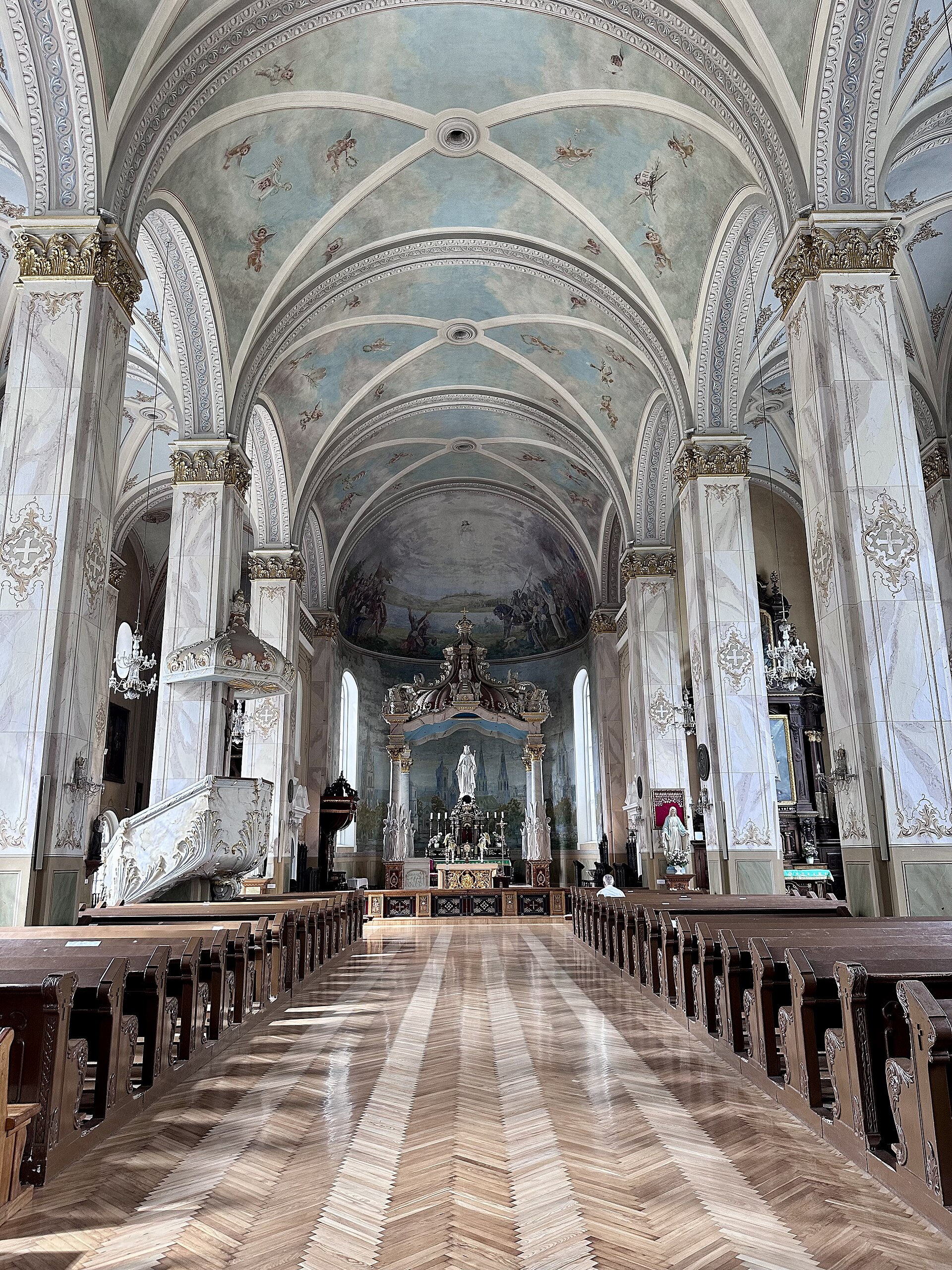
The building itself blends neoclassical and modernist influences in a way that sets it apart from more traditional Lithuanian churches. The façade is marked by a simple portico with columns, lending the structure a sense of dignified restraint. Inside, the design is equally thoughtful but uncluttered. High windows filter soft light across wooden pews and a restrained altar, while the frescoes, painted in subdued hues, avoid distraction. There’s no opulence here, no gilded excess—just a space that feels honest, almost intimate. It’s the kind of place where you might find yourself lost in thought, not because it’s overwhelming, but because it invites reflection without demanding it.
Panevėžys isn’t a city that tries to impress. It doesn’t have the dramatic castles of Trakai or the baroque splendor of Vilnius, but that’s part of its charm. The cathedral fits seamlessly into this unassuming landscape, a place where locals come not just for services but for moments of quiet. On Sundays, the pews fill with families, elderly couples, and the occasional visitor who wandered in by chance. In summer, the flowerbeds around the cathedral bloom in careful rows, while winter coats the stone in a thin layer of frost. There’s no fanfare, no grand spectacle—just the steady, unhurried pulse of everyday life.
The cathedral’s history mirrors Lithuania’s own. During the Soviet years, when religion was marginalized, it stood as a rare sanctuary where faith could be practiced openly. For many, it wasn’t just a place of worship but a quiet act of defiance. After Lithuania regained independence in 1990, the cathedral didn’t fade into the background. Instead, it adapted, hosting not only religious services but also concerts of sacred music and small art exhibitions. The building itself has remained largely unchanged, a testament to the idea that some things don’t need to be reinvented to stay relevant.
What makes the Cathedral of Christ the King special isn’t its size or grandeur, but the way it feels lived-in. There are no crowds here, no souvenir stalls, no guided tours rushing you through. The air is still, scented faintly with candle wax and old wood, and the light through the windows shifts with the time of day. It’s the kind of place where you might sit for a while, watching the way the afternoon sun catches the edges of the pews, or listening to the echo of footsteps on the stone floor. There’s no pressure to perform awe or admiration—just the quiet understanding that some places don’t need to shout to be heard.
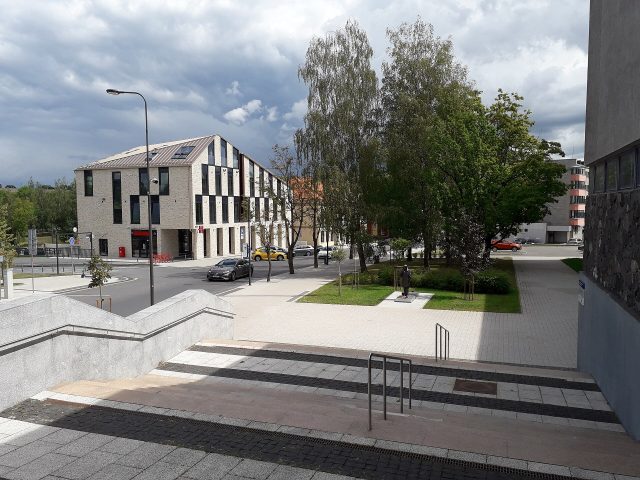
To really appreciate the cathedral, it helps to explore the streets around it. Panevėžys is a compact city, easy to navigate on foot. Nearby, you’ll find low-slung houses with terracotta roofs, small cafés serving hearty Lithuanian dishes like cepelinai or šaltibarščiai, and parks where children play and old men gather to chat. The cathedral isn’t set apart from this life—it’s woven into it. It doesn’t dominate the skyline or demand to be the center of attention. Instead, it stands as a quiet presence, a place where the past and present coexist without fuss.
For travelers who venture beyond Lithuania’s usual tourist routes, the Cathedral of Christ the King offers something rare: a glimpse of the country as it truly is. Not polished for visitors, not exaggerated for effect, but real. It’s a place where history isn’t just preserved in stone but lived, where faith isn’t just performed but felt. And perhaps that’s why it lingers in the memory—not because it’s spectacular, but because it’s sincere. In a world that often values the loud and the grand, the cathedral reminds you that sometimes, the most meaningful places are the ones that don’t try too hard to be noticed.