Panevėžys Town Hall doesn’t demand attention when you arrive in the city. It sits in Freedom Square, where the main streets meet, a quiet marker of the city’s past. This part of Lithuania moves differently—no crowds, no rush—just the pace of a provincial town. The square feels like a place where history and today share the same space.
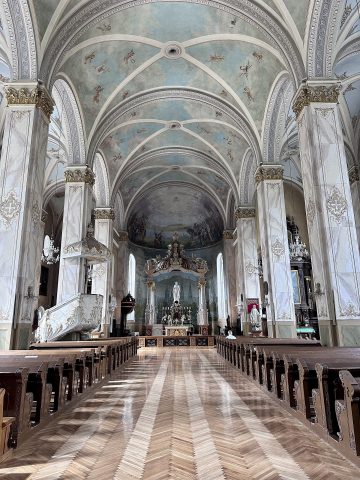
The building dates to the mid-19th century, when Panevėžys was under Russian rule. It was meant to show the city’s role as a trade and administrative center. The architecture mixes classicism with late Baroque: a symmetrical facade, tall windows, and a clock tower above the entrance. Inside, plasterwork and chandeliers remain, though the halls now host official events rather than daily government work. The building has survived wars, occupations, and regime changes, yet it still serves the city.
During World War I, German forces occupied Panevėžys. In World War II, Soviet troops took control. The town hall stood through it all, though some details were lost. After Lithuania regained independence, it was restored. Today, municipal offices fill the space. Visitors can enter during guided tours, seeing rooms where officials once worked and decisions were made. It’s not a museum—just a place where history is still part of the air.
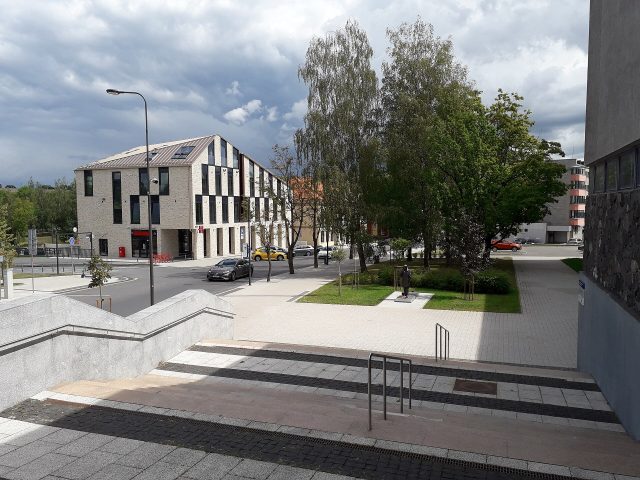
The square in front is where different times meet. Next to the town hall’s neoclassical facade are 19th-century houses with red-tiled roofs. Modern buildings edge the space. In summer, markets sell local produce and crafts. In winter, a Christmas tree and ice rink appear. On holidays, music and crowds fill the square.
For travelers, the town hall isn’t a typical attraction. Panevėžys doesn’t try to impress tourists. No overpriced cafes or souvenir shops—just everyday life. Nearby, you might find an old synagogue, a remnant of the city’s Jewish past, or a museum with local history. The streets hold ordinary shops, pharmacies, and cafes where people gather.
What stands out is how the town hall still belongs to the city. No plaques, no guides—just the quiet rhythm around it. Standing on the square, you can almost see how it looked a century ago.
If you visit, don’t rush. Panevėžys reveals itself slowly. You might find a park with a monument to the poet Maironis, born here, or climb the water tower for a view of the rooftops. The town hall is a place to return to—a spot to pause. It’s not about grand sights, but the small moments that appear when you pay attention.