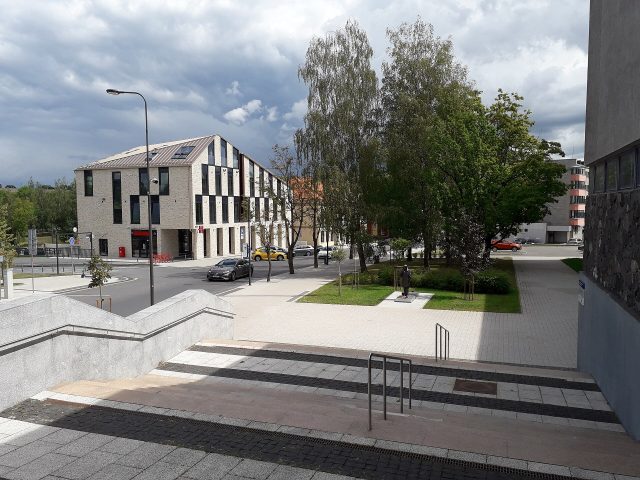
Freedom Park in Panevėžys is one of those rare urban spaces where the city’s usual rhythm slows down, giving way to quiet and greenery. Tucked in the heart of the town, it feels like a small green refuge that draws in both locals and passersby. There are no grand monuments or flashy attractions here—just wide pathways, mature trees, and benches where you can sit for an hour or two, watching the world go by at its own pace.
The park’s history is closely tied to Panevėžys itself. In the 19th century, this area was a modest city garden, a place where residents came to escape the bustle of daily life. Over time, it grew—new trees were planted, paths were laid, and by the early 20th century, it had become a familiar part of the town’s landscape. The name Freedom Park came later, after Lithuania regained independence, when symbols of liberty and remembrance took on deeper meaning for the country.
The park’s design is simple and unassuming, which is part of its charm. There are no ornate pavilions or towering fountains, just well-kept paths leading to small clearings where you can spread out a picnic blanket or lie in the grass. The trees—linden, maple, and oak—have stood here for decades, their sturdy presence giving the place a sense of permanence. In autumn, the leaves turn gold and crimson, painting the park in warm hues, while winter transforms it into a quiet, snow-dusted retreat.
Beyond being a place for leisurely strolls, Freedom Park serves as a kind of cultural hub for Panevėžys. Throughout the year, it hosts small concerts, open-air exhibitions, and local festivals. In summer, you might stumble upon musicians playing for an impromptu audience, while in winter, the park’s ice rink becomes a gathering spot for skaters. When the weather is warm, small cafés and ice cream stands pop up, offering a quick bite without interrupting the flow of a walk.
A quiet but meaningful part of the park is the memorial dedicated to the victims of Soviet occupation. It’s a modest monument, yet its presence is deeply felt by those who understand its significance. Visitors often leave flowers or light candles here, a small but powerful reminder that history is not forgotten. The memorial doesn’t demand attention, but those who pause before it do so with respect.
For the people of Panevėžys, Freedom Park is more than just a green space—it’s a part of everyday life. Families come here with children to ride bikes or play badminton, students bring books to read under the shade of the trees, and older residents gather to chat with neighbors or simply enjoy the fresh air. On weekends, the park buzzes with activity: laughter, conversations, and sometimes the sound of a guitar or accordion drifting through the air.
Despite its unpretentiousness, the park plays an important role in the life of the town. It brings together people of all ages and backgrounds, offering a break from the city’s hustle and a chance to reconnect with nature. There’s no luxury here, just a quiet kind of comfort—the kind that comes from a place where time seems to move a little slower, like the water in the small pond near one of the paths.
Walking through Freedom Park, it’s easy to wonder about the stories it could tell if it had a voice. How many people have walked these paths over the past century? How many lives have intersected here, how many moments of joy and sorrow has this corner of Panevėžys witnessed? Perhaps that’s the park’s greatest strength—it doesn’t try to impose anything. It simply exists, a living witness to time, offering each visitor the chance to find their own meaning within its quiet embrace.