The Holy Trinity Cathedral in Omdurman stands as one of Sudan’s most quietly enduring landmarks, a place where history, faith, and daily life intersect in ways that feel both ordinary and profound. Built in the late 19th century, the cathedral was established during a period when Sudan was under Anglo-Egyptian rule, a time marked by colonial influence and shifting power dynamics. Its construction reflected the presence of a growing Christian community in the region, particularly among European administrators, missionaries, and local converts. Unlike the grand, towering cathedrals of Europe, this one was designed with a more modest scale, blending elements of traditional church architecture with adaptations to the local climate and materials. The result is a building that feels rooted in its surroundings, neither imposing nor inconspicuous, but simply part of the fabric of Omdurman.
The architecture of the cathedral is understated yet deliberate. The exterior is characterized by its simple, whitewashed walls, which help reflect the harsh Sudanese sun, and a low-pitched roof that allows heat to dissipate more easily. The entrance is framed by a small portico, offering shade to those who pause before stepping inside. The bell tower, though not particularly tall, is a recognizable feature, its cross visible from a distance. Inside, the space is open and airy, with high ceilings and large windows that allow natural light to filter through, creating a sense of calm. The walls are adorned with minimal ornamentation, save for a few religious icons and paintings that tell stories of faith in a way that feels personal rather than grandiose.
What makes the Holy Trinity Cathedral notable is not just its physical presence but its role in the community over the decades. For much of its history, it has served as a spiritual center for Sudan’s Christian minority, a group that has often navigated its identity in a predominantly Muslim country. The cathedral has witnessed periods of both harmony and tension, reflecting the broader social and political changes in Sudan. During times of conflict, it has sometimes been a place of refuge, offering solace to those in need. In quieter times, it has been a gathering spot for worship, weddings, and community events, a place where people come together regardless of background.
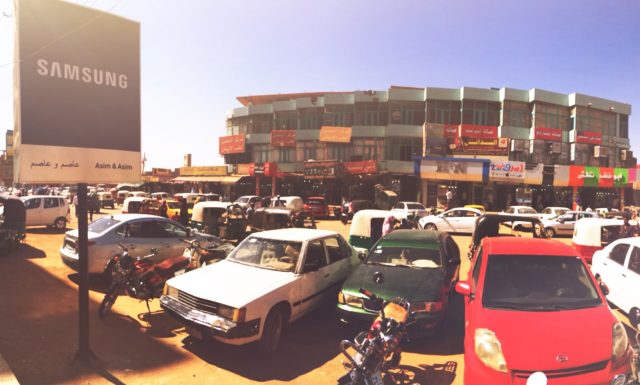
Omdurman itself is a city with a layered history, and the cathedral is one of its quieter threads. Founded in the 19th century as a military outpost, Omdurman later became the capital of the Mahdist state before being absorbed into the Anglo-Egyptian Sudan. Today, it is often overshadowed by Khartoum, the modern capital across the Nile, but it retains a distinct character. The streets around the cathedral are a mix of old and new—dusty markets, narrow alleys, and the occasional modern building standing alongside structures that have been there for generations. The cathedral fits into this landscape unobtrusively, a reminder of the city’s diverse past.
Visiting the Holy Trinity Cathedral is not an experience that demands attention in the way some historic sites do. There are no grand tours or elaborate exhibits here. Instead, it offers something more subtle: a sense of continuity. The building has seen generations come and go, its walls holding the echoes of prayers, hymns, and quiet conversations. On any given day, you might find a small group of worshippers inside, or perhaps a few visitors sitting in the pews, taking a moment away from the bustle of the city. The atmosphere is one of quiet reflection, a place where time seems to slow down.
The cathedral’s location also makes it a natural starting point for exploring Omdurman. Just a short walk away is the Souq Omdurman, one of the largest and most vibrant markets in Sudan. Here, the air is filled with the scent of spices, the sound of bargaining, and the sight of goods ranging from traditional textiles to fresh produce. Nearby, the tomb of the Mahdi, the religious leader who once ruled Sudan, stands as a stark contrast to the cathedral—a reminder of the country’s complex religious and political history. The two sites, though very different, coexist in the same city, each telling a part of Sudan’s story.
For those interested in Sudan’s religious diversity, the Holy Trinity Cathedral offers a glimpse into a lesser-known aspect of the country’s identity. Christianity has been present in Sudan for centuries, with roots tracing back to the early days of the faith. The cathedral is one of the few remaining physical testaments to this history, a place where the past is not just remembered but still lived. It is not a museum, nor is it a tourist attraction in the conventional sense. Instead, it is a living space, one that continues to serve its original purpose while quietly bearing witness to the changes around it.
The cathedral’s significance extends beyond its religious function. It is a symbol of resilience, having endured political upheavals, economic challenges, and the ebb and flow of Sudan’s turbulent history. In a country where the past is often overshadowed by the present, places like the Holy Trinity Cathedral serve as anchors, grounding the community in something enduring. Whether you come for spiritual reasons, historical interest, or simply to escape the heat for a while, the cathedral offers a moment of stillness in a city that is always moving.
There is no fanfare when you visit, no grand entrance or exit. The experience is what you make of it—a quiet walk through its doors, a few moments spent in contemplation, or perhaps a conversation with someone who has been part of its story. In a world where so many places are packaged for consumption, the Holy Trinity Cathedral remains refreshingly unadorned. It is not trying to impress; it simply is. And in that simplicity, it tells a story far richer than any guidebook could capture.