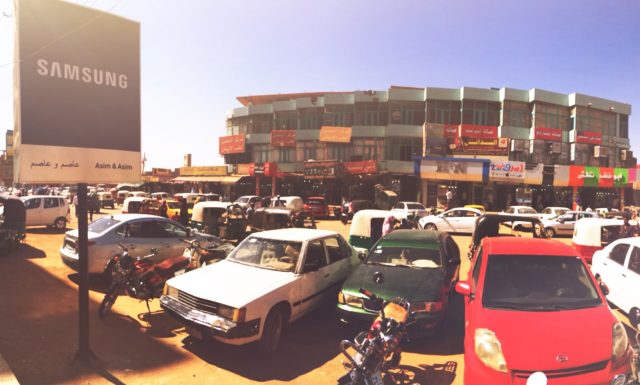
Omdurman’s Folk Museum is one of those quiet places that doesn’t announce itself with grand facades or tourist crowds, yet it holds the kind of stories that make Sudan feel more like a lived-in place than a distant idea. Tucked away in the heart of the city, just a short walk from the bustling souqs and the rhythmic hum of daily life, the museum occupies a modest building that blends into the surroundings without fuss. It’s the kind of spot you might stumble upon while wandering through Omdurman’s older neighborhoods, where the streets still carry the weight of history in their uneven pavement and the occasional donkey cart passing by.
The museum itself is small, but its collection speaks to a much larger narrative—one of Sudan’s cultural resilience and the everyday traditions that have shaped life here for generations. Inside, the exhibits unfold like a conversation rather than a lecture, with displays of handcrafted tools, woven textiles, and household items that once belonged to ordinary people. There are wooden mortars and pestles used for grinding dura, the staple grain in Sudanese cuisine, their surfaces worn smooth by decades of use. Nearby, intricately patterned baskets and leatherwork hint at the skill passed down through families, each piece telling a story of necessity turned into art.
One of the most striking sections is devoted to traditional clothing, where brightly colored tobes and embroidered dresses hang alongside men’s jellabiyas. These garments aren’t just fabric; they’re markers of identity, status, and occasion. The tobes, in particular, with their flowing lengths and delicate embroidery, reflect the way Sudanese women have long expressed both modesty and creativity. Some of the older pieces on display show signs of careful mending, a quiet testament to the value placed on preserving what was made by hand. Nearby, photographs from the early 20th century show people wearing similar styles, bridging the gap between past and present.
The museum also gives space to Sudan’s musical heritage, with a small but fascinating collection of instruments. There’s the tambour, a stringed instrument central to Sudanese folk music, its wooden body carved with simple yet elegant designs. Next to it, drums of various sizes—some used in celebrations, others in religious ceremonies—stand as reminders of how deeply rhythm is woven into the country’s cultural fabric. Occasionally, the museum hosts live performances, though these aren’t advertised in advance. If you’re lucky enough to visit during one, the sound of the oud or the beat of the daluka drum spilling into the courtyard can make the past feel almost tangible.
What makes the Folk Museum different from larger, more polished institutions is its focus on the unglamorous but essential aspects of life. There are no grand historical artifacts here, no relics of kings or conquerors. Instead, the exhibits center on the tools, crafts, and customs that sustained communities through droughts, wars, and shifting borders. A display of fishing nets and clay pots used for storing water speaks to the ingenuity of people living along the Nile, where survival often depended on adapting to the river’s rhythms. Nearby, agricultural tools—hoes, sickles, and wooden plows—hint at the labor that went into cultivating the land before mechanization.
The building itself is part of the story. It’s an old structure, likely repurposed from another use, with high ceilings and large windows that let in just enough light to soften the edges of the exhibits. The courtyard, shaded by a few acacia trees, offers a place to sit and absorb what you’ve seen. There’s no air conditioning, no gift shop pushing postcards or keychains—just the occasional hum of a ceiling fan and the distant call to prayer from a nearby mosque. The lack of modern frills isn’t a drawback; it’s what makes the museum feel authentic, like a pause in time rather than a curated spectacle.
Omdurman, as Sudan’s former capital and the country’s largest city, has always been a crossroads of cultures, and the Folk Museum reflects that diversity in subtle ways. Some exhibits touch on the influences of Arab, African, and even Ottoman traditions, though the museum doesn’t dwell on these connections in a heavy-handed way. Instead, it lets the objects speak for themselves—a silver amulet here, a carved wooden chest there—each piece a fragment of a larger, more complex history. The museum doesn’t claim to tell the whole story of Sudan, but it offers glimpses of the lives that have unfolded in its shadow.
Visiting the Folk Museum isn’t about ticking off a checklist of must-see sights. It’s more like stepping into someone’s home, where the details of daily life are laid out with quiet pride. The staff, if you can find them, are often locals who know the collection well and are happy to share anecdotes if you ask. They might point out a particularly fine example of Nubian pottery or explain the significance of a certain pattern in a woven rug. There’s no scripted tour, no audio guide—just the occasional exchange of stories, as if the museum exists as much for the people of Omdurman as it does for visitors.
In a country where history is often overshadowed by more dramatic narratives of conflict or ancient civilizations, the Folk Museum offers something different: a reminder that culture isn’t just about monuments or grand events. It’s in the way a woman ties her tobe, the sound of a drum echoing through a neighborhood, the shape of a clay pot used to carry water from the Nile. These are the things that endure, not because they’re preserved in glass cases, but because they’re still part of life in Sudan today. The museum doesn’t try to romanticize the past; it simply shows how the past and present coexist, one thread in the fabric of a place that’s always been more than its headlines.