Omdurman’s Mahdi Tomb is one of those rare places where Sudan’s history feels almost tangible. It isn’t just a monument—it’s a symbol of a nation’s struggle for sovereignty, built in the late 19th century to honor Muhammad Ahmad, the religious leader who declared himself the Mahdi, a messianic figure destined to restore justice in the Islamic world. His rebellion against Anglo-Egyptian rule became one of Sudan’s defining moments, a time when faith and resistance merged into a single force. The tomb stands as a quiet testament to that era, a place where the past isn’t just remembered but still resonates.
The building itself is unassuming yet striking. A simple white dome rises above low walls, its clean lines devoid of ornamentation. There’s a certain strength in that simplicity—it reflects the spirit of a people fighting to define their own identity. Inside, the space is dimly lit, with only faint shafts of light filtering through narrow windows. There are no grand decorations, just an atmosphere of stillness, as if the weight of history lingers in the air.
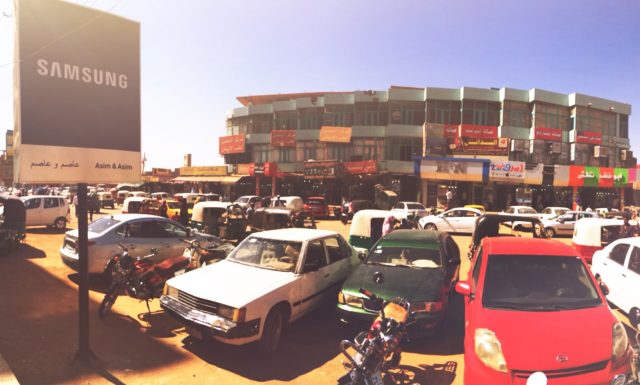
Omdurman, where the tomb is located, is a city steeped in character. Once the capital of the Mahdist state, it remains one of Sudan’s most important cultural hubs. The streets are narrow, the markets bustle with the scent of spices and the vibrant colors of handwoven fabrics, and the minarets of old mosques pierce the skyline. The Mahdi Tomb is woven into this landscape, a place that draws not only pilgrims but anyone seeking to understand what shapes Sudan’s collective memory.
For Sudanese people, the tomb is more than a burial site—it’s a sacred space. Muhammad Ahmad’s legacy is complex, but his vision of justice and independence still holds meaning, especially for those who remember Sudan’s long fight for freedom. On religious holidays and anniversaries, thousands gather here, filling the air with a sense of reverence and unity. The tomb becomes a focal point for reflection, a place where the past feels immediate.
The tomb has also endured its share of turmoil. During the 1898 Battle of Omdurman, when British forces crushed the Mahdist army, the structure was partially destroyed. Yet it was later restored, preserving its original form. Today, it stands as a symbol of resilience—not just for the Mahdi, but for Sudan itself, a country that has repeatedly found itself at history’s crossroads.
Visiting the tomb is less about sightseeing and more about context. Here, religion, politics, and culture intersect in ways that are hard to ignore. Sudan’s heritage is rich and layered, and the Mahdi Tomb is one of those places where it becomes tangible. Unlike the lavish mausoleums of other Islamic leaders, this one’s power lies in its modesty. There’s no grandeur, just a quiet dignity that speaks volumes.
The area around the tomb is worth exploring, too. Nearby, Omdurman’s old market offers a glimpse into traditional crafts, local flavors, and the unhurried rhythm of daily life. The pace here feels timeless, much like the tomb itself—a place where the past and present coexist. Walking through the market or standing in the shadow of the dome, it’s easy to sense how history isn’t just something that happened; it’s something that still shapes the present.
What makes the Mahdi Tomb truly special, though, is the people who come here. Some arrive to pray, others to connect with something beyond the ordinary. In that sense, the tomb remains alive, not just a relic but a living part of Sudanese culture. It doesn’t draw visitors as a tourist attraction so much as a place where history is still being felt, still being lived. And perhaps that’s why it continues to matter—not just as a monument, but as a piece of Sudan’s ongoing story.