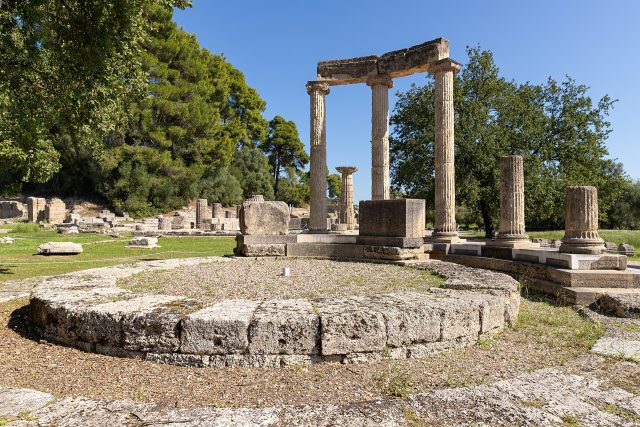
Omdurman
Sudan · 3 places
Photo: Bertramz, CC BY 3.0
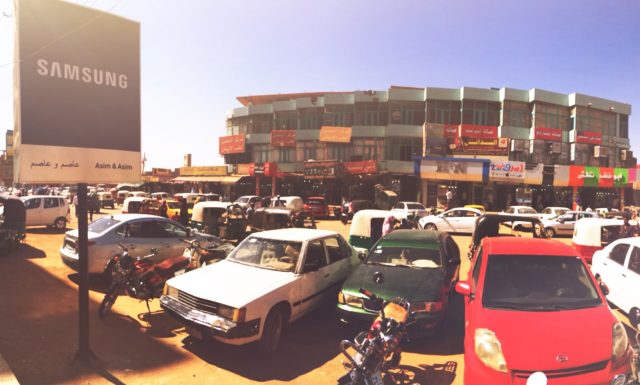
Omdurman doesn’t reveal itself at first glance. It sits on the western bank of the Nile, just across from Khartoum, connected by a handful of bridges, yet it moves to its own rhythm. While it’s often seen as an extension of the capital, it feels distinct—less hurried, less polished, with none of Khartoum’s modern edges. There are no skyscrapers here, no crowds of tourists, just the hum of daily life: narrow lanes lined with clay houses, the clatter of market stalls, and the sense that time unfolds more slowly than elsewhere. This is Sudan’s beating heart, where history, culture, and everyday existence intertwine without pretense.
The city’s soul lives in its markets, especially Souk el-Shaabi, a sprawling maze of alleys where the air is thick with the scent of spices, roasting coffee, and fresh bread. Vendors sell everything from handwoven textiles to intricately carved silver, their stalls piled high with goods that tell stories of trade and craftsmanship. What makes the market unforgettable isn’t just what’s for sale, but how it’s made—right in front of you. Leatherworkers stitch sandals, blacksmiths hammer out knives, and women weave baskets with practiced ease. Even if you don’t buy a thing, wandering through the crowd, dodging donkey carts and bargaining voices, feels like stepping into another era.
History isn’t confined to museums here; it’s woven into the streets. The most striking landmark is the Mahdi’s Mausoleum, a place of quiet reverence where Sudanese come to honor Muhammad Ahmad, the 19th-century leader who resisted British rule. The white-domed structure stands as a symbol of defiance and pride, its simplicity more powerful than any grand monument. Nearby, the Khalifa Abdullahi Mosque, with its towering minarets and open courtyard, offers a glimpse of traditional Sudanese architecture—unadorned but striking, built to serve both faith and community. These sites aren’t just relics; they’re living parts of the city, where locals gather for prayer, reflection, or simply a moment of respite from the heat.
Culture thrives in Omdurman’s music and dance, especially during celebrations that spill into the streets. Weddings here are legendary, with drummers and singers keeping the rhythm long past midnight. The music is hypnotic—deep, pulsing beats layered with the twang of stringed instruments like the *tambura* or *oud*, while dancers move with a fluidity that seems effortless. If you’re lucky enough to stumble upon a performance, you’ll see Sudan at its most vibrant: unscripted, joyful, and deeply communal. Even in everyday life, music isn’t far away—whether it’s a radio playing in a tea stall or a group of friends strumming a guitar by the riverbank.
Life in Omdurman moves at its own pace, and the locals seem to have mastered the art of slowing down. Conversations happen over tiny cups of spiced coffee, brewed strong and served with cardamom, a ritual that can stretch for hours. There’s no rush, no agenda—just the pleasure of company and the warmth of hospitality. If you’re invited into a home, you’ll likely be offered this coffee, along with stories about the city, its people, and the small joys of daily life. It’s in these moments that Omdurman feels most real, far removed from the polished veneer of tourist destinations.
This isn’t a city to be ticked off a list. It demands time—to wander without a map, to sit by the Nile as the sun dips below the horizon, to watch the market stalls pack up at dusk and the streets fill with families heading home. Omdurman doesn’t put on a show for visitors; it simply exists, as it has for generations. Here, the past and present coexist without fanfare, each corner holding a piece of Sudan’s story. To experience it is to understand the country not as a postcard, but as a place that lives, breathes, and welcomes those willing to look beyond the surface.
See & Do
All of them

Places on the map
Marker colour follows the categoryClimate and weather
Detailed weather: Omdurman- Average temperature
- 31 °C
- Precipitation per year
- 96 mm
Average air temperature
°C
24
25
30
33
36
35
33
31
33
33
29
25
Jan
Feb
Mar
Apr
May
Jun
Jul
Aug
Sep
Oct
Nov
Dec