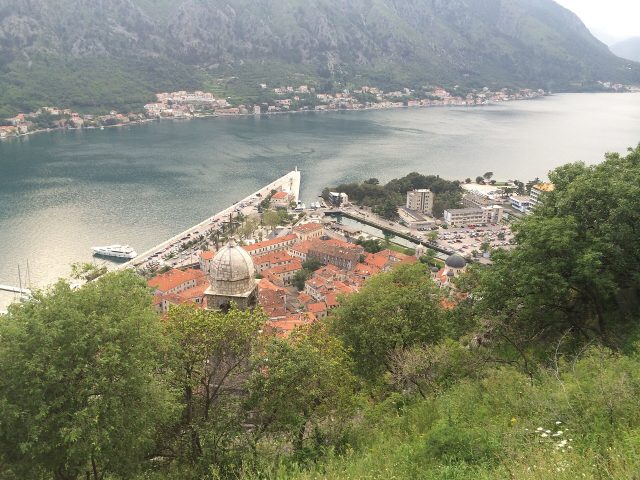
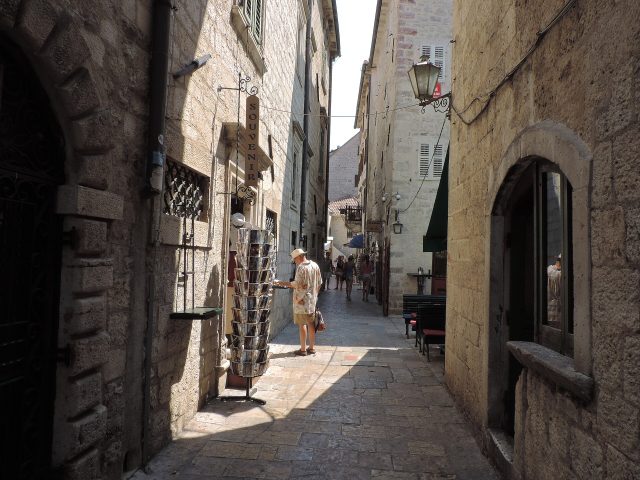
St. Tryphon’s Cathedral stands in the heart of Kotor’s old town. Built in the twelfth century, it has endured earthquakes, fires, and wars. Its stone walls, uneven towers, and narrow windows give little away until you step closer. The weight of its past becomes tangible here—where generations have prayed, sought refuge, and celebrated their faith.
The cathedral’s history begins with St. Tryphon, the patron saint of Kotor. Venetian merchants brought the saint’s relics to the city in the ninth century, and a small church was soon built to house them. The current building dates to 1166, constructed in the Romanesque style. Over the centuries, it absorbed Gothic and Baroque influences, but its thick walls and sturdy arches remain from medieval Kotor.
Inside, the space feels intimate. The high vaulted ceilings and massive columns create solemnity. Faded frescoes and worn stone floors mark centuries of footsteps. The main altar holds St. Tryphon’s relics in an ornate silver reliquary, displayed on special occasions. Venetian artisans crafted it with scenes from the saint’s life. Nearby, wooden choir stalls, ancient icons, and marble tombstones bear the names of Kotor’s noble families.
A small museum within the cathedral shows objects once used in liturgical ceremonies—vestments embroidered with gold thread, silver chalices, and illuminated manuscripts. The collection of icons includes some from the fifteenth century. The faces of saints and biblical figures reflect Byzantine and Western European traditions, a result of Kotor’s position as a crossroads of cultures. The museum feels like a private archive, where each piece carries a story.
St. Tryphon’s Cathedral has always been more than a place of worship. During Venetian rule, it served as a civic hub for meetings, city records, and oaths of office. Today, locals still attend services here. On feast days, chanting fills the air while the square outside buzzes with activity.
The architecture shows its resilience. The two towers differ slightly—one was rebuilt after an earthquake. The façade has rosettes and reliefs, some depicting saints, others mythical creatures. The main portal, with its carved columns and arches, leads inside. The capitals of the columns are decorated with foliage patterns, and fragments of medieval frescoes remain in the shadows.
Kotor’s 1979 earthquake caused extensive damage. The cathedral was restored, preserving its ancient character. Today, patches of lighter stone or newly carved details mark the repairs. These signs of time make it feel more authentic, a structure that has weathered the ages.
Visiting St. Tryphon’s Cathedral is about stepping into old Kotor’s rhythm. The creak of the wooden floors, the coolness of the stone, the faint scent of incense—all slow you down. Even those who aren’t religious or interested in architecture often linger. Here, empires have risen and fallen, yet the cathedral remains. In a city that has changed, it endures.