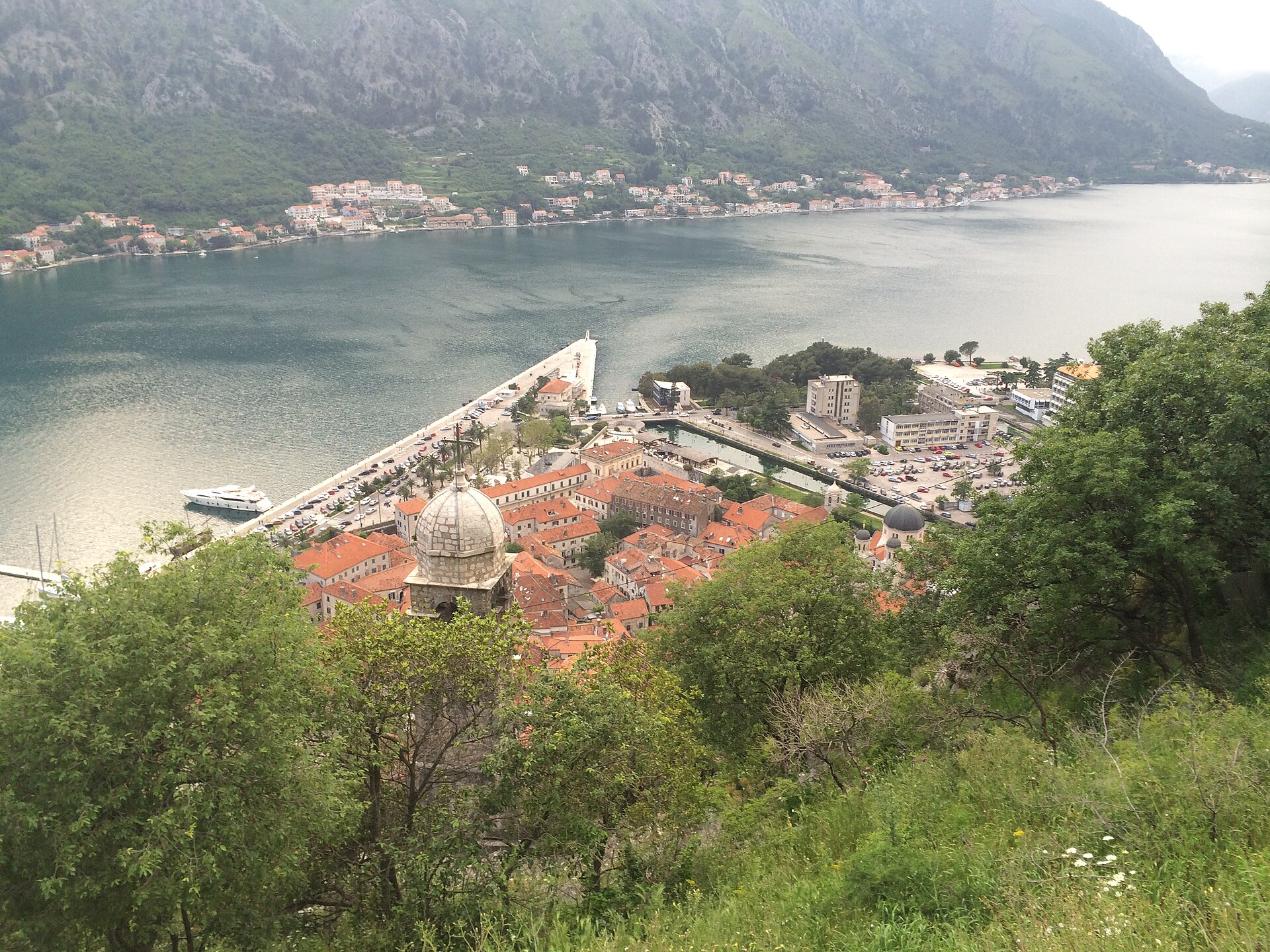
The fortifications of Kotor climb St. John’s Mountain, starting at the bay’s edge where early outposts stood. They rise nearly 250 meters, encircling the old town and merging with the landscape. Walking these walls means moving through time—from Roman settlements to the Venetian era, which shaped the city’s architecture most.
The oldest sections date to the 6th century, when Emperor Justinian rebuilt Kotor after its destruction. The Venetians, who ruled from the 15th to the 18th century, turned it into a stronghold. They reinforced walls, added bastions, and built gates for merchants and soldiers. The winged lion of Venice, carved into stone, still marks the entrance—a reminder of Kotor’s role as a trading and military outpost on the Adriatic.
Why walk these walls?
For the views, yes—red-tiled rooftops, the bay’s deep blue, Mount Lovćen’s jagged slopes. But also for the details. Narrow paths twist between crenellated parapets, some so tight only two can walk abreast. Others widen into platforms where cannons once stood. The stones are worn smooth by centuries, grass sprouting through cracks, reclaiming what was built over.
The fortress of St. John sits at the highest point. The climb takes about an hour, each step rewarded with better views. At the summit, the medieval citadel’s ruins overlook the Bay of Kotor. On clear days, Herzegovina’s mountains appear in the distance. The wind carries history—once the scent of salt and tar, now just rustling through grass.
These walls were never just for defense. Inside lay homes, churches, warehouses, even wells for sieges. Some sections still show traces of daily life—niches for soldiers’ belongings, torch grooves. Kotor faced attacks from Turks, pirates, and rival armies, yet the fortress held against all but one. In 1657, Venetians destroyed part of it to keep it from the Ottomans.
Earthquakes have also shaped these walls. The 1979 quake damaged much, but restorers preserved their original character. Today, moss covers some stones, others are cracked, but the walls still stand strong.
The fortifications stretch over four kilometers. Walking them all at once is tough, but even a short stretch reveals Kotor’s golden age. Early morning or late evening are best—when the sun rises over the mountains or lanterns soften the walls. Then, time feels still, and you half-expect a sentry or merchant to round the corner.
These walls aren’t just a museum. Locals use them as shortcuts or for fresh air. Tourists pose for photos in summer; children play hide-and-seek in winter. That’s their magic—they’re not just a monument. They breathe, change, and endure.