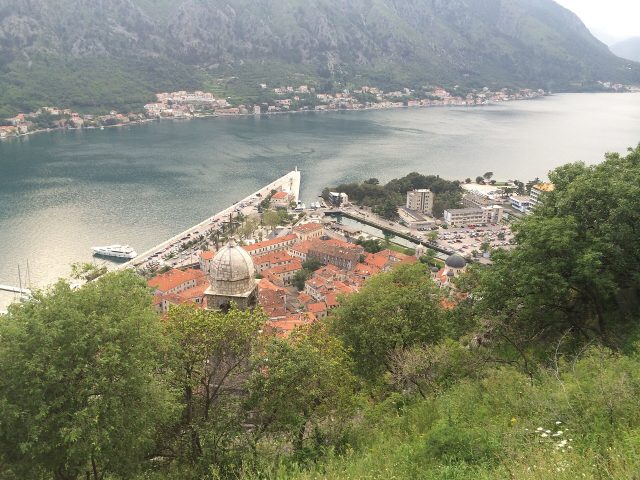
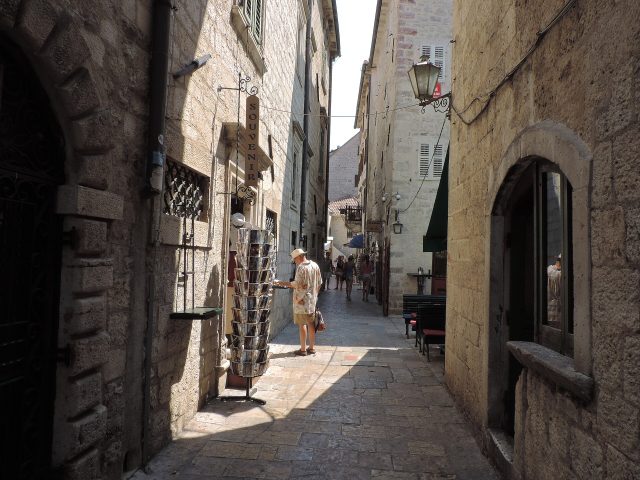
This church doesn’t demand attention but lingers in the mind long after you’ve left. Tucked away on a small square in the Old Town, it blends into the worn stone houses and terracotta roofs. It feels like part of the city’s air—thick with salt, slow with history. Unlike Montenegro’s grander cathedrals, it doesn’t overwhelm. Instead, it invites you to feel, not just look.
The church is one of Kotor’s younger Orthodox buildings, completed in the early 20th century. Yet its story is tied to the city’s Serbian community. For centuries, Kotor was a place where Catholics and Orthodox Christians, Venetians and Slavs, lived side by side. After the Venetians left and Austro-Hungarian rule began, the Orthodox population faced restrictions—new churches were forbidden. It wasn’t until 1902, when Kotor became part of the Kingdom of Montenegro, that permission was granted. The church rose on the site of an older chapel dedicated to Saint Nicholas, the patron saint of travelers and sailors.
The architecture is simple. Built in a neo-Byzantine style, it has a single dome and tall, narrow windows that soften the light inside. The pale stone façade has weathered to a golden hue, matching the city walls. The interior is modest but carefully proportioned, with an iconostasis of dark wood and gilded accents. The frescoes are restrained—more heartfelt than grand.
The icon of Saint Nicholas draws locals, sailors, and fishermen. In a city shaped by the sea, faith in the saint’s protection runs deep. People still come before voyages or in times of trouble, seeking safety or giving thanks. Even as Kotor attracts tourists, the church isn’t a museum. It’s a living space where hymns fill the air on Sundays and parishioners gather for feast days.
Beyond religion, the church holds cultural weight. During Austro-Hungarian rule, it became a sanctuary for Serbian identity. Meetings were held here, national holidays observed, and community documents preserved. After World War II, its role as a place of memory grew. The walls seem to echo different eras—from medieval trade to modern cruise ships.
Most tourists visit the Cathedral of Saint Tryphon or the fortress of San Giovanni. But this quiet square offers something different. Here, you step out of the flow. The city’s rhythms become clearer: the creak of fruit carts, the chime of bells, children playing in hidden courtyards.
Inside, the church stays cool even in summer. It’s a refuge that clears the mind. Not every travel experience needs to be loud. Sometimes, stillness stays with you.
If you find the church empty, the effect is striking. Sunlight slants through the windows, casting patterns on the stone floor. Oil lamps flicker before the icons, candles crackle quietly. In those moments, it’s easy to see why people have come here for generations—not for spectacle, but for peace.
Kotor knows how to hold silence, and Saint Nicholas is one of those places where it feels deepest.
The church occasionally hosts small concerts of sacred music or exhibitions of icon painting. These events don’t turn it into a tourist attraction. There are no crowds, no souvenir stalls—just stone and light. Maybe that’s why visitors return. Not because there’s something to photograph, but because they want to recapture that sense of simplicity and meaning.